The Indian hospitality sector is currently confronting a critical failure point in its operational cost structure: an over-reliance on Liquefied Petroleum Gas (LPG) and Piped Natural Gas (PNG) sourced from a volatile West Asian corridor. While general market sentiment attributes rising costs to "unforeseen conflict," a structural analysis reveals that the crisis is a predictable consequence of a Just-In-Time (JIT) fuel procurement model that lacks regional redundancy. When maritime chokepoints—specifically the Strait of Hormuz and the Bab el-Mandeb—experience kinetic friction, the price of fuel for an Indian five-star kitchen does not merely rise; it enters a period of high-frequency volatility that breaks standard budgeting cycles.
The Energy Architecture of Modern Hospitality
To understand why a regional conflict 3,000 kilometers away translates into a margin squeeze for a hotel in Delhi or Mumbai, one must deconstruct the hotel’s energy consumption profile. In high-end hospitality, energy represents the second-highest variable cost after human capital, typically accounting for 12% to 18% of total operational expenses. The fuel component of this profile is non-negotiable for large-scale banquet operations and industrial-scale laundering.
The Cost-Transfer Bottleneck
A common misunderstanding in hospitality management is the belief that fuel price increases can be passed directly to the consumer. This logic fails because of the Banqueting Contract Lag (BCL). Large-scale corporate events and weddings are often booked 6 to 18 months in advance with fixed menus and per-plate pricing. When fuel input costs spike between the signing of the contract and the execution of the event, the hotel cannot retroactively adjust the bill. This creates a margin-compression trap where a hotel can be 100% occupied but experience a 15% drop in EBITDA due to fuel-driven supply chain inflation.
Mechanics of the West Asian Fuel Chokehold
India imports nearly 45% of its natural gas requirements, with a heavy concentration from Qatar, the UAE, and Saudi Arabia. For the Indian hotel industry, this creates a Single-Point-of-Failure (SPOF) in the supply chain.
The Maritime Risk Multiplier
- War Risk Surcharges (WRS): As tankers traverse the Red Sea or the Persian Gulf, insurance premiums for carriers skyrocket. These costs are not absorbed by the logistics firms; they are amortized across every cubic meter of gas delivered to the Indian industrial user.
- The Red Sea Diversion Cost: Ships forced to reroute around the Cape of Good Hope add 10 to 14 days to the transit time. This does not just increase fuel consumption for the vessel; it ties up global shipping capacity, leading to a synthetic supply shortage.
- The Inventory Deficit: Most Indian hotels maintain only 48 to 72 hours of on-site gas storage due to safety regulations and spatial constraints in urban centers. This lack of a "buffer stock" makes them immediately sensitive to even a minor 4% disruption in the domestic delivery grid.
Categorizing the Impact: The Three Tiers of Vulnerability
The impact of the West Asia conflict on Indian hotels is not uniform. It distributes along a spectrum of operational scale and geographic location.
Tier 1: The Mega-Convention Center
These properties have the highest energy density. A single wedding for 1,500 guests can consume more LPG in 48 hours than a mid-sized apartment complex uses in a month. For these entities, a 20% increase in gas prices represents a direct hit to the bottom line that cannot be mitigated through "efficiency" because the cooking methods are culturally specific (e.g., tandoors and high-flame woks) and cannot be easily electrified.
Tier 2: The Urban Business Hotel
These hotels face a different pressure: the Corporate Rate Lock. While they use less gas than convention centers, they are bound by annual contracts with multinational corporations that specify fixed room rates. If the cost of heating water and providing breakfast rises by 12% due to PNG price hikes, the hotel has no mechanism to recover that cost within the contract period.
Tier 3: The Boutique Heritage Property
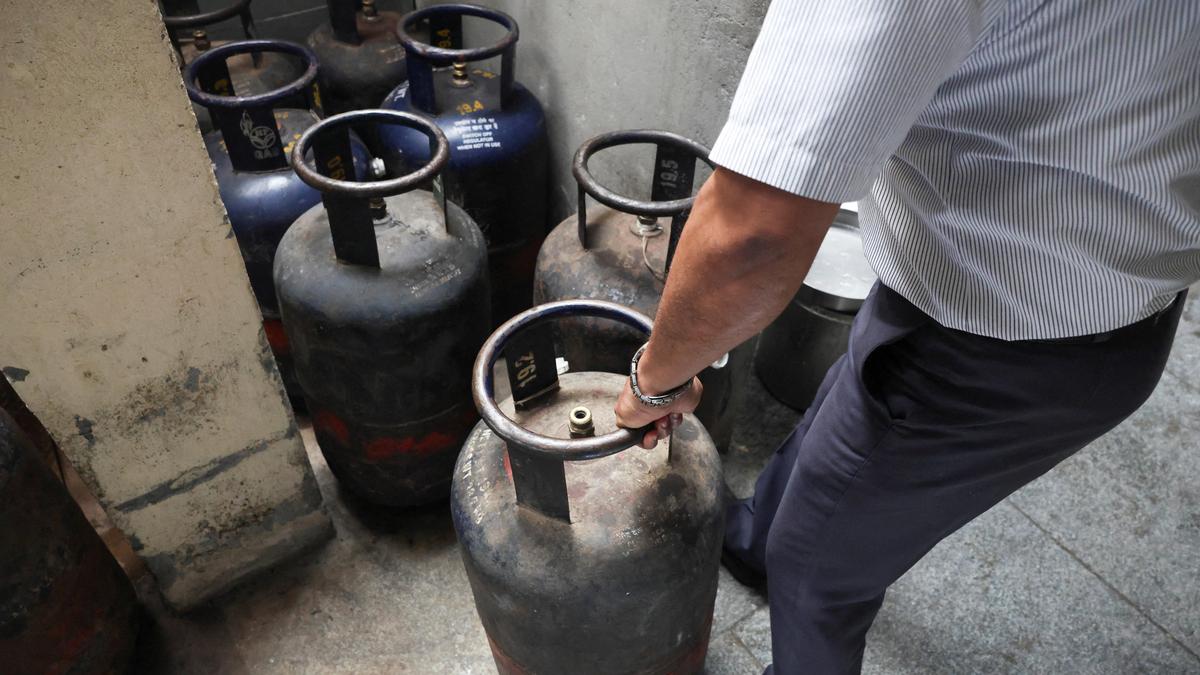
Often located in remote regions, these properties rely on trucked-in LPG cylinders. They are the first to suffer from supply chain breaks. If the national supply is prioritized for urban hubs during a shortage, heritage properties in Rajasthan or the Himalayas face total operational shutdowns.
The Electrification Mirage
Many analysts suggest that the "solution" is a rapid shift toward electric induction cooking and heat pumps. However, this ignores the Grid Infrastructure Cap (GIC). Converting a 300-room hotel's entire kitchen and water-heating infrastructure from gas to electric requires a massive increase in the property's connected load. In many Indian metros, the local electricity board cannot provide this additional load without a multi-year upgrade to the neighborhood's sub-station and distribution transformers.
Furthermore, the CAPEX required for a full-scale conversion is often prohibitive for independent hotel owners already recovering from post-pandemic debt. The ROI for such a conversion, at current Indian commercial electricity tariffs, typically exceeds seven years—a timeframe that exceeds the strategic planning horizon of most hospitality boards.
Mapping the Indirect Supply Chain Contraction
The West Asia crisis does not only affect the gas burned on-site. It triggers a secondary wave of inflation across the entire procurement catalog.
- Food Sourcing (F&B): Gas is a primary input for fertilizers and cold storage logistics. When gas prices rise, the cost of procurement for poultry, dairy, and fresh produce follows a lag-time of 30 to 45 days.
- Laundry and Linens: Industrial laundry operations for hotels are heavily reliant on steam generated by gas boilers. A hotel outsourcing its laundry will see a "fuel surcharge" added to its vendor invoices within weeks of a West Asian flare-up.
- Housekeeping Chemicals: Many surfactants and cleaning agents are petrochemical derivatives. A sustained conflict in the Middle East raises the cost of these base chemicals, increasing the cost-per-occupied-room (CPOR).
Strategic Response: Moving Beyond Passive Exposure
To survive a prolonged West Asian conflict and the resulting fuel instability, the Indian hospitality sector must move away from a reactive "wait-and-see" posture.
The Implementation of Fuel Escalation Clauses (FEC)
Standardized contracts for banquets and corporate stays must be rewritten to include an FEC. This clause allows the hotel to adjust the final bill by a small, transparent percentage if the price of PNG or LPG rises beyond a pre-set threshold (e.g., +10% from the date of booking). This shifts the risk from being purely on the hotel's balance sheet to a shared risk model with the client.
Hybridization of the Energy Stack
Instead of a total shift to electric (which is unfeasible), hotels should adopt a Dual-Fuel Strategy. By maintaining both gas-fired and electric-powered water heating systems, a property can toggle between energy sources based on the real-time cost-per-unit of energy. This requires an initial investment in smart building management systems (BMS) that can automate this switching logic based on daily utility rates.
Collective Procurement Alliances
Individual hotels, especially smaller chains and independent properties, lack the leverage to negotiate favorable rates with gas distributors. The formation of regional "Energy Purchasing Consortiums" would allow hotels to buy gas futures or negotiate bulk contracts that offer price stability for 6 to 12 months, effectively hedging against short-term geopolitical shocks.
The current crisis is not a temporary anomaly but a signal of a permanent shift in energy geopolitics. Indian hospitality leaders must decide whether to continue operating as price-takers in a volatile market or to re-engineer their operational DNA to prioritize energy resilience. The most successful operators will be those who view energy not as a utility bill to be paid, but as a strategic variable to be managed.
The immediate move for any hotel board is a comprehensive Energy Audit and Risk Mapping (EARM). This process must identify the exact percentage of EBITDA exposed to West Asian gas price fluctuations. Once the exposure is quantified, the property must aggressively move to install localized solar thermal systems for pre-heating water—reducing the base load requirement of gas boilers by up to 40%. This is not an "environmental" initiative; it is a defensive financial play designed to decouple the hotel’s profitability from the security of the Strait of Hormuz.