The global push for green energy has a dark, metallic stench in the Democratic Republic of Congo. While the world's automotive giants promise a carbon-neutral future powered by lithium-ion batteries, the residents of Tenke Fungurume are choking on the literal byproduct of that transition. In late 2024 and early 2025, reports began surfacing of a catastrophic sulfuric acid leak and toxic gas release from the mining operations of CMOC Group, the Chinese behemoth that now reigns as the world’s top cobalt producer. This is not just a localized industrial accident. It is a systemic failure of oversight in the world's most critical mineral supply chain.
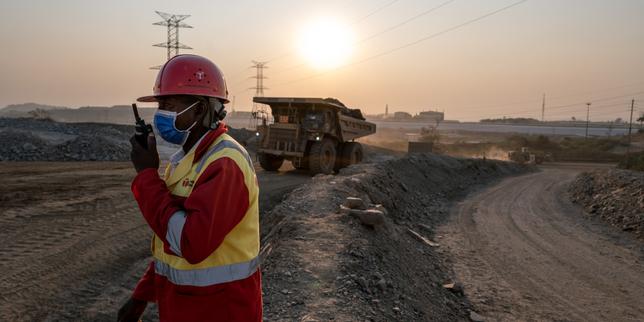
For the people living in the shadow of the Tenke Fungurume Mining (TFM) concessions, the price of the "energy transition" is measured in blood. Specifically, nosebleeds and the sight of children vomiting blood after a thick, acrid mist settled over their homes. CMOC Group, which overtook Glencore to become the dominant force in cobalt production, finds itself at the center of allegations involving the discharge of sulfur dioxide and other toxic particulates. The company’s meteoric rise to the top of the market has been fueled by massive expansions, but the infrastructure to protect the surrounding populace has clearly failed to keep pace with the extraction targets.
The Chemistry of a Crisis
To understand why children are falling ill, one must understand the brutal chemistry of cobalt processing. Cobalt doesn't just jump out of the ground ready for a Tesla battery. It is extracted from copper-cobalt ores through a process known as hydrometallurgical leaching. This requires massive quantities of sulfuric acid. When a processing plant suffers a "process upset" or a containment failure, the result is the release of sulfur dioxide ($SO_2$) gas or the aerosolization of acidic mists.
Sulfur dioxide is a punishing respiratory irritant. Upon contact with the moist membranes of the nose, throat, and lungs, it reacts to form sulfurous acid. This causes immediate inflammation, mucosal bleeding, and in severe cases, pulmonary edema. For a developing child, the impact is magnified. Their smaller airways and higher respiratory rates mean they inhale more toxins relative to their body mass than the adults working the pits. When a village is blanketed in these fumes, the medical outcome is predictable, horrific, and entirely preventable.
Market Dominance at Any Price
CMOC’s ascent to the peak of the cobalt industry was a calculated geopolitical move. By securing the TFM and Kisanfu mines, the company effectively placed a stranglehold on the primary ingredient for electric vehicle (EV) batteries. In 2024, CMOC reported a massive surge in production, aiming for a target of 60,000 to 100,000 metric tons of cobalt.
This aggressive scaling has a ripple effect. When a mining operation prioritizes volume above all else, maintenance cycles on scrubbers and filtration systems often slip. The pressure to meet quotas set in Beijing or to satisfy the insatiable demand of Western EV manufacturers creates a culture where "minor" leaks are treated as the cost of doing business. However, when those leaks occur in densely populated regions like Fungurume, there is nothing minor about them.
The economic reality is that the DRC provides roughly 70% of the world’s cobalt. This gives mining giants immense leverage over local regulators. The Congolese government, often cash-strapped and reliant on mining royalties, faces a harrowing dilemma: enforce environmental standards and risk slowing production, or turn a blind eye to the "red mist" and keep the tax revenue flowing. Historically, the revenue wins every time.
The Myth of the Clean Supply Chain
Western tech companies love to talk about "responsibly sourced" minerals. They join initiatives, sign pledges, and audit their Tier 1 suppliers. But these audits are often superficial, focusing on child labor in artisanal pits while ignoring the industrial-scale environmental devastation caused by the major players.
The incident at Tenke Fungurume exposes the hollowness of corporate social responsibility (CSR) in the mining sector. If a company like CMOC can be "suspected" of venting toxic gas for days without an immediate, transparent shutdown and remediation plan, the audit system is broken. The supply chain isn't being cleaned; it's being laundered. The carbon emissions saved by an EV in Norway are being paid for by the respiratory health of a ten-year-old in the Lualaba Province.
We are seeing a divergence in mining standards. On one hand, there are the public-facing ESG (Environmental, Social, and Governance) reports filled with photos of newly built schools. On the other, there is the raw data of soil acidity, water contamination, and hospital admissions. The gap between the two is where the truth resides.
The Infrastructure of Neglect
The physical layout of these mines is a testament to the lack of buffer zones. In many parts of the DRC, the mine doesn't end where the town begins. They are intertwined. Waste rock piles loom over residential shacks. Tailings ponds, filled with a cocktail of heavy metals and processing chemicals, sit precariously close to water sources.
When the gas release occurred, there was no sirens. There was no mass evacuation protocol coordinated by the mine. The first sign of trouble for many families was the smell—a sharp, metallic burn—and then the physical symptoms. This lack of emergency infrastructure is a choice. It is cheaper to pay a small settlement to a grieving family or a local chief than it is to build a world-class early warning and containment system.
The Hidden Data
Independent environmental monitoring in the DRC is nearly non-existent. Most of the data regarding air quality or water toxicity comes from the mining companies themselves. This is the equivalent of a student grading their own exam. International NGOs have attempted to bridge the gap, but they often face restricted access to mine sites and harassment from local authorities who view them as threats to the national economy.
Without third-party, real-time sensors placed in the communities of Tenke and Fungurume, we are forced to rely on anecdotal evidence. But when hundreds of people report the same symptoms at the same time, the anecdotes become a data set. The presence of blood—in vomit, in mucus—points to high-concentration exposure that exceeds any international safety standard.
Geopolitical Complicity
The silence from the international community is deafening. Because CMOC is a Chinese entity, and the DRC is a strategic partner for both the East and the West in the "Green Race," nobody wants to rock the boat too hard. Washington needs the cobalt to keep its own battery industry alive. Beijing needs the profit and the strategic control.
This creates a vacuum of accountability. The victims in Fungurume are caught in the gears of a global power struggle. They are the "externalities" in a massive geopolitical spreadsheet. If this level of toxic discharge happened in a suburb of Phoenix or a village in France, the mine would be shuttered within hours and the CEO would be in front of a congressional committee. In the DRC, it barely makes the back pages of the business section.
Moving Beyond the "Artisanal" Distraction
For years, the narrative around "blood cobalt" has focused on artisanal miners—the "creuseurs" who dig by hand in dangerous tunnels. While that remains a serious issue, it has served as a convenient distraction for the industrial giants. By pointing the finger at the unorganized, hand-digging sector, large-scale industrial miners have positioned themselves as the "clean" alternative.
The Tenke Fungurume incident shatters that illusion. Industrial mining is not inherently safer for the community; it is simply dangerous on a much larger scale. An artisanal miner might risk their own life in a cave-in, but an industrial mine's "process upset" can poison an entire zip code. The scale of chemical usage in these massive hydrometallurgical plants introduces risks that the artisanal sector could never replicate.
The Accountability Gap
What happens next is usually a familiar dance. The mining company will issue a statement citing their commitment to the community. They might blame a specific piece of equipment or a "weather anomaly" that trapped the gas near the ground. They will offer a one-time donation of medical supplies to a local clinic. And then, the production lines will resume their record-breaking pace.
Real accountability would require a total overhaul of how mineral concessions are managed. It would require:
- Mandatory independent air and water monitoring with data broadcast publicly in real-time.
- Legal standing for Congolese citizens to sue parent companies in their home jurisdictions (e.g., Shanghai or Hong Kong).
- Buffer zone enforcement that relocates residents away from high-risk processing zones at the company's expense, before the plant begins operations.
Until these measures are implemented, the "green" label on an electric vehicle is nothing more than a marketing veneer. The blood in the dust of Tenke Fungurume is a reminder that there is no such thing as a clean energy revolution without a clean conscience in the extraction zones.
The world wants its batteries. It wants its climate-friendly transportation. But it continues to demand them at a price point that necessitates the poisoning of the Congolese people. We are trading one form of environmental destruction for another, shifting the burden from the atmosphere to the lungs of the poor. The "suspected" gas leak at TFM is not a glitch in the system; it is a feature of a market that values cobalt more than the people who live on top of it.
Stop looking at the car in the showroom and start looking at the hospital wards in Fungurume.