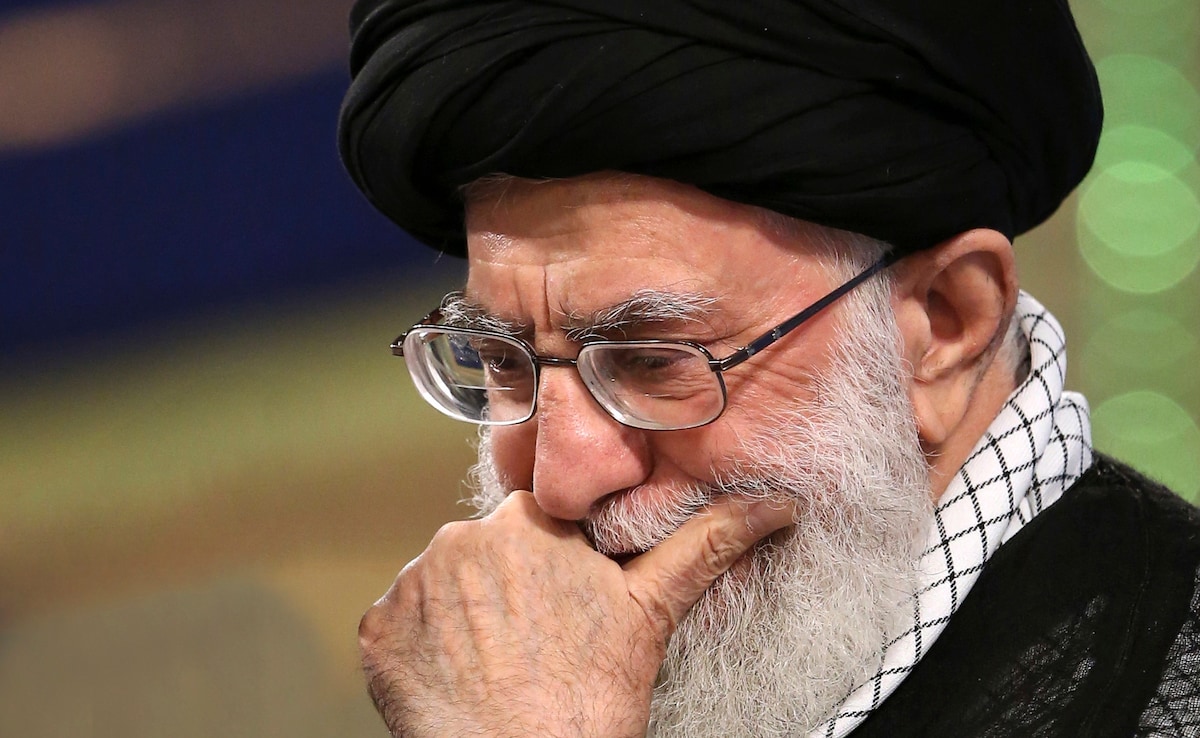
Ali Khamenei sat before the Assembly of Experts in 1989 and told them he wasn't fit for the job. He didn't just suggest it. He pleaded. He argued that his leadership would be a disaster for Islamic law and the nation. Today, critics and supporters alike point to that specific moment to prove two entirely different things. Some see a humble man forced into a role by destiny. Others see a calculated performance or a genuine admission of a legal disqualification that should have barred him from power forever.
The death of Ruhollah Khomeini left a massive vacuum in Iran. The system was designed around a "Marja"—a grand ayatollah with supreme religious authority. Khamenei wasn't that. He was a mid-ranking cleric with a political resume. When the cameras rolled during that emergency session, the tension was thick enough to cut.
The Video That Still Shakes Iranian Politics
For decades, the Iranian public only knew the official version of the 1989 succession. It was painted as a smooth, divinely inspired transition. Then, a leaked video surfaced years later that showed the raw, uncomfortable reality of the debate.
In the footage, Khamenei stands at the podium. He looks visibly distressed. He tells the gathered clerics that based on the constitution, he is not qualified to give fatwas (religious decrees) in all areas of jurisprudence. He literally says, "I am not worthy of this position." He goes even further, stating that any leadership he provided would be "formal" and not "real" because he lacked the necessary religious credentials.
This wasn't just a moment of "imposter syndrome." It was a legal crisis. The 1979 constitution was crystal clear: the leader had to be a Marja-e Taqlid (a source of emulation). Khamenei was a Hojatoleslam, several ranks below that. To make him leader, they had to change the rules on the fly. They basically decided that political savvy mattered more than religious seniority.
Why the Assembly of Experts Ignored His Protest
You have to wonder why a room full of powerful, ego-driven clerics would ignore a man's own admission of inadequacy. The answer is simple: survival.
The inner circle, led by the incredibly influential Akbar Hashemi Rafsanjani, was terrified of a power struggle. If they didn't pick a successor immediately, the revolution might collapse. Rafsanjani played the kingmaker. He claimed that Khomeini, on his deathbed, had privately expressed support for Khamenei.
There's no written proof of this deathbed endorsement. It rests entirely on Rafsanjani’s word. By pushing Khamenei forward, Rafsanjani likely thought he could control the new leader. He viewed Khamenei as a weak, malleable figure who would handle the ceremonies while Rafsanjani handled the state. He was wrong. Khamenei eventually outmaneuvered everyone who helped him get the seat.
The Constitutional Fix That Changed Everything
To bridge the gap between "unworthy" and "Supreme Leader," the government held a referendum to change the constitution. They stripped away the requirement for the leader to be a top-tier religious authority.
- The old rule: You must be a Marja.
- The new rule: You just need "political and social perspicacity" and "clerical standing."
This shifted the entire nature of the Iranian state. It moved from a theo-democracy led by a religious giant to a system where political loyalty and security apparatus control are the real currencies of power. By accepting the role after his "protest," Khamenei oversaw a transition where the office of the Supreme Leader became more about the "Supreme" and less about the "Leader" as a religious guide.
The Problem of Religious Legitimacy
Even after he took power, the religious establishment in Qom didn't just fall in line. Many senior Grand Ayatollahs looked at Khamenei as a political appointee. They didn't see him as their peer.
To fix this, the state's propaganda machine went into overdrive. They started calling him "Ayatollah" overnight. It was an instant promotion that bypassed the decades of study usually required. This created a rift that still exists. When Khamenei said he wasn't worthy, he was acknowledging a fact that the senior clergy in Qom already knew. He was an outsider in their world of high-level jurisprudence.
From Humble Cleric to Absolute Power
The most striking thing about the "unworthy" speech is how it contrasts with the next thirty-plus years. The man who said he shouldn't be leader became the longest-serving head of state in the Middle East.
He didn't stay the "formal" leader he predicted he would be. He built a shadow state. He took control of the Islamic Revolutionary Guard Corps (IRGC). He seized the country's massive economic foundations. He turned the office into a powerhouse that dictates foreign policy, nuclear strategy, and social norms with an iron fist.
If you look at the 1989 video now, it feels like a glimpse into an alternate timeline. What if they had listened to him? What if they had picked a council of leaders instead of a single man? The decision to ignore his "unworthiness" set Iran on a path toward a highly centralized, security-focused autocracy.
The Political Strategy of Self-Deprecation
Was he being honest? It's possible. But in the world of high-stakes Middle Eastern politics, public humility is often a shield. By expressing reluctance, Khamenei shielded himself from accusations of being power-hungry. If things went wrong, he could always point back and say, "I told you I wasn't the guy for this."
It’s a classic move. You see it in history all the time. A leader "reluctantly" accepts power to save the nation. It gives them a moral high ground. But once that power is grasped, it's rarely let go. Khamenei’s "unworthiness" became the foundation of a tenure defined by an absolute refusal to yield.
The legacy of that 1989 session isn't just about one man’s credentials. It’s about the moment the Iranian Revolution chose stability over its own legal and religious principles. They wanted a quick fix for a succession crisis, and they got a leader who has outlasted almost all of them.
If you're tracking the current state of Iranian politics, keep an eye on how the Assembly of Experts talks about the next succession. The same tensions are bubbling under the surface. The question of "worthiness" versus "loyalty" is more relevant now than ever. You should look into the current members of the Assembly; their recent votes on internal committees tell you exactly who they're grooming to avoid the mess of 1989. Read the official transcripts of the last three Assembly sessions if you want to see how they're trying to prevent another "unworthy" moment from happening on camera.


