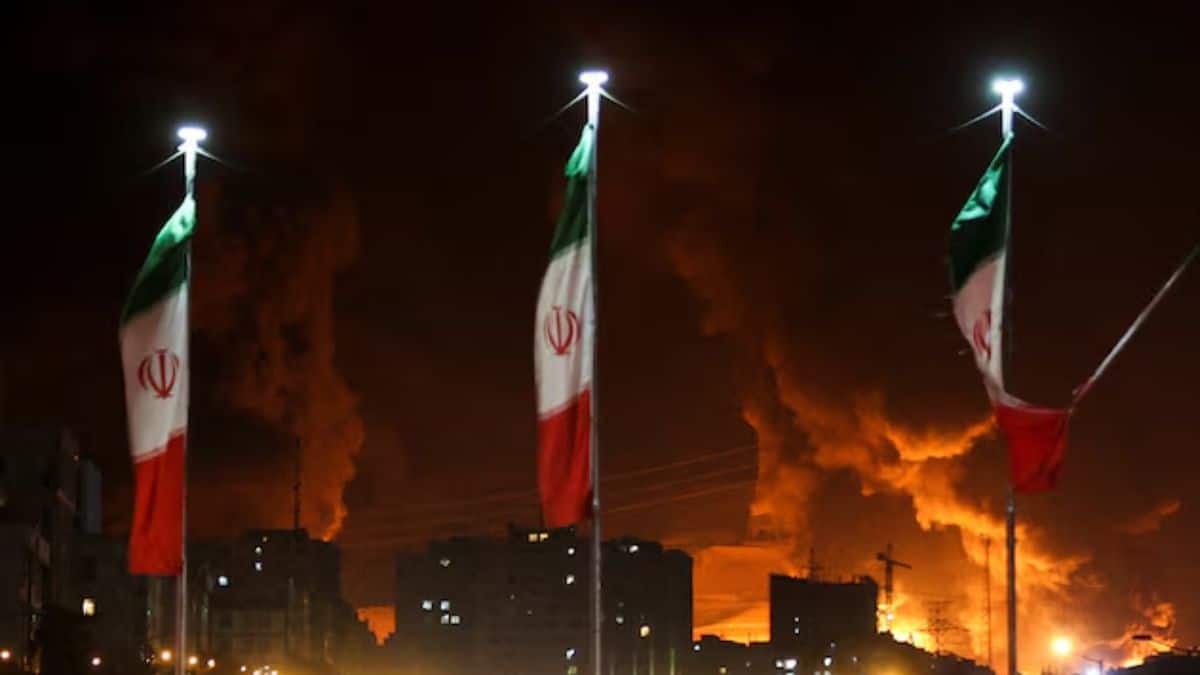
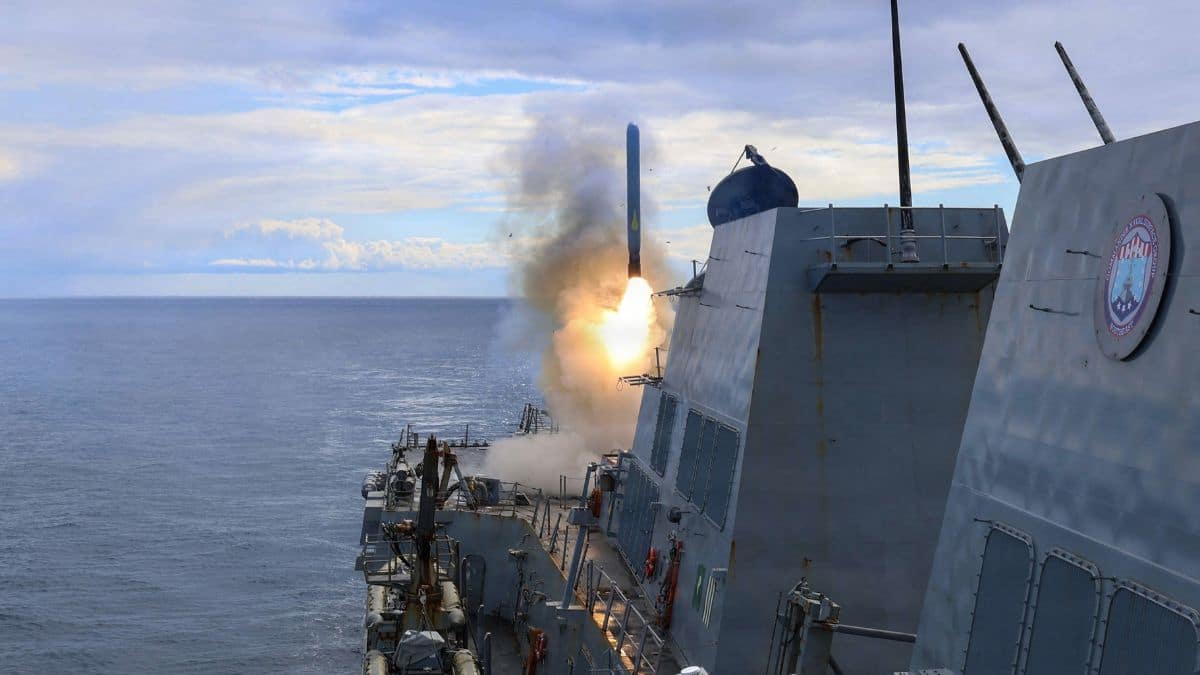
The rockets launch, the headlines scream, and within minutes, the lawyers start typing. It’s a cycle we've seen under every administration for decades. When the U.S. military strikes targets in or related to Iran, a fierce debate about the Constitution and the War Powers Resolution of 1973 inevitably follows. Critics point to Article I, Section 8, which says Congress has the power to declare war. They’re right. But the President points to Article II, which names the Commander in Chief and grants the power to defend the nation. They’re also right, at least in their own eyes.
Here is the uncomfortable truth. The "legality" of an attack on Iran is often a secondary concern to the occupant of the Oval Office. National security interests and political optics almost always override the finer points of international law or even domestic statutes. If you’re looking for a clear-cut legal boundary that a President won't cross, you’re looking for something that hasn't existed in practice since 1941.
The War Powers Loophole and the Self Defense Shield
Every time a President orders a strike without a formal declaration of war, they rely on a very specific set of justifications. Usually, it's the "imminent threat" argument. Under the War Powers Resolution, the President can send troops into action only after a declaration of war, specific statutory authorization, or a national emergency created by an attack upon the United States.
The problem is the definition of "attack."
Modern administrations have stretched this to include preemptive strikes. If the Pentagon claims an Iranian general or a proxy militia is planning something, the President claims the legal authority to hit first. We saw this clearly with the 2020 strike on Qasem Soleimani. The administration argued the strike was a defensive measure to prevent future attacks. Whether that threat was truly "imminent" in the way international law defines it—meaning it's instant, overwhelming, and leaves no choice of means—is usually a matter of debate long after the smoke has cleared.
The 2001 Authorization for Use of Military Force (AUMF) is another favorite tool. Originally intended to target those responsible for 9/11, it has been used to justify operations in over 20 countries. While it’s a stretch to apply a 25-year-old resolution against Al-Qaeda to modern-day Iranian interests, lawyers in the executive branch are remarkably good at finding creative connections.
Why Congress Rarely Steps In
You might wonder why Congress doesn't just pull the plug. They have the power of the purse. They can pass a resolution telling the President to stop. But they almost never do.
The political reality is that many members of Congress prefer the President to take the heat for military actions. If a strike goes well, they can praise the decisiveness. If it goes poorly, they can blame "executive overreach" without ever having had to cast a difficult vote themselves. This creates a vacuum of accountability.
Even when Congress does try to act, the President has the veto. Overriding a veto requires a two-thirds majority in both chambers. In our current polarized environment, getting that kind of consensus on a sensitive foreign policy issue is nearly impossible. Presidents know this. They know that as long as they can keep a third of one chamber on their side, they can effectively ignore any legislative attempt to reign in their military powers.
The Role of International Law in a Unipolar World
Internationally, the United Nations Charter is the supposed gold standard. Article 2(4) prohibits the threat or use of force against the territorial integrity or political independence of any state. There are only two exceptions: a UN Security Council authorization or self-defense under Article 51.
Does the U.S. care? Sometimes.
When it suits the mission, the State Department will release lengthy memos explaining how a strike aligns with international norms. But when those norms get in the way of a perceived strategic necessity, the U.S. often pivots to "exceptionalism." The argument becomes that the global order depends on U.S. strength, and therefore, U.S. actions are inherently stabilizing, even if they technically skirt the letter of the law.
Iran knows this. They play the same game. They use "gray zone" tactics—militias, cyberattacks, and maritime harassment—to stay just below the threshold that would trigger a full-scale legal justification for war, while still achieving their goals. It’s a dangerous dance where the law is a prop, not a boundary.
Executive Branch Lawyers are the Real Gatekeepers
Inside the White House, the Office of Legal Counsel (OLC) writes the memos that give the President "legal cover." These aren't impartial judges. They are lawyers working for the executive branch. Their job is to find a legal path for the President's desired policy.
If the President wants to strike an Iranian drone facility, the OLC will find a way to frame it as a "limited" engagement that doesn't rise to the level of "war" in the constitutional sense. They argue that because there are no boots on the ground or because the risk of escalation is low, the President doesn't need Congressional approval. It’s a circular logic that has slowly eroded the legislative branch’s role in foreign policy.
Common Misconceptions About Presidential Power
- The "Declare War" Clause: Many think the President can't fight without a declaration. In reality, the U.S. hasn't declared war since WWII, yet we’ve fought in Korea, Vietnam, Iraq, and Afghanistan.
- The 60-Day Clock: The War Powers Resolution says the President has 60 days to get approval after starting hostilities. Presidents often argue the clock hasn't started because the situation isn't "hostilities" yet.
- The Supreme Court: People think the Court will step in. They won't. The Supreme Court almost always views foreign policy as a "political question" and refuses to hear cases that would pit them against the Commander in Chief.
What This Means for Future Conflicts
We have to stop expecting the law to be the primary deterrent for military action against Iran. The law is a tool of justification, not a barrier to entry. Whether the President is a hawk or a dove, the institutional weight of the presidency pushes toward more power, not less.
If you want to see if an attack is coming, don't look at the legal memos. Look at the carrier strike group deployments. Look at the rhetoric coming out of the Pentagon. Look at the domestic political pressure the President is facing. Those are the real indicators.
The legal framework is essentially a post-game analysis. It provides the language for the Sunday morning talk shows and the history books, but it rarely changes the trajectory of a missile. Until Congress is willing to risk political capital to reclaim its constitutional role, the President's "illegal" strikes will continue to be perfectly "legal" in the only way that seems to matter in Washington: they happen, and nobody stops them.
Pay attention to the AUMF repeal efforts in the Senate. If those fail or get watered down, it's a green light for any President to keep using the same old justifications for new conflicts. Watch the budget hearings for the Department of State versus the Department of Defense. When the diplomacy budget shrinks and the "contingency fund" grows, the legal arguments for peace lose their teeth.
Keep your eye on the War Powers Act amendments currently being debated. If you want to change how this works, that is the only lever left that hasn't been completely rusted over by decades of disuse.