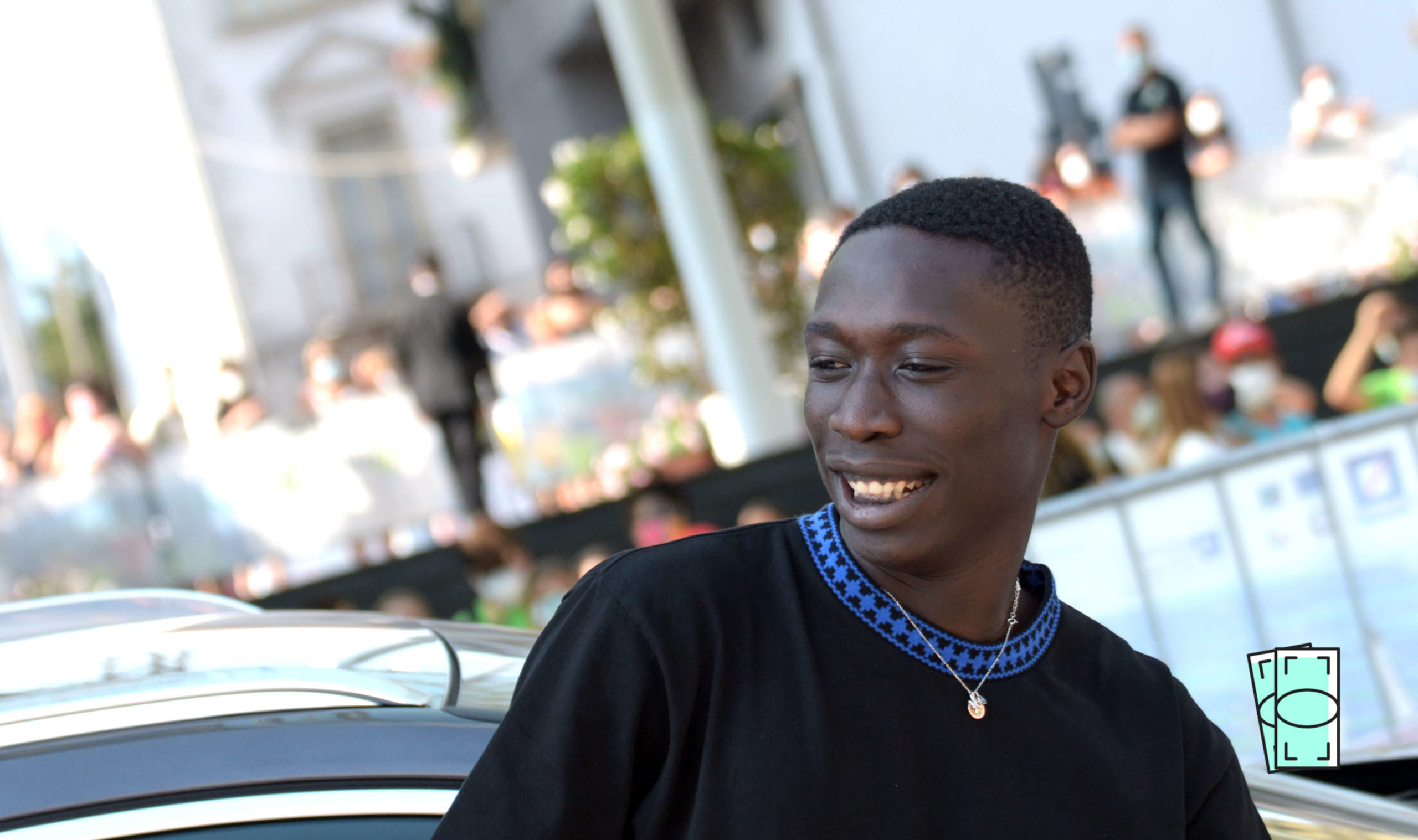
The persistent rumors of a $6.6 billion valuation or "deal" surrounding TikTok sensation Khaby Lame represent a fascinating case study in how digital fame is often confused with corporate equity. To be clear, there is no verified public record of a single $6.6 billion transaction, nor does Lame personally hold a net worth of that magnitude. What we are actually seeing is the collision of hyper-viral social media metrics with the speculative math of the venture capital world. When onlookers see a creator with over 160 million followers, they stop seeing a person and start seeing a platform. They begin to apply software-as-a-service multipliers to a human being, and that is where the financial logic begins to fracture.
The reality of Lame’s business empire is impressive, but it functions on the traditional rails of high-end endorsements and content production rather than the valuation of a unicorn tech company. He is a master of the silent reaction, a universal language that has secured him massive contracts with brands like Hugo Boss and Binance. However, the $6.6 billion figure frequently cited in speculative circles is more of a reflection of the "creator economy" hype cycle than it is a reflection of his bank balance or any specific acquisition.
The Mechanics of Social Arbitrage
Khaby Lame’s rise was not an accident of the algorithm alone. He tapped into a specific form of social arbitrage. By reacting to over-complicated "life hacks" with simple, silent logic, he became the ultimate Everyman. From a business perspective, this lowered his production costs to near zero while maximizing his reach across every linguistic barrier on the planet.
Most creators hit a ceiling because their content is tied to a specific language or cultural context. Lame bypassed this entirely. When a creator can reach a billion people without saying a word, the theoretical "lifetime value" of that creator becomes a number that makes investors lose their minds. This is the root of the multi-billion dollar speculation. If you view Lame as a media network rather than a person, you can squint and see a massive valuation. But media networks have overhead, diversified assets, and proprietary technology. A creator, no matter how famous, is still a single point of failure.
Why the Billion Dollar Narrative is Dangerous
The danger in floating $6.6 billion figures is that it sets an impossible standard for the rest of the industry. It suggests that "influencing" has evolved into "institutionalized scale" in a way that the current market cannot actually support. Most of the wealth in the creator space is still held by the platforms—TikTok, Instagram, and YouTube—not the individuals.
The Platform Dependency Trap
Lame’s business is built on rented land. If TikTok were to disappear tomorrow, or if the algorithm shifted away from short-form reactions, the "valuation" of his brand would plummet instantly. This is the primary reason why serious analysts remain skeptical of billion-dollar valuations for individual creators. Unlike a company like Disney, which owns a library of intellectual property that exists independently of any one distribution channel, a creator is often inseparable from the feed.
- Platform Risk: The constant threat of regulatory bans or algorithm changes.
- Key Man Risk: If the creator stops posting, the business ceases to exist.
- Monetization Caps: There is only so much "ad space" a single human face can sell before the audience reaches fatigue.
Moving Beyond the Hype
To understand the actual economic impact of a star like Khaby Lame, we have to look at his shift from content creator to brand entity. He isn't just taking checks for posts anymore; he is moving into the territory of equity stakes and creative direction. This is the "Jay-Z Model" of business. You don't just promote the champagne; you own the brand.
Lame’s partnership with Hugo Boss, for example, went beyond a simple photo shoot. It involved co-designed capsules and a long-term presence in their global marketing strategy. This is where the real money lives—in the transition from a service provider (the influencer) to a capital owner (the partner). But even with the most lucrative equity deals in the world, hitting a $6.6 billion mark would require Lame to own a company with the scale of a mid-sized global bank or a major airline.
The Math of Influence
Let’s look at the numbers without the rose-tinted glasses. For a person to be "worth" billions, they must generate hundreds of millions in annual profit. While Lame is reportedly earning seven figures per sponsored post, the math doesn't bridge the gap to a multi-billion dollar valuation unless there is a massive, scalable product involved—think Kim Kardashian’s Skims or Rihanna’s Fenty. Without a physical product or a proprietary software platform, Lame is a high-earning individual, not a multi-billion dollar conglomerate.
The Future of Creator Capital
The conversation shouldn't be about whether one man is worth $6 billion. It should be about how the financial world is trying to commodify human attention. We are seeing the birth of a new asset class, and Khaby Lame is the poster child for its potential and its volatility. Investors are desperate to find a way to "exit" a creator investment, but you can't sell shares in a person’s personality on the New York Stock Exchange—at least not yet.
The obsession with these inflated figures distracts from the legitimate, hard-earned success Lame has achieved. He transitioned from a laid-off factory worker in Italy to a global icon in less than three years. That story is powerful enough without the need for manufactured financial milestones that don't hold up under professional scrutiny.
The next phase for Lame, and those at his level, is the construction of "dark stores" and private labels that use their reach to bypass traditional retail. When Lame can launch a logistics company or a clothing line that rivals Zara purely through his own distribution channel, we can start talking about billions. Until then, we are looking at a very successful entertainer with a very talented PR team.
Stop looking at the follower count as a bank balance. Start looking at the ownership of the underlying assets. If you want to know what Khaby Lame is truly worth, look at who owns the copyright to his videos and who owns the trademarks on his likeness. That is where the power sits. The rest is just noise for the investors.