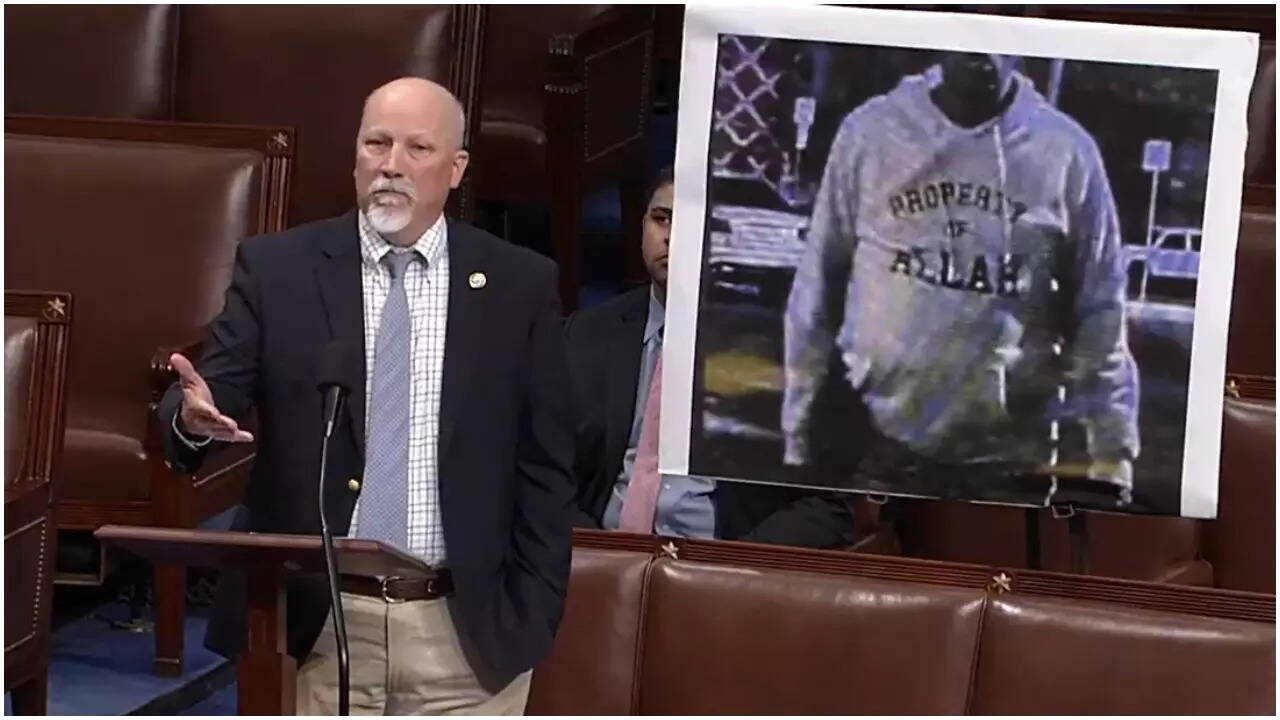
The collision between franchised physical infrastructure and polarized political campaigning creates a high-stakes friction point where the cost of brand association often outweighs the benefit of local engagement. When a high-profile political figure—specifically one previously expelled from a competing hospitality chain like Waffle House—attempts to utilize an IHOP location for campaign visibility, the resulting conflict is not merely a public relations "he-said-she-said." It is a structural failure of Permissive Use vs. Brand Governance. This analysis deconstructs the mechanisms of private property rights, the fragility of the "Third Place" concept in a fractured electorate, and the strategic imperative for corporations to maintain a clinical distance from fringe political actors to protect long-term enterprise value.
The Infrastructure of Exclusion: Why Waffle House Set the Precedent
The initial banning of a political candidate from Waffle House establishes a baseline for Risk-Adjusted Property Management. In the hospitality sector, the legal right to refuse service or trespass an individual is predicated on the maintenance of "Safety and Order." When a candidate’s presence consistently results in logistical bottlenecks, security costs, or the alienation of the core customer demographic, the business undergoes a shift from a profit center to a liability zone.
Waffle House’s decision to ban the candidate was likely a calculated response to the Crowd Density Variable. In high-turnover, low-margin environments, any event that slows the "table turn" rate (the time it takes for a party to eat and leave) directly degrades the store's EBITA. Political rallies in confined spaces represent a net loss in operational efficiency. By enacting a formal ban, Waffle House effectively offloaded the political liability, forcing the candidate to seek "Brand Displacement"—the attempt to leverage a competitor's physical space to regain lost social capital.
The IHOP Response: Deconstructing the Denial Mechanism
The subsequent event at an IHOP location, where the candidate claimed an "invitation" that the corporate entity later denied, highlights the Agency Gap inherent in franchise models. To understand the breakdown, one must examine the hierarchy of corporate communication:
- The Franchisee/Manager Layer: Local operators often prioritize hyper-local community relations. If a manager verbally permits a "meet and greet," they are acting on a micro-tactical level, often without considering the macro-brand implications.
- The Corporate Shield: Dine Brands Global (IHOP’s parent company) operates on a "Neutrality-as-Default" strategy. Any association with a "far-right" or "fringe" label triggers a defensive protocol.
- The Disavowal Loop: The denial issued by IHOP serves to re-establish the boundary of the Private Public Square. By stating they did not invite the candidate, the corporation resets its neutral status, effectively nullifying any perceived endorsement by the local operator.
The candidate's strategy relies on Assumed Legitimacy. By standing inside a recognized national brand, the candidate attempts to borrow the brand’s "middle-America" credibility. When the brand pushes back, the candidate can then pivot to a "Persecution Narrative," which is a high-yield currency in fringe political circles. This creates a zero-sum game: the brand loses if the event happens (alienating half the country) and "loses" in the eyes of the candidate's base if they deny it.
The Economic Cost of Political Friction
Corporate neutrality is not a moral stance; it is a Capital Preservation Strategy. The financial impact of becoming a "political flashpoint" can be quantified through three primary vectors:
The Security Surcharge
Hosting a controversial figure necessitates an immediate increase in physical security. This includes crowd control, potential protest management, and the protection of the physical plant (windows, furniture, kitchen equipment). For a business like IHOP, which operates on high volume and thin margins, the cost of an extra two security guards for four hours can wipe out the entire day’s profit for that unit.
Customer Churn and Brand Dilution
A restaurant’s value proposition is built on being a "neutral third space." When a brand becomes associated with a specific ideology, it experiences Demographic Narrowing. If 40% of a customer base feels uncomfortable or unwelcome due to the presence of a polarizing figure, the Lifetime Value (LTV) of those customers drops to zero. Replacing that lost LTV is significantly more expensive than the one-time publicity gained from a campaign stop.
Operational Parity and the Labor Variable
Employee retention in the hospitality sector is already precarious. Forcing staff to operate in a high-tension political environment increases "Emotional Labor" costs. If staff feel unsafe or ideologically opposed to the event they are forced to facilitate, the risk of walk-outs or decreased service quality rises. This degrades the Service-Profit Chain, where internal service quality drives external customer satisfaction.
Property Rights vs. First Amendment Misconceptions
A recurring point of friction in these disputes is the fundamental misunderstanding of "Free Speech" in commercial spaces. Political candidates often frame a business's refusal to host them as a violation of their rights. However, under the Pruneyard Doctrine and subsequent legal interpretations, private property owners (especially in the context of individual restaurant units vs. large shopping malls) retain the absolute right to curate the activities on their premises.
The denial of the invitation is a legal exercise of Exclusionary Rights. In the absence of a formal contract or lease agreement for the space, a verbal "invite" from a low-level employee does not constitute a binding corporate endorsement. This legal reality allows corporations to maintain a "Fail-Safe" mechanism; they can always revert to the "Policy of Neutrality" to override local-level decisions that threaten the national brand’s equilibrium.
The Strategy of the Non-Response
The most effective corporate response to political encroachment is the Sterile Disavowal. By using clinical, non-emotive language, a brand avoids feeding the "Outrage Cycle."
- Vague Statements (Ineffective): "We love all our customers and hope everyone can just get along." (This invites further debate).
- Structural Disavowal (Effective): "This location is a franchised entity. Corporate policy prohibits the use of our facilities for partisan political campaigning. No formal invitation was extended by the brand."
This second approach removes the "personality" from the conflict. It shifts the blame from a person to a "Policy," which is much harder for a political candidate to attack effectively. It also signals to shareholders that the management team is focused on operational stability rather than social commentary.
Strategic Forecast: The Rise of the "Gated" Brand
As political polarization intensifies, we will see a shift toward Proactive Brand Gating. National chains will likely integrate "No-Campaign" clauses more aggressively into their franchise agreements. These clauses will mandate:
- Pre-Approval for Public Events: Any event involving a public official or candidate above a certain profile must be cleared by regional brand protection teams.
- Indemnity Clauses: Franchisees who allow unauthorized political events may be held financially liable for any subsequent brand damage or drop in regional sales.
- Standardized Trespass Protocols: Uniform training for managers on how to politely but firmly decline requests for "impromptu" campaign stops.
The goal is to move the brand into a "Utility" space—like a power company or a post office—where the service is so standardized and neutral that it becomes invisible to political discourse.
The tactical move for any hospitality brand facing similar encroachment is the Immediate Decoupling. The moment a candidate claims an association, the brand must issue a technical correction that focuses on the violation of "Standard Operating Procedures" rather than the candidate's platform. By framing the issue as a breach of internal logistics and corporate governance, the brand preserves its broad-market appeal and avoids the trap of the culture war.
Failure to execute this decoupling results in Permanent Brand Tagging, where the restaurant is no longer a place to get breakfast, but a "Far-Right IHOP" or a "Progressive Starbucks." In a fragmented economy, the only winning move for a mass-market brand is to remain aggressively, boringly neutral.