India’s defense procurement is undergoing a structural realignment that moves beyond simple supplier switching; it is an aggressive hedging strategy against the systemic fragility of the Russian defense industrial complex. While the recent SIPRI data highlights a 33% drop in Russian arms imports to India between 2014-18 and 2019-23, the underlying shift is defined by a transition from "buyer-seller" dynamics to "co-development" imperatives. This pivot is necessitated by the convergence of Russian manufacturing bottlenecks, Western technological superiority in high-end sensors, and India’s internal mandate for strategic autonomy.
The Triple-Constraint Framework of Indian Defense
The Indian Ministry of Defence (MoD) currently operates under a triple-constraint framework that dictates every major procurement decision. To understand why France and the United States are gaining ground, one must analyze these three pillars:
- Supply Chain Resiliency: The conflict in Ukraine has diverted Russian internal production toward domestic replenishment, creating a "parts famine" for foreign operators of Sukhoi and MiG platforms. India can no longer risk a procurement strategy that relies on a single point of failure.
- Technological Asymmetry: In the domains of Electronic Warfare (EW), Active Electronically Scanned Array (AESA) radars, and high-bypass turbofan engines, Russian hardware has hit a developmental plateau. Western platforms offer a higher "mean time between failures" (MTBF) and superior data-link integration.
- Geopolitical Arbitrage: By increasing spend with NATO-aligned nations, India secures diplomatic leverage in Washington and Paris, effectively insulating itself from potential CAATSA (Countering America's Adversaries Through Sanctions Act) blowback while maintaining its "non-aligned" status.
The Russian Decline Mechanism
The erosion of Russia’s market share in India—dropping to approximately 36% of total imports—is not a fluke of policy but a result of fundamental economic and technical friction. Russian defense exports have traditionally relied on low-cost, high-volume production of ruggedized platforms. However, the modernization of the Indian Air Force (IAF) requires precision-guided munitions and stealth characteristics that the Russian Su-57 program has struggled to deliver at scale.
The failure of the FGFA (Fifth Generation Fighter Aircraft) joint venture served as the primary catalyst for this divorce. India’s withdrawal from the project signaled a loss of confidence in Russian stealth engineering and sensor fusion. Consequently, the capital that would have been locked into Russian long-term contracts has been liquidated and reallocated toward the Rafale ecosystem and the potential procurement of MQ-9B SeaGuardian drones.
The French Ascendance and the Sovereignty Premium
France has emerged as India’s second-largest supplier because it offers something neither Russia nor the U.S. can fully provide: high-tech weaponry with zero political strings attached. Unlike the U.S., which often ties equipment sales to End-Use Monitoring (EUM) agreements or human rights benchmarks, France treats defense as a purely commercial and strategic transaction.
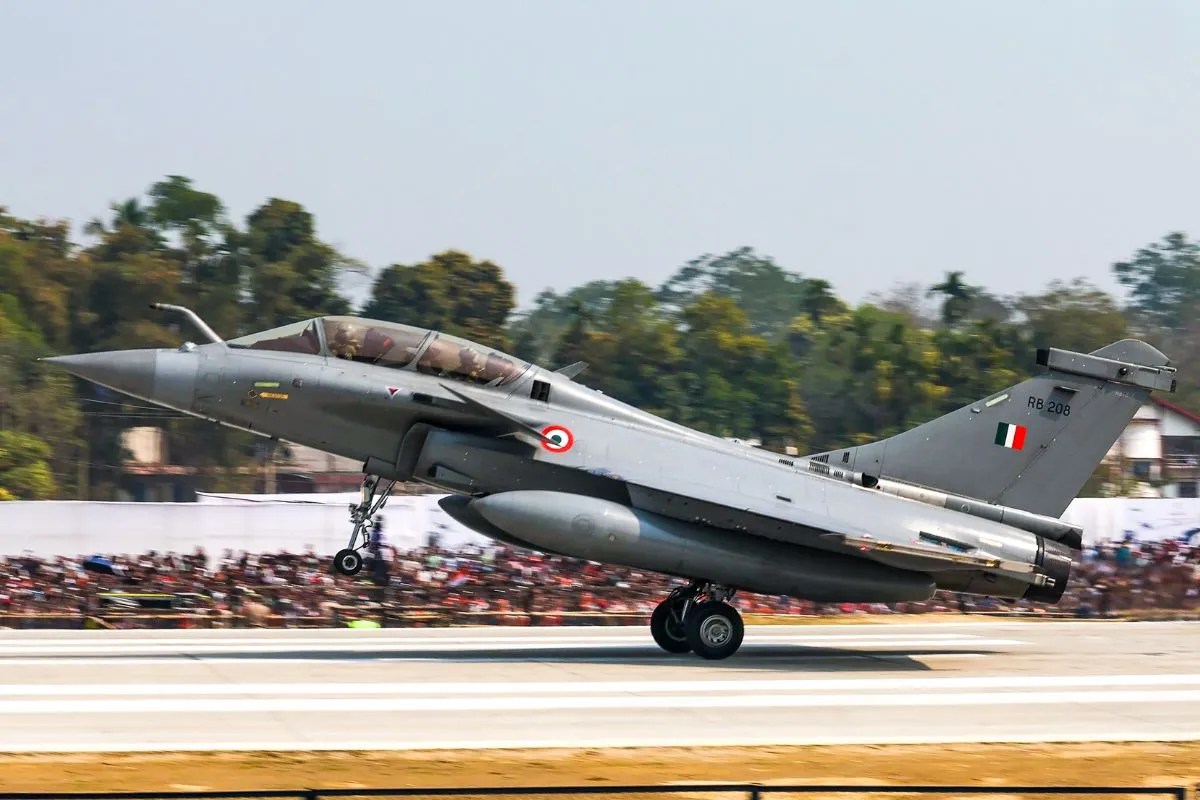
The procurement of 36 Rafale jets was not merely an acquisition of airframes; it was an acquisition of a nuclear-capable delivery system that operates outside the American sphere of influence. The "French Model" succeeds in the Indian market because:
- Interoperability: French systems are designed to be "plug-and-play" with India’s existing diverse fleet.
- IP Transfer: Dassault and Safran have shown greater flexibility in localizing manufacturing components under the 'Make in India' initiative compared to the rigid proprietary silos of Lockheed Martin or Boeing.
- Strategic Silence: France rarely comments on India’s internal security policies, making them a "frictionless" partner for the long-term lifecycle of defense platforms.
The American Gateway: Engines and Undersea Warfare
The relationship with the United States is maturing through the iCET (Initiative on Critical and Emerging Technology) framework. While the U.S. is not yet the primary supplier of platforms, it is becoming the primary supplier of "core enablers."
The deal for GE F414 jet engines to power the Tejas Mk2 represents a historic shift in U.S. policy. For decades, the U.S. guarded engine hot-section technology as the "crown jewels" of aerospace. The willingness to transfer 80% of this technology to India indicates that Washington now views a militarily capable India as a necessary counterweight to Chinese maritime expansion in the Indo-Pacific.
This creates a specific logical sequence for Indian procurement:
- Air: Shift to France for high-end strike capability and the U.S. for engine cores.
- Sea: Focus on U.S. and French cooperation for nuclear-powered attack submarines (SSNs) and anti-submarine warfare (ASW).
- Land: Aggressive indigenization through the ATAGS (Advanced Towed Artillery Gun System) to replace aging Russian field guns.
The Cost Function of Indigenization
The 'Atmanirbhar Bharat' (Self-Reliant India) policy acts as a domestic tariff on foreign imports. The MoD’s "Positive Indigenisation Lists" now prohibit the import of over 500 types of military equipment. This creates a temporary capability gap. While India develops its own AMCA (Advanced Medium Combat Aircraft), it must bridge the deficit with "stop-gap" imports.
The risk of this strategy is the "vintage gap." If domestic R&D (DRDO) fails to hit milestones, India faces a situation where its Russian fleet is retiring faster than its indigenous or Western replacements can be inducted. The current squadron strength of the IAF (roughly 31 against a sanctioned 42) is the physical manifestation of this risk.
Analyzing the 'China Factor' as a Procurement Driver
Every percentage point of shift in the SIPRI data is a reaction to the Line of Actual Control (LAC) tensions. The 2020 Galwan Valley clash accelerated the need for "emergency procurement" cycles. Russian hardware, which requires long lead times for spare parts, proved a liability during active standoffs. In contrast, the rapid deployment of the Rafale and the utilization of American P-8I Poseidon aircraft for high-altitude surveillance provided India with an immediate intelligence-surveillance-reconnaissance (ISR) edge.
India is now optimizing for "High-Endurance/Low-Latency" systems. This explains the pivot toward Israeli and American loitering munitions and drones. The Russian military-industrial complex is currently optimized for "High-Mass/Low-Precision" warfare, which is increasingly irrelevant in the Himalayan theater where precision and altitude performance are the only variables that matter.
The Structural Shift in Underwater Assets
One of the most critical, yet underreported, shifts is in the naval domain. Historically, India’s submarine fleet was a Russian monopoly (Kilo-class). The current Scorpene-class (Kalvari) program with France's Naval Group signifies a departure toward stealthier, diesel-electric boats equipped with Air-Independent Propulsion (AIP).
The strategic logic here is the "Silence Ratio." Russian submarines, while robust, are louder and more detectable by modern sonar arrays compared to the French Scorpene or the proposed German Type 214. As the People's Liberation Army Navy (PLAN) increases its presence in the Indian Ocean, the "detectability cost" of Russian hardware has become too high for the Indian Navy to bear.
Identification of Strategic Vulnerabilities
Despite the diversification, India faces a "legacy lock-in." Approximately 60-70% of India’s current defense inventory is of Russian origin. You cannot pivot a military of 1.4 million personnel overnight. The "tail" of logistics, maintenance, and training for S-400 missile systems and T-90 tanks will keep India tethered to Moscow for at least another two decades.
The challenge is managing the "Cannibalization Phase." As Russia struggles to export spares, India must establish domestic facilities to manufacture Russian components without Russian IP assistance—a process known as reverse engineering for maintenance. This is the ultimate test of the "Make in India" philosophy.
Tactical Reorientation: The 2030 Roadmap
To maintain a credible deterrent against a two-front threat (China and Pakistan), the strategic play for the next decade is not to find a "new Russia" but to build a "Modular Military."
- Priority 1: The Engine Bottleneck. Success hinges on the GE-414 localization. Without it, the indigenous Tejas program remains a decorative asset rather than a frontline fighter.
- Priority 2: Multi-Domain Integration. India must move away from platform-centric buying (buying a "tank" or a "ship") and toward network-centric buying. This favors U.S. and Israeli systems that excel in sensor fusion and real-time data sharing.
- Priority 3: The Attrition Buffer. India must stockpile critical munitions from multiple sources. Relying on French missiles for Russian planes (as seen with the integration of the Hammer missile on the LCA Tejas) is the new tactical norm.
The era of the "Mega-Deal" with a single superpower is dead. It has been replaced by a fragmented, high-precision acquisition model that prioritizes the software inside the machine over the machine itself. India is no longer just a "top importer"; it is becoming a sophisticated system integrator that uses its massive procurement budget as a weapon of diplomacy and an engine for domestic industrialization.