The smell of unburnt gasoline is a ghost. For generations, it was the scent of freedom, of Saturday mornings under a propped-up hood, and of the frantic, metallic heartbeat of the European commute. It is a scent that is currently being written out of the script.
Luca de Meo, the man steering the massive, rattling ship that is Renault, didn't just announce a business pivot when he committed the brand to a 100% electric lineup in Europe by 2030. He signed the death warrant for a century of muscle memory. Think about the grease-stained hands of a mechanic in Lyon or the rhythmic thrum of a diesel engine idling in a rainy Berlin alley. These are not just mechanical outputs. They are the background radiation of our lives.
But the radiation is fading.
The Ghost in the Assembly Line
Consider a hypothetical engineer named Marc. Marc has spent twenty-four years perfecting the tolerances of a cylinder head. He understands the violent, beautiful alchemy of controlled explosions. To Marc, an internal combustion engine (ICE) isn't just a part; it’s a living thing. When Renault announces that it will stop selling these "living things" in Europe in less than a decade, Marc’s world doesn't just change—it evaporates.
This is the invisible stake. It isn't just about carbon credits or meeting the stringent Euro 7 emissions standards that loom over the industry like a guillotine. It is about the radical retooling of human identity. Renault is betting its entire existence on the hope that we can fall in love with a hum instead of a roar.
The transition is brutal. To move from the complexity of an engine—with its thousands of moving parts, cooling jackets, and exhaust manifolds—to the stark, silent simplicity of an electric motor is a leap across a tectonic chasm. De Meo knows this. He isn't just fighting Volkswagen or Tesla; he is fighting the weight of history.
The Math of Survival
The numbers are cold, and they don't care about Marc’s nostalgia. The European Union has set the clock. By 2035, the sale of new petrol and diesel cars will be effectively banned across the bloc. Renault, once the king of the affordable hatchback, found itself caught in a pincer movement. On one side, high-end innovators were stealing the "cool" factor. On the other, the sheer cost of making a diesel engine "clean enough" for modern regulations was becoming a financial suicide note.
So, they accelerated.
By moving the goalpost to 2030, Renault is trying to outrun the law. It’s a gamble of staggering proportions. They are pouring billions into "ElectriCity"—a cluster of plants in northern France designed to churn out 400,000 electric vehicles a year. They are trying to prove that a French company can do "industrial" as well as the Germans and "software" as well as the Americans.
But there is a catch. A big one.
The 2030 deadline applies to Europe. For the rest of the world—the dusty roads of Brazil, the sprawling highways of India, the markets where charging stations are still a futuristic dream—the internal combustion engine will keep gasping for air. Renault will continue to sell gas-guzzlers elsewhere under their Dacia brand or through international partnerships. This creates a strange, bifurcated reality: a clean, silent Europe and a loud, smoking "everywhere else." It’s a corporate identity crisis played out on a global stage.
The Charging Anxiety is a Human Fear
We talk about "range anxiety" as if it’s a technical specification. It isn’t. It’s a primal fear of being stranded.
Imagine a family driving through the Massif Central in the dead of winter. The heaters are blasting. The kids are plugged into their tablets. The dashboard displays a "battery level low" warning. The anxiety is palpable. The transition isn't just about making the cars. It’s about the nervous system of the continent.
Renault knows this. They are trying to build more than a car; they are trying to build an ecosystem. They’ve launched Mobilize, a division that isn't about selling metal and rubber but about selling access to the grid. They are turning the battery—the most expensive part of the vehicle—into a service.
The Sound of the Future
In 2024, the Renault 5 E-Tech was the opening salvo. It is a nostalgic fever dream, a boxy, charming nod to the original 1972 city car. It’s an olive branch. It says, "We aren't taking your memories away; we’re just electrifying them."
The problem isn't the battery. It’s the soul.
When a Tesla flies past you on the autobahn, it’s a silent blur. It lacks the "theatrical" element of a Ferrari or even an old, clattery Twingo. Renault is desperately trying to inject personality into silence. They are working with electronic music pioneer Jean-Michel Jarre to design the "vocal chords" of their cars. Think about that: a car company hiring a synthesizer wizard to compose the sound of a vehicle moving at low speed to warn pedestrians.
We are no longer buying machines; we are buying digital compositions.
The Invisible Stakes of a Cobalt World
Let’s be honest about the cost. We are swapping the soot of the tailpipe for the scars of a mine.
The lithium-ion battery is the heart of Renault’s 2030 promise. But the story of that battery is written in the earth of the Congo and the salt flats of Chile. To be "clean" in Europe, we are shifting the burden of extraction elsewhere. Renault is trying to "circularize" its supply chain, opening a "Re-Factory" in Flins to recycle batteries and give older cars a second life. It’s an attempt at ethical survival.
But the question remains: Can a legacy giant, weighed down by labor unions, pension liabilities, and a century of "the old way," out-maneuver a software company that builds cars as an afterthought?
The End of the Gas-Station Hot Dog
Think about the gas station. It’s more than a refueling point. It’s a cultural hub, a sanctuary for long-haul drivers, a place where we stretch our legs and buy overpriced coffee.
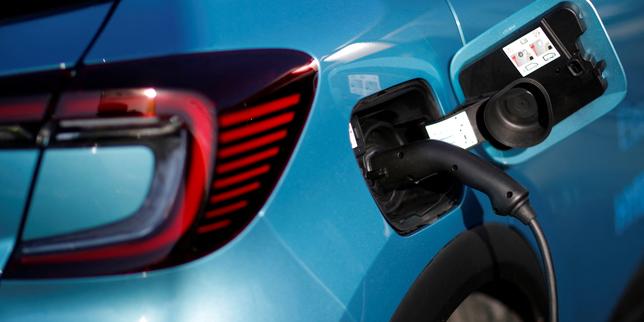
In a Renault-only-electric world, the gas station becomes a charging hub. You don't "fill up" in five minutes; you "dwell" for thirty. The architecture of our roads will change. The way we plan our vacations will shift. The spontaneous road trip—the "just drive until we hit the coast" philosophy—is being replaced by an algorithm that calculates charging stops based on temperature, elevation, and battery health.
Is it progress? Yes. Is it loss? Also, yes.
The Silent Road
Walking through a city in 2031, you might notice something eerie. The constant, low-frequency roar of the urban landscape will be gone. The birds will be louder. You will hear the sound of tires on asphalt, the wind against the glass, and the conversation of people on the sidewalk.
Renault’s gamble is that we will prefer this silence to the symphony of the piston. They are betting that the "Marc’s" of the world will find new purpose in winding copper coils instead of grinding valves. They are betting that we are ready to leave the 20th century behind, even if it means losing the scent of the ghost.
The last petrol Renault will roll off a line somewhere in the next few years. It will be sold to someone who doesn't realize they are buying a relic. They will drive it home, park it, and for a few years, it will feel normal. But then, the parts will get harder to find. The gas stations will start disappearing. One morning, they will turn the key—if cars even have keys then—and the engine will cough, sputter, and finally go quiet.
And in that silence, the future will have already arrived.
Would you like me to analyze the specific economic impact on Renault's French labor force as they move toward this 2030 goal?