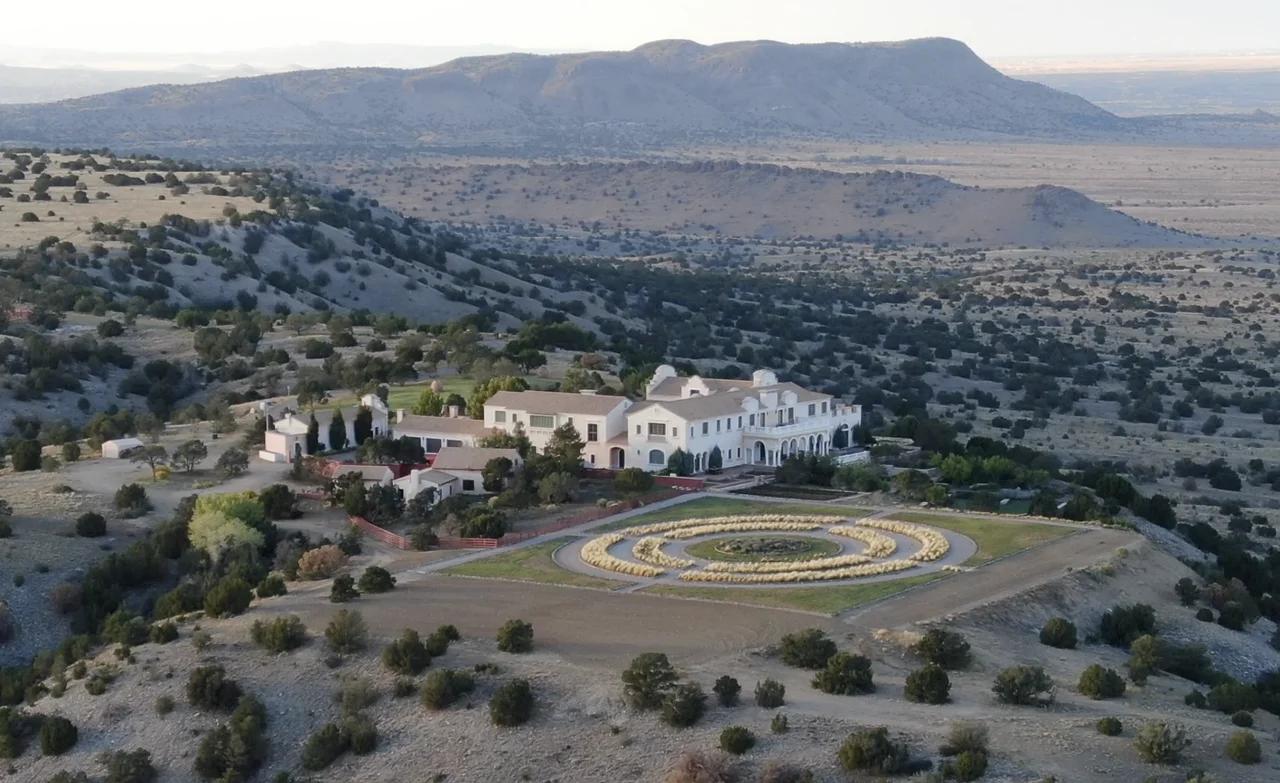
The scrubland of Santa Fe County holds a secret that is less about mystery and more about systemic negligence. For decades, Jeffrey Epstein utilized his Zorro Ranch—a 7,500-acre high-desert fortress—as a private sovereign state, operating with a level of impunity that suggests the local oversight wasn't just blind, but legally neutered. While recent scrutiny has finally turned toward the sprawling estate, the investigations arrive years after the digital and physical evidence has likely turned to dust. The real story isn't the salacious rumors of what happened behind the gates, but the specific legal and bureaucratic loopholes that allowed a convicted sex offender to maintain a massive base of operations in the American Southwest without a single meaningful zoning or law enforcement check.
The tragedy of the Zorro Ranch case lies in the timing. Law enforcement and state officials are now "scrutinizing" a ghost. By the time the New Mexico Attorney General’s office and local land commissioners began asking hard questions about the property’s use, the principal actors were dead or incarcerated, and the trail of logistical support had grown cold. This delay wasn't an accident. It was the result of a deliberate exploitation of New Mexico’s rural land codes and the strategic use of shell companies that obscured the true nature of the ranch's activities for nearly thirty years.
The Architecture of Impunity
Epstein didn't just buy land; he bought a vacuum. In 1993, when he purchased the initial acreage from a former governor, he stepped into a jurisdiction where wealth functions as a shield against transparency. The ranch is centered around a 30,000-square-foot mansion, but its true power lay in its infrastructure. It featured a private hangar, a runway, and a complex web of support buildings that operated outside the typical scrutiny applied to residential properties.
The local government's failure to monitor the property is a case study in regulatory capture. For years, the ranch benefited from agricultural tax valuations, a common tactic for the ultra-wealthy to minimize their footprint while maximizing their privacy. By claiming the land was for ranching, the owners kept the assessors at bay. No one checked if the "ranching" was actually a front for a global human trafficking node. The disparity between the property’s stated purpose and its actual use is a glaring indictment of the Santa Fe County valuation process.
The Shell Company Maze
At the heart of the Zorro Ranch operation was Cypress 13 LLC, a corporate entity that served as the legal owner of the estate. This wasn't merely for tax benefits. The use of an LLC allowed the property to interface with local contractors, utility companies, and state agencies without Epstein's name appearing on a single routine permit application.
- Privacy through anonymity: Neighbors knew "the billionaire" lived there, but the paper trail led to a New York office building.
- Liability shifting: Any legal disputes regarding land use or construction were funneled through corporate lawyers, keeping the principal insulated from personal deposition.
- Asset protection: By the time victims attempted to seek restitution, the ownership structure was so convoluted that tying the physical ranch to the crimes committed elsewhere became a decade-long legal marathon.
The paperwork reveals a pattern of "minor" amendments to building permits that, when viewed in totality, transformed a residence into an industrial-scale compound. These weren't mistakes. They were calculated moves to build an environment where people could be moved in and out via private aircraft without ever passing through a public terminal or a monitored road.
The Failure of the New Mexico Land Office
The most damning evidence of institutional failure rests with the New Mexico State Land Office. A portion of the Zorro Ranch footprint involved state-leased land. These leases come with specific stipulations regarding "good character" and lawful use. Yet, even after Epstein’s 2008 conviction in Florida, his company was allowed to maintain its standing with the state.
This raises a fundamental question about the vetting process for state contractors and lessees. If a registered sex offender can maintain a sweetheart deal with a state government for a decade after his crimes become public knowledge, the system is broken by design. The State Land Office only moved to cancel the leases in 2019, following Epstein’s final arrest and subsequent death. This wasn't proactive governance; it was reactive PR.
The internal communications within the Land Office during those years show a startling lack of curiosity. There were no field inspections that flagged the unusual security measures or the lack of actual ranching activity on the leased parcels. The state essentially acted as a silent partner in the estate’s maintenance.
The Logistics of Displacement
To understand how Zorro Ranch functioned, one must look at the transportation logs. The ranch wasn't an island; it was a destination. The proximity to the Belen and Moriarty airports allowed for a "shadow logistics" network.
Investigative leads suggest that the ranch served as a transit point. Victims were often moved between the New York townhouse, the US Virgin Islands, and the New Mexico desert. The desert provided something the other locations couldn't: total isolation. In Manhattan, there are cameras and doormen. In the Caribbean, there are boat captains and local staff. In the high desert of New Mexico, there is only the wind and the fence line.
The local workforce employed at the ranch—the cleaners, the groundskeepers, the security detail—occupied a precarious position. Many were hired through third-party agencies, further distancing Epstein from the people who saw the day-to-day operations. This "contractor curtain" ensured that no single employee saw the full picture, preventing the kind of whistleblowing that might have triggered an earlier investigation.
The New Mexico Legal Loophole
New Mexico’s laws regarding civil asset forfeiture and the statute of limitations for certain crimes also played into the hands of the Zorro Ranch operators. Unlike other states that have expanded the window for survivors to file suit, New Mexico remained a relatively "safe" harbor for those looking to wait out their legal liabilities.
Furthermore, the state’s historical hands-off approach to large rural estates meant that as long as the gates were closed and the taxes (however minimal) were paid, the authorities had no reason to knock. This culture of "western independence" was weaponized. It was used to frame any inquiry into the ranch as an overreach of government power, rather than a necessary check on potential criminal activity.
A Comparative Failure of Oversight
| Jurisdiction | Oversight Mechanism | Outcome at Zorro Ranch |
|---|---|---|
| County Zoning | Building Permits | Massive unmonitored expansion |
| State Land Office | Lease Compliance | 11 years of post-conviction lease renewals |
| Local Police | Welfare Checks | Zero documented entries based on suspicion |
| Tax Assessor | Agricultural Status | Significant tax avoidance on a luxury estate |
The table above illustrates a total collapse of the "Swiss Cheese" model of risk management. Usually, if one layer of oversight fails, another catches the problem. In the case of Zorro Ranch, every single hole aligned perfectly.
The Evidence in the Dust
Current efforts to "get to the bottom" of what happened at Zorro Ranch are largely performative. The property has been sold, the contents have been cleared, and the digital servers that likely housed years of surveillance footage are gone. The "scrutiny" being applied now is an autopsy of a crime scene that has been scrubbed by experts.
The New Mexico Attorney General’s pursuit of the Epstein estate is a necessary step for public optics, but it faces a grim reality. The most valuable evidence in any trafficking case is the contemporaneous testimony of witnesses and the physical logs of movement. By waiting until 2019 and beyond to take the ranch seriously, the state allowed a generation of evidence to evaporate.
The focus should now shift toward the enablers. Who were the local lawyers who filed the Cypress 13 paperwork? Who were the contractors who installed the sophisticated surveillance and "panic" infrastructure? These individuals are still in New Mexico. They hold the keys to understanding how the ranch functioned as a cog in a much larger machine.
The Real Cost of Rural Isolation
The Zorro Ranch saga exposes a terrifying truth about the American West: it remains a place where enough money can buy a different set of laws. The "scrutiny" being discussed today is a day late and a dollar short. It serves as a warning, not a solution.
As the estate is repurposed or sold off, the infrastructure of the ranch remains—a sprawling monument to the fact that in the vastness of New Mexico, you don't need to hide if you can simply buy the ground everyone is standing on. The failure wasn't just in the ranch's walls, but in the statehouse and the county offices that allowed those walls to be built without question.
The next step for New Mexico isn't just investigating a dead man's ranch; it is a scorched-earth audit of how agricultural land status and state leases are granted to corporate entities that have no intention of farming or ranching. Without a fundamental change in how the state monitors its most isolated and expensive properties, the conditions that created the Zorro Ranch impunity will remain, waiting for the next buyer with a dark secret and a deep pocket.