The narrative is officially exhausted. You have read it in every trend piece from the New York Times to the local rag: "Music fans are craving authenticity." They claim listeners are "returning" to analog because they want a "tactile connection" to the art.
It is a lie.
Nobody is returning to 1974. What we are witnessing isn't a cultural shift toward deep listening; it is the commodification of shelf space. The "vinyl revival" is a triumph of interior design over acoustics. If you actually look at the data—not the feel-good PR from record store day—the picture gets ugly for the romanticists.
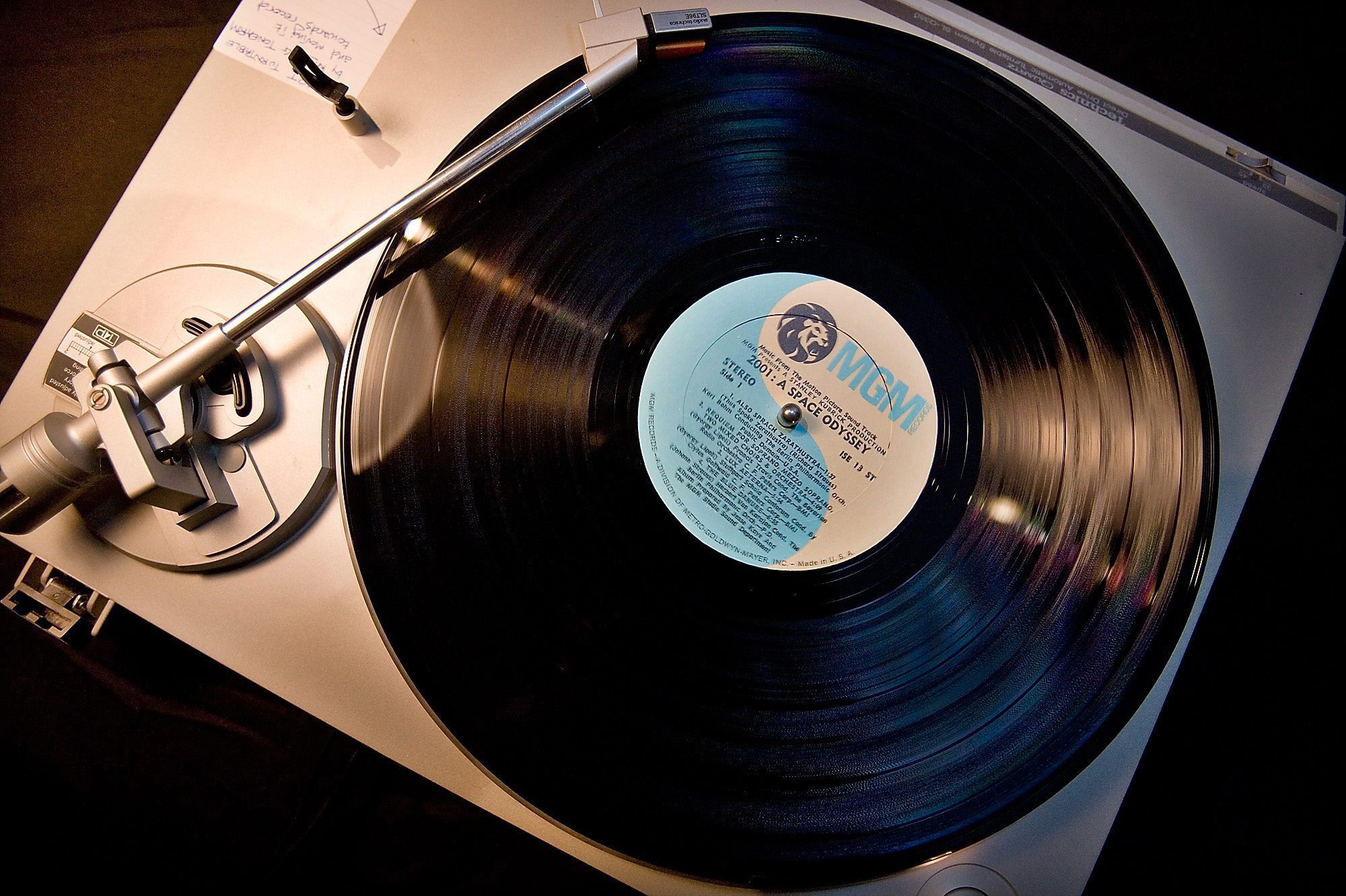
Luminate’s 2023 data dropped a bomb that the industry tried to bury: 50% of vinyl buyers do not own a record player. Read that again. Half of the people driving the "physical revolution" are buying expensive plastic circles to lean against a wall. They aren't listening. They are decorating.
The Myth of the Analog Warmth
Let’s dismantle the biggest technical fallacy in music: the idea that your new $35 pressing of a pop album sounds "better" or "warmer."
Unless you are buying AAA (all-analog) pressings—which are a tiny, expensive sliver of the market—you are listening to a high-resolution digital file that was shoved onto a piece of wax. Most modern records are mastered from digital sources. When you play them on a $120 suitcase turntable with a ceramic cartridge, you aren't getting "warmth." You are getting harmonic distortion and a frequency response that looks like a car crash.
If you want the best audio quality, you stay on digital. A lossless FLAC file or a Tidal MQA stream delivers a dynamic range that physical PVC cannot touch without significant surface noise.
$Dynamic Range_{Digital} \approx 96dB - 144dB$
$Dynamic Range_{Vinyl} \approx 60dB - 70dB$
We are watching a generation pay a 300% premium for an inferior technical format while pretending it’s a sophisticated choice. It’s not an audiophile movement. It’s a cosplay movement.
Physical Ownership Is a False Security
The "old-school" advocates love to bark about ownership. "They can’t take your records away if the internet goes down!"
Technically true. Also practically irrelevant. I’ve consulted for distribution firms that have seen the "ownership" craze spike, and the reality is that physical media is a liability masquerading as an asset.
A record collection is a heavy, fragile, temperature-sensitive anchor. It is the antithesis of how modern life functions. The "return" to physical is a reaction to the anxiety of the ephemeral, but it’s a hollow solution. You don't own the music; you own a license printed on a volatile polymer. If your house floods, your "ownership" evaporates. If you move cities, your "ownership" costs $2,000 in shipping fees.
The industry loves this. Why? Because they can sell you the same 1972 catalog every five years.
- Year 1: Remastered Digital.
- Year 3: 180g Heavyweight Vinyl.
- Year 5: 50th Anniversary "Splatter" Edition.
They are weaponizing nostalgia to fix the "problem" of infinite access. When everything is available for $10 a month, the product has no perceived value. By forcing you back to the "old ways," the labels are just re-inflating the price of a dead asset.
The Scarcity Trap
The most dangerous part of this "revival" is the manufactured scarcity. We have moved from the era of "Music for Everyone" to "Music for those who got the pre-order link at 9:00 AM."
The vinyl industry is currently a bottleneck. There are only a handful of aging pressing plants worldwide. Major labels (Universal, Sony, Warner) clog these plants with 500,000 copies of the latest superstar release in fifteen different colors.
This pushes the independent artists—the ones who actually need the physical revenue—to the back of a 10-month line. The "old-school way" is actually killing the diversity of the industry. It has turned music into a hype-cycle commodity, no different than a limited-edition sneaker drop.
People aren't asking: "Is this album good?"
They are asking: "Is the vinyl 'Target Exclusive' Red or 'Urban Outfitters' Clear?"
The Environmental Hypocrisy
You cannot claim to be a conscious consumer while hoarding PVC. Polyvinyl chloride is one of the most environmentally damaging plastics in existence. Its production involves chlorine chemistry that releases dioxins. Its disposal is a nightmare.
The digital "footprint" of streaming—often cited as a hidden cost—is real, but it scales with efficiency. Data centers are moving toward carbon neutrality. A piece of plastic shipped from a plant in the Czech Republic to a warehouse in Tennessee to a doorstep in Oregon is a carbon disaster.
But the "old-school" fans don't want to hear that. They want the "vibe." They want the Instagram post of the spinning platter.
Stop Buying Into the Romance
If you want to support an artist, buy a shirt. Go to a show. Subscribe to their Patreon.
If you want to hear the best version of the music, invest in a high-end DAC (Digital-to-Analog Converter) and a pair of open-back headphones.
Buying vinyl in 2026 is a hobby in logistics and interior design. It has almost nothing to do with the progression of music as an art form. The "return" to old ways isn't a sign of a maturing audience; it’s a sign of a stagnant one that has been convinced that "difficult" equals "better."
The needle isn't just in the groove. It’s stuck.
Stop pretending the crackle is soul. It’s just dirt.