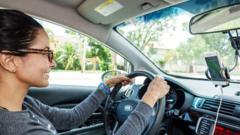
You’ve probably been there. It’s late, you’re standing on a dimly lit street corner, and you’re checking the license plate of the car pulling up while mentally rehearsing your "I'm meeting a friend" speech. For many women, ridesharing isn't just about getting from point A to point B; it’s a constant exercise in risk assessment. Uber finally acknowledged this reality by taking its Women Preferences feature nationwide this week.
This isn't just another minor app update. It’s a fundamental shift in how the platform handles the basic expectation of feeling safe. After a pilot program that started in five cities in August 2025 and grew to 60 by the end of that year, the option is now hitting every corner of the U.S. market.
How the Women Preferences Feature Actually Works
Uber isn't just giving you a checkbox. They’ve built three distinct ways to use this feature depending on how much you value your time versus your peace of mind. Honestly, it’s about time they made this simple.
- On-Demand Requests: When you go to book an UberX or similar ride, you can specifically select Women Drivers. If the app finds one nearby, you’re matched.
- The Preference Toggle: You can dive into your account settings and set a permanent preference for women drivers. This doesn't guarantee a match every time, but it tells the algorithm to prioritize those connections for you automatically.
- Uber Reserve: This is the heavy hitter for travelers. You can pre-book a ride and request a woman driver in advance. It offers the most certainty for those 4 a.m. airport runs.
If you’re a parent, there’s a massive win here too. Uber is extending this to Uber Teen accounts. In any city where teen accounts are active, guardians can set the preference so their kids are matched with women drivers. It adds a layer of reassurance for parents who aren't in the car themselves.
The Supply Problem Nobody Wants to Talk About
Here is the reality check: only about 20% of Uber drivers in the U.S. are women. I’ve seen this play out in real-time. If you’re in a city like New York, that number can drop even lower. This creates a massive "math problem" for the app.
If you select the women-only option, you might see a longer wait time. Uber’s own interface will tell you if the wait is getting ridiculous and give you the choice to switch back to a standard request. In busy urban centers, you might not notice much of a difference. But if you’re in a suburb at 2 a.m., don't expect a woman driver to be around the corner every time. It’s a preference, not a legal guarantee.
Legal Drama and the Discrimination Debate
Uber isn't doing this in a vacuum. The company is currently staring down thousands of lawsuits related to sexual assault and safety failures. This rollout is partly a response to that pressure. But in solving one problem, they’ve stepped into another.
Two male drivers in California have already filed a class-action lawsuit. Their argument? The feature is discriminatory because it gives female drivers access to the entire rider pool while cutting men out of a portion of it. They claim it violates the Unruh Civil Rights Act by reinforcing stereotypes. Uber’s stance is firm: this is a "business necessity" for safety. It’s a messy legal fight that could eventually decide if identity-based matching stays or goes.
Uber vs. Lyft in the Safety Race
If this sounds familiar, it’s because Lyft launched its own version, Women+Connect, back in 2024. But there’s a key difference you should know. Lyft’s version includes non-binary riders and drivers. Uber has opted to keep it strictly for those identifying as women.
Uber says they consulted with LGBTQ+ groups and decided this was the most effective way to manage the rollout, but it’s a point of friction for some users. For drivers, Uber typically relies on the gender listed on their driver's license. If you're a trans woman, your ability to use the feature might depend on whether your state documents reflect your identity.
Getting Started With Your Settings
If you want to try this out, don't wait until you're standing in the rain to find the button. Open your Uber app and check your Settings menu under Preferences. You can toggle the option on immediately.
Keep in mind that while this feature is a huge step forward, it works best when more women feel safe enough to drive for the platform. It’s a circular challenge. By giving women drivers the same power to choose female riders, Uber hopes to bring more women behind the wheel. Check your app today to see if the update has hit your specific region yet.