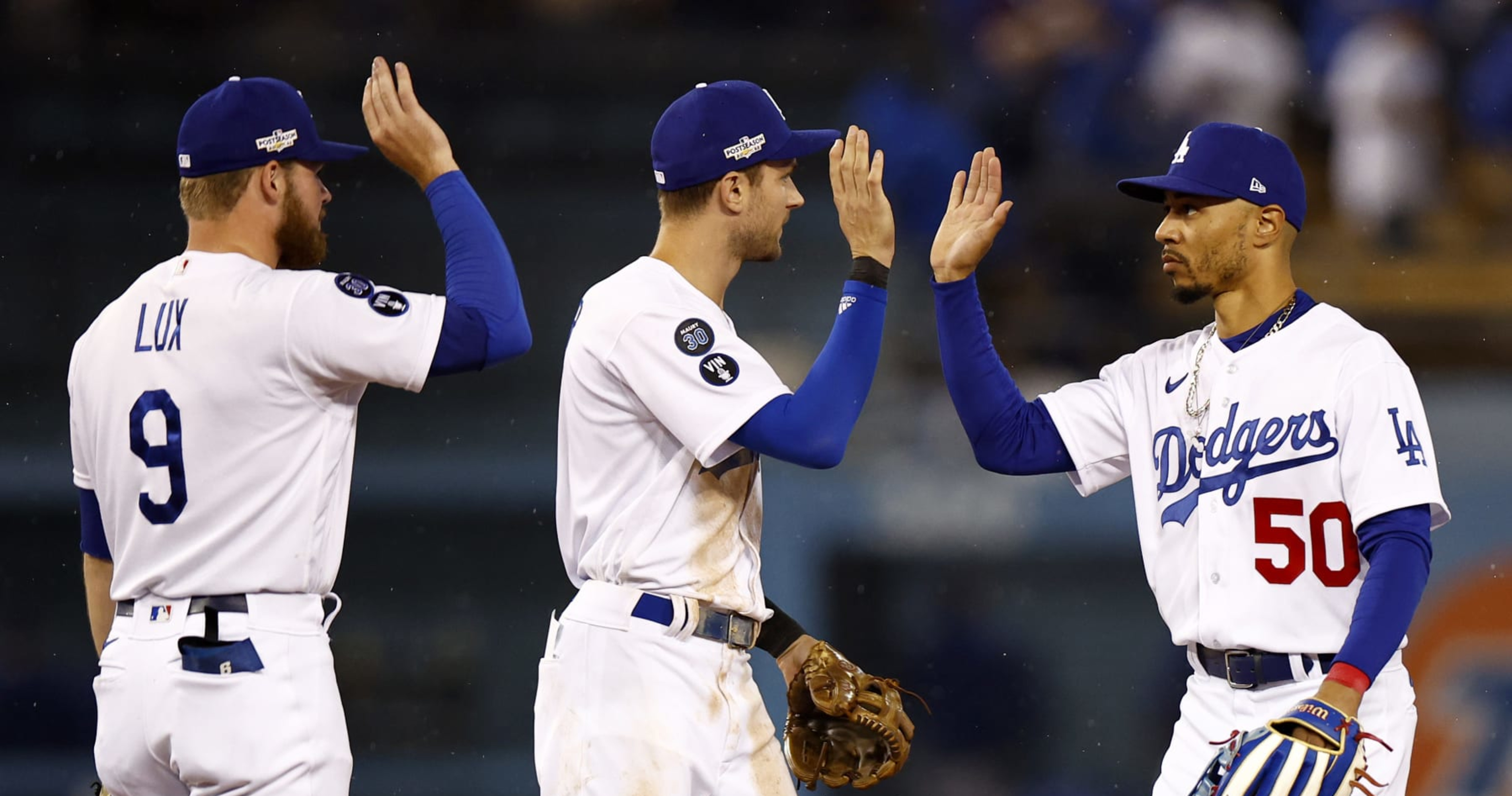
The Los Angeles Dodgers spent the last few years collecting starting pitchers like they were infinity stones. You remember the names. Max Scherzer, Trea Turner (as a throw-in), Tyler Glasnow, Yoshinobu Yamamoto, and the eventual Shohei Ohtani pitching return. It felt like they had ten guys for five spots. Then reality hit. Injuries didn't just happen; they cascaded. The once-crowded rotation became a skeleton crew, forcing the front office to rethink how they build a staff from the ground up.
If you're looking for the "super-rotation" of 2024, you're looking at a ghost. The 2026 outlook is entirely different. It's less about star power and more about survival of the fittest. Andrew Friedman and Brandon Gomes aren't just looking for the best arms anymore. They're looking for the arms that won't fall off by August.
Moving Away From the Glass Cannon Model
For a long time, the Dodgers gambled on elite talent with checkered medical histories. It worked until it didn't. When you rely on guys like Glasnow or Clayton Kershaw’s aging back, you’re playing a dangerous game of "when," not "if." The shift we’re seeing now is a pivot toward durability.
They need innings. Plain and simple. The bullpen can only cover four innings a night for so long before the arms start dragging. We saw the fatigue settle in during previous playoff exits. When the starters can't get through the fifth, the ripple effect ruins the entire month of October.
The current strategy involves a mix of high-floor veterans and a developmental "churn" from Oklahoma City. They aren't just filling spots. They're auditioning for a postseason role where the leash is short but the expectations are massive.
The Youth Movement Is No Longer Optional
In the past, the Dodgers could afford to keep their top prospects in Triple-A for seasoning. That luxury is gone. Gavin Stone and Bobby Miller weren't just "prospects" last year; they were necessities. As we move through 2026, the reliance on the farm system has reached a fever pitch.
River Ryan and Justin Wrobleski represent the new wave. These aren't just back-of-the-rotation fillers. They’re high-velocity, high-spin-rate arms that the Dodgers believe they can "optimize" using their proprietary data. The internal belief is that a 23-year-old with a fresh arm is more valuable than a 32-year-old veteran with a "proven" track record but diminishing stuff.
I’ve watched this organization long enough to know they value "swing-and-miss" above all else. If a kid can strike out 10 batters per nine innings in the Pacific Coast League, he’s getting a look in Los Angeles. The margin for error is thin, but the upside is a cheap, controllable ace.
Why the Six Man Rotation Makes Sense Now
There’s been a lot of talk about the six-man rotation. Some fans hate it. They think it messes with a pitcher's rhythm. Honestly, they're wrong. In the modern game, especially with Ohtani’s unique schedule and Yamamoto’s transition from Japan, the extra day of rest is the only way to keep these guys active for 162 games.
Yamamoto specifically thrives on that extra day. His NPB background was built on a once-a-week schedule. Pushing him to the standard MLB four-day rest cycle is asking for a ligament tear. By adopting a flexible six-man structure, the Dodgers protect their $325 million investment while giving younger guys a chance to stay in the big leagues.
The Role of the Reclamation Project
Nobody does the "one-year prove-it deal" better than the Dodgers. You’ve seen it with Andrew Heaney, Noah Syndergaard (mostly a bust, but the intent was there), and Jack Flaherty. The front office looks for one specific trait—usually a flat fastball or a high-spin slider—and tells the pitcher to scrap everything else.
They’re doing it again. They find guys who have been cast off by teams like the White Sox or the Athletics and turn them into trade bait or playoff starters. It’s a cynical way to run a ballclub, but it’s undeniably effective. If you can take a guy with a 5.00 ERA and turn him into a 3.50 ERA middle-of-the-rotation starter by changing his release point by two inches, you win the division.
Managing the Ohtani Factor
Shohei Ohtani is the sun that the entire Dodgers' solar system orbits around. His return to the mound changes every single calculation. When he's pitching, he isn't just a starter; he’s an event. But he also limits what you can do with the rest of the staff.
You can't treat him like a normal workhorse. He requires specific rest windows to maintain his elite offensive production. This means the other four or five guys in the rotation have to be incredibly versatile. They have to be okay with their start day sliding back or forward 24 hours based on how Ohtani’s arm feels. It takes a specific kind of veteran—one without an ego—to handle that.
What This Means for the Trade Deadline
Expect the Dodgers to be aggressive, but not for the names you’re seeing on the back of jerseys in the stands. They don't need another superstar. They need a "boring" veteran. Think of the 2021 trade for Max Scherzer, but scaled down. They need the 2026 version of a reliable strike-thrower who can give them 180 innings.
The market for starting pitching is inflated. Every team thinks they're one arm away. The Dodgers have the prospect capital to outbid anyone, but they've become more disciplined. They won't overpay for a rental unless the medicals are pristine.
The Bullpen Game Trap
We have to talk about the "opener" strategy. Dave Roberts loves it. The fans? Not so much. It’s a tool that works in a vacuum but wears out a team over a seven-game series. The goal of filling out this rotation is specifically to stop doing bullpen games.
When the Dodgers start a "bullpen day" in May, it feels like a tactical masterstroke. When they do it in the NLCS because three starters are on the IL, it’s a white flag. Filling the rotation isn't just about winning games in the spring; it’s about having enough healthy bodies so that Michael Kopech isn't pitching the first inning of a playoff game.
Stop Obsessing Over Names and Start Looking at Tiers
Stop looking for the "Opening Day Starter" labels. The Dodgers don't care about that. They view their rotation in tiers.
- Tier 1: The Anchors (Yamamoto, Glasnow when healthy, Ohtani).
- Tier 2: The Stability (Veterans on short-term deals).
- Tier 3: The Variance (Prospects and reclamation projects).
Success this year depends entirely on Tier 3. If the kids like River Ryan can provide league-average production, the Dodgers cruise to 100 wins. If they struggle, the front office will be forced to overpay at the deadline, potentially gutting a farm system that they’ve worked years to protect.
The rotation isn't "crowded" anymore. It's experimental. It's a living, breathing depth chart that changes every time a trainer walks onto the field. If you're a Dodgers fan, get used to the "Next Man Up" mantra, because the days of a locked-in, five-man rotation are dead in Los Angeles.
Keep an eye on the velocity readings for the Triple-A guys in April. That’s where the real season will be won or lost. If the velocity stays up and the walks stay down, the Dodgers will have the depth they need to finally stop the early playoff exits. Check the waiver wire and the minor league IL lists daily; in this system, the 40-man roster is the real starting rotation.