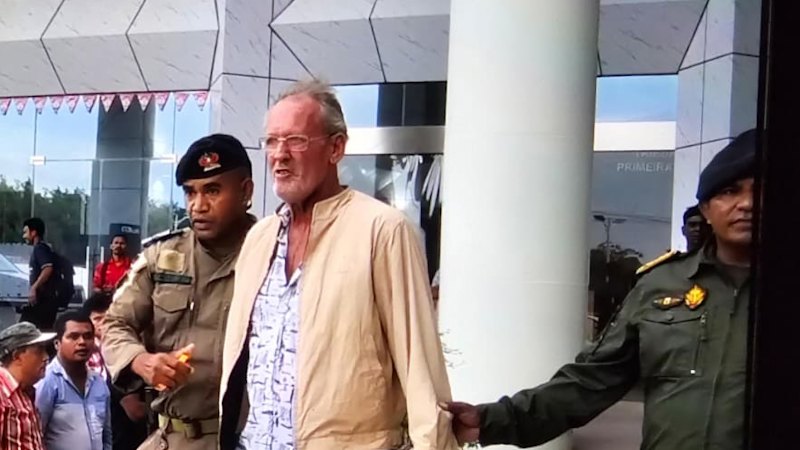
Justice in Southeast Asia doesn't always look like the bureaucratic, often lenient systems we see in the West. When a 72-year-old Australian man was handed a 20-year prison sentence in Dili recently, it sent a shockwave through the region. This wasn't just another legal proceeding. It was a definitive statement from one of the world's youngest nations that it's no longer a playground for foreign exploiters.
For years, predators have looked at developing nations with a sense of entitlement. They assume that poverty, weak infrastructure, or a lack of police resources will provide them with a shield. They're wrong. The case of the Australian man sentenced in Timor-Leste proves that the tide has turned. This individual will likely spend the rest of his life behind bars in a facility far removed from the comforts of an Australian correctional center.
The court found him guilty of horrific crimes against children. It's a grim reality that highlights a massive gap in how international travel and local protection laws intersect. People often think these cases are rare or that perpetrators are easily spotted. That's a dangerous myth. Most of the time, they blend in. They use "volunteering" or "charity" as a front. In this instance, the facade crumbled under the weight of brave testimony and a judicial system that refused to be intimidated by a foreign passport.
The harsh reality of prison life in Dili
A 20-year sentence in Timor-Leste isn't the same as 20 years in a medium-security wing in New South Wales. We're talking about Gleno prison or Becora. These are places where the heat is relentless. Resources are thin. Overcrowding is the norm. The Australian government provides consular assistance, sure, but they can't get you out. They can't demand better food or a private cell.
You're subject to the laws of the land you're in.
International law experts often point out that "consular assistance" is basically just a wellness check and a list of local lawyers. If you break the law in Timor-Leste, you face Timor-Leste’s consequences. This specific predator will be in his 90s if he ever sees the outside of a cell again. Given the conditions, many legal observers doubt he'll survive the full term. It's a bleak outlook, but for the victims and their families, it’s the first semblance of peace they’ve had in years.
The message to other potential offenders is loud. The "easy target" narrative is dead. Timor-Leste has been working closely with international agencies like Interpol and the Australian Federal Police (AFP) to sharpen their surveillance and investigative techniques. This wasn't a lucky break for the prosecution; it was the result of a coordinated effort to clean up the tourism and NGO sectors.
How the Australian Federal Police track offenders abroad
A common question is how these guys even get caught. You’d think they’d be invisible once they cross a border. They aren't. The AFP operates a sophisticated network of international liaison officers. They track movements. They share data on known offenders with local authorities long before a plane touches down.
- Passport monitoring and red flags.
- Financial trail analysis through international banking.
- Intelligence sharing with regional partners like Indonesia and Timor-Leste.
- Monitoring of online forums where these individuals congregate.
In this specific case, the cooperation between Dili and Canberra was tight. Australian authorities provided the technical expertise, while Timorese police handled the boots-on-the-ground investigation. This synergy is exactly what predators fear most. They rely on "jurisdictional gaps"—the idea that one country won't talk to another. Those gaps are closing fast.
The 20-year sentence is actually near the maximum allowed under Timorese law for these types of offenses. It shows the judges weren't looking for a middle ground. They wanted a deterrent. They wanted to show that the dignity of their children isn't for sale, regardless of how much money a foreigner brings into the local economy.
Why the NGO sector is under fire
One of the most disturbing parts of this story is how the predator integrated himself into the community. Often, these individuals use the guise of being a "helpful expat" or a "retired professional" looking to give back. They target vulnerable families. They offer school fees or food. It’s a calculated grooming process that can last for years.
Local communities are now being taught to be skeptical. While most expats are there for the right reasons, the damage done by a single bad actor is catastrophic. It taints the reputation of genuine aid organizations. It creates a climate of suspicion that makes it harder for real help to reach those who need it.
If you're traveling or working abroad, you've got a responsibility to report suspicious behavior. Don't assume someone else will do it. Don't think you're overreacting. In the Timor-Leste case, it took multiple people coming forward to build a case that could actually stick in court. Silence is the predator's greatest ally.
The legal precedent for future cases
This ruling sets a massive precedent. It tells the legal community in Southeast Asia that heavy sentences are supported both domestically and internationally. There was no political pushback from Australia to "bring him home" for a lighter sentence. The Australian government has made it clear: if you commit these crimes, you're on your own.
The focus now shifts to victim support. In a country like Timor-Leste, where mental health resources are scarce, the trauma remains long after the jail cell door slams shut. Organizations are now scrambling to provide the necessary counseling for the children involved. It’s a long road to recovery.
What you can do to help stop child exploitation
Most people read these headlines and feel a sense of rage, then move on. But there’s a practical side to this. Prevention starts with awareness and better regulations for anyone working with minors overseas.
- Check the credentials of any small "orphanage" or "learning center" before donating.
- Support organizations like ECPAT International that fight child prostitution and trafficking.
- Encourage your local representatives to support legislation that increases the AFP's budget for international child protection.
- Be aware of the "voluntourism" traps that allow unqualified individuals easy access to kids.
The 20-year sentence in Dili is a victory, but it's one battle in a very long war. The Australian man will grow old in a concrete room, and that is a just outcome. But the real win is the message it sends to every other person thinking they can hide in the corners of the world. There are no corners left. If you're looking for a way to stay informed, keep an eye on the travel advisories and regional crime reports coming out of the Department of Foreign Affairs and Trade (DFAT). They often contain the first signs of shifting safety landscapes.