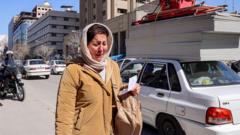
You can't walk through the Grand Bazaar or the local shops in northern Tehran without hearing the same word over and over. "Gherani." It means dearness or expensiveness, but lately, it carries a heavier weight. People aren't just complaining about the price of lamb or tomatoes like they usually do. They’re looking at the news, looking at their half-empty shopping bags, and wondering if the supply chains will hold if this "shadow war" stays out in the light for another six months.
The anxiety hitting Tehran’s streets isn't just about what’s happening today. It’s about the fear of a long, grinding conflict that bleeds the economy dry. When people anticipate a long war, they stop buying logic and start buying flour.
The Psychology of the Empty Shelf
Panic buying is a self-fulfilling prophecy. We've seen it in every major conflict zone from Kyiv to Gaza, and Tehran is no exception. Even though the government insists silos are full, the average person sees the rial tanking and decides that ten bags of rice today are better than a pile of devaluing cash tomorrow. This collective twitchiness pushes prices up faster than any actual shortage would.
Most Western analysts focus on the big missiles and the diplomatic posturing. They miss the domestic reality. For a family in Tehran, the "front line" is the dairy aisle. If the price of eggs jumps 30% in a week because truckers are scared to drive or fuel is being diverted to the military, that’s a crisis. It doesn't matter how many drones are in the air if there’s no bread on the table.
Why Bread and Oil Rule the Street
Iran has a massive domestic agricultural sector, which should, in theory, insulate it. But modern farming needs imported spare parts, specific fertilizers, and a stable currency to pay for it all. The Iranian Statistical Center has been tracking inflation for years, and while the official numbers are often "massaged," the food inflation rate has frequently hovered between 40% and 60% in recent cycles.
Rice is the soul of the Iranian kitchen. If the price of Mazandaran rice or imported Indian basmati climbs too high, it's a signal to the public that the government has lost control of the borders. We're seeing a shift where middle-class families are ditching high-quality meat for soy protein or just more bread. This isn't just a change in diet. It’s a loss of dignity. That's a dangerous thing for any government to manage during a period of high military tension.
Strategic Reserves vs Public Perception
The Iranian government keeps "strategic reserves" of wheat, sugar, and cooking oil. They've done this since the Iran-Iraq War in the 1980s. They know how to manage a siege economy. But the 1980s were different. Back then, the population was smaller and the ideological fervor was fresh. Today, you have a young, tech-savvy population that knows exactly what life looks like outside the borders. They aren't interested in "sacrificing" their breakfast for a geopolitical chess match that feels endless.
Supply chain disruptions are the real bogeyman here. Iran relies heavily on the Port of Bandar Abbas. If regional maritime tensions escalate to the point where insurance premiums for cargo ships skyrocket, the cost is passed directly to the guy buying a jar of sunflower oil in a corner shop in Tehran. The "war" isn't just about explosions. It’s about the cost of shipping a container of lentils across the Persian Gulf.
The Black Market and Informal Economy
When the formal economy chokes, the informal one breathes fire. We’re seeing a massive uptick in "under-the-table" trading. People are bartering. They’re using WhatsApp and Telegram groups to find who has wholesale bags of sugar or tea before it hits the store shelves at a markup.
This shadow economy makes it impossible for the state to regulate prices effectively. Even when the government threatens "profiteers" with arrest—a common tactic in Tehran—it doesn't stop the flow. It just moves it further into the shadows where prices are even higher. If you're a shopkeeper and you don't know if you can replace your stock next week for the same price you sold it today, you're going to hoard. It’s survival, not just greed.
Managing Your Resources in a Volatile Market
If you're watching this situation from the outside or trying to understand how to navigate a high-inflation environment, the rules are different. You don't wait for a "better deal" when the currency is in freefall.
Start by identifying the "hard" commodities in your own life. In Tehran, that's non-perishables and gold. People are hedging against food shortages by turning their liquid cash into anything that doesn't rot or lose value. If you're looking for a signal that the situation is stabilizing, don't listen to the state-run media. Watch the price of a kilo of red meat. When that stabilizes, the fear has subsided.
Keep a close eye on the secondary transit routes through Armenia and Turkey. If those borders see increased truck traffic, it means the sea routes are too risky or expensive. That's the real indicator of how long the locals think this war will last. Don't look at the headlines. Look at the logistics.