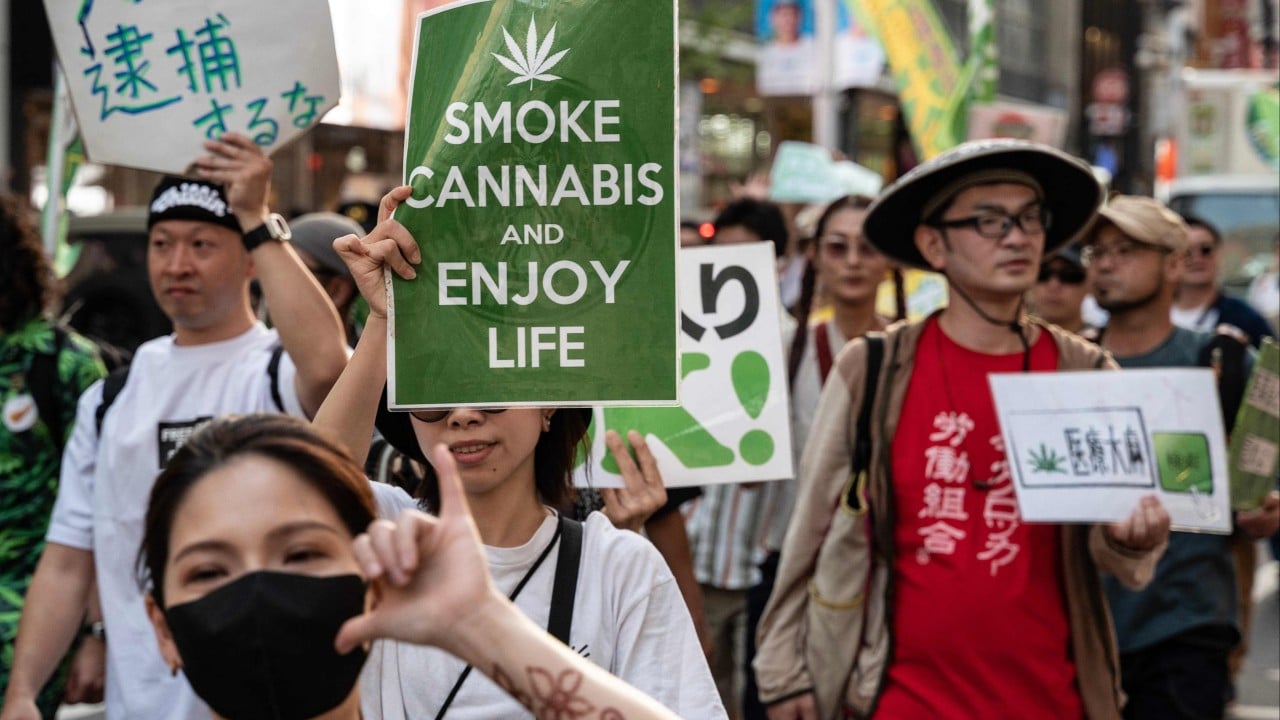
The neon-drenched streets of Shibuya and Shinjuku are masking a chemical shift that the Japanese government is currently losing. For decades, Japan maintained a reputation as one of the most drug-averse developed nations on earth, bolstered by draconian laws and a social stigma so potent it bordered on excommunication. That wall has breached. Data from the National Police Agency and the Ministry of Health reveals a sharp, jagged spike in drug-related arrests and hospitalizations among teenagers and those in their early 20s. But focusing on "social morals" misses the point entirely. This is not a sudden collapse of national character. It is a sophisticated, supply-chain-driven exploitation of the legal gray market and the digital isolation of a generation.
The primary culprit is not the classic narcotics of the 20th century. While cocaine and heroin remain marginal, cannabis derivatives and synthetic analogs have flooded the market. These substances are designed to bypass the Cannabis Control Act by slightly altering a molecular chain, staying one step ahead of the "designated substances" list. Young people are not necessarily looking to rebel against their parents; they are looking for a way to quiet the noise of a stagnant economy and a rigid social hierarchy that offers fewer rewards than it did for their predecessors.
The Gray Market Loophole
Japan’s drug laws are famously strict, yet the market has found a way to hide in plain sight. Walk into any "recreational" shop in Tokyo’s periphery, and you will find products labeled as incense or bath salts that are clearly intended for human consumption. The rise of HHCH (Hexahydrocannabihexol) and similar compounds represents a tactical evolution by distributors. When the government bans one compound, chemists in overseas labs swap an atom and ship a "new" product that is technically legal for several months until the bureaucracy catches up.
This cat-and-mouse game has created a dangerous perception among the under-20 demographic. Because these products are sold in shiny, professional packaging in well-lit stores, there is a false sense of safety. A nineteen-year-old university student does not see themselves as a "junkie" if they are buying a gummy from a store that looks like a high-end boutique. This "clean" aesthetic has decoupled drug use from its traditional association with the yakuza or the criminal underworld.
Digital Distribution and the Death of the Street Dealer
The "street dealer" is an endangered species in Tokyo. Today’s transactions happen on encrypted messaging apps like Telegram and Signal. This shift has fundamentally changed who can access drugs. In the past, you needed a connection to the underworld, a certain level of physical risk-taking that acted as a barrier to entry. Now, all a high school student needs is a smartphone and a bit of cryptocurrency or a bank transfer.
- Anonymity: Dropped-off packages in coin lockers or via standard courier services eliminate face-to-face contact.
- Price Compression: Competition among online vendors has driven prices down to levels that a student on a part-time convenience store wage can easily afford.
- Algorithmic Normalization: Social media algorithms see a user’s interest in "stress relief" or "vaping" and begin pushing content related to synthetic cannabinoids, creating an echo chamber where everyone seems to be doing it.
The psychological impact of this digital marketplace cannot be overstated. When the transaction feels like ordering a pair of shoes from an e-commerce site, the gravity of the act is lost. The barrier isn't a dark alley; it's a "Buy Now" button.
The Failure of Traditional Deterrence
For fifty years, Japan’s strategy has been "Dame. Zettai." (No. Absolutely.) This campaign relied on the idea that any drug use leads to immediate ruin. It worked when the public had no counter-evidence. However, the internet has given Japanese youth access to global perspectives. They see Western countries legalizing cannabis and treating it as a wellness product. When the Japanese government continues to use the same "scare tactics" from the 1980s, it loses credibility.
If a student tries a synthetic cannabinoid and doesn't immediately become a hollow-eyed addict, they stop believing the government's warnings about more dangerous substances like "kakuseizai" (stimulants). The rigid, all-or-nothing approach to drug education has created a credibility gap that traffickers are more than happy to fill with their own narratives.
Economic Despair as a Catalyst
Why now? The answer lies in the crumbling promise of the "Life-long Employment" system. The current generation of under-20s is the first to grow up entirely within a Japan that feels like it is in permanent retreat. Wages are flat. Costs are rising. The social contract—study hard, get into a good company, and be taken care of—is effectively dead.
In this environment, drugs are not an escape to a better world, but a way to tolerate the current one. It is a form of chemical resignation. We are seeing a shift from "party drugs" used for high-energy social interaction to "numbing drugs" used in isolation. The uptick in use among those living in cramped, expensive apartments in the suburbs of the Greater Tokyo Area points to a quiet crisis of loneliness.
The Health System’s Blind Spot
Japanese hospitals are ill-equipped for this new wave. Most psychiatric wards are designed to handle chronic schizophrenia or geriatric dementia, not acute synthetic drug psychosis. Because these substances are new, many ER doctors don't even know what to test for. Standard toxicology screens often come back negative for synthetic analogs, leading to misdiagnosis and inadequate treatment.
We are seeing a rise in "overdose by accident" cases. Because the potency of synthetic gummies or liquids is unregulated, a user might consume a dose ten times stronger than what is found in natural cannabis. The results are often violent seizures, prolonged paranoia, and permanent neurological damage. This isn't a moral failing; it's a public health disaster caused by a lack of regulation and a black market that thrives on potency because it's easier to smuggle.
The Role of Over-the-Counter Abuse
Parallel to the synthetic cannabinoid crisis is the rampant abuse of over-the-counter (OTC) cough and cold medicines. Bron and similar products containing dihydrocodeine or ephedrine are being consumed in massive quantities by teenagers. This is the "safe" way to get high because it is perfectly legal to buy.
- Accessibility: Any drugstore stocks these.
- Affordability: A "high" costs less than a movie ticket.
- Invisibility: Parents see a bottle of cough syrup and think their child has a cold, not an addiction.
The government has recently moved to limit the number of bottles a minor can purchase, but pharmacy staff are often overworked and fail to enforce these rules. Furthermore, the sheer number of drugstores in urban Japan makes it easy for a "loop" shopper to hit five different stores in an hour.
Reevaluating the Moral Narrative
The older generation’s outcry about "dying morals" is a convenient distraction. It blames the victim for a systemic failure. If the youth are turning to chemicals in record numbers, the question isn't what's wrong with their character, but what's wrong with the environment we've built for them.
The current legal framework is a blunt instrument. It focuses on punishment and "shaming" the individual. But in a digital age where the shame is diluted by online subcultures, this tool is losing its edge. Japan needs a shift toward harm reduction, even if the term is currently taboo in the Diet. This means acknowledging that these substances are here to stay and focusing on education that prioritizes physical safety over moral lecturing.
The Supply Chain Problem
Much of the raw material for these synthetics originates in laboratories in Southeast Asia and China. The precursors are shipped as industrial chemicals, making them nearly impossible to intercept at the border. Once inside Japan, they are processed into oils, gummies, and vape cartridges. The profit margins are astronomical. A liter of precursor can be turned into thousands of individual doses, each retailing for 5,000 to 10,000 yen.
The authorities are trying to play a game of Whac-A-Mole. Every time the Ministry of Health adds a chemical to the prohibited list, the manufacturers have a new one ready to ship within 72 hours. This agility is something a state bureaucracy cannot match.
The focus must move away from the chemistry and toward the commerce. Targeting the financial networks and the "last mile" delivery systems—the shops and the social media accounts—is the only way to significantly disrupt the flow. But even this is a temporary fix if the underlying demand remains high.
A Generation at a Crossroads
The youth of Japan are not more "immoral" than their parents; they are simply more exposed. They are the target of a globalized, high-tech drug trade that has identified Japan as a high-value, under-served market. The traditional social guards—shame, family pressure, and fear of the law—are being bypassed by the anonymity of the internet and the normalization of synthetic "wellness" products.
If the goal is to protect the under-20 population, the strategy needs to evolve faster than the chemistry. Continuing to shout about "morals" while a nineteen-year-old is having a seizure in a Shinjuku bathroom from a "legal" gummy is not just ineffective; it's a dereliction of duty by the state. The real crisis isn't that young people are getting high; it's that the society they live in hasn't given them a better reason to stay sober.
Would you like me to analyze the specific financial structures of the gray-market "incense" shops or provide a breakdown of the most common synthetic compounds currently bypassing Japanese customs?