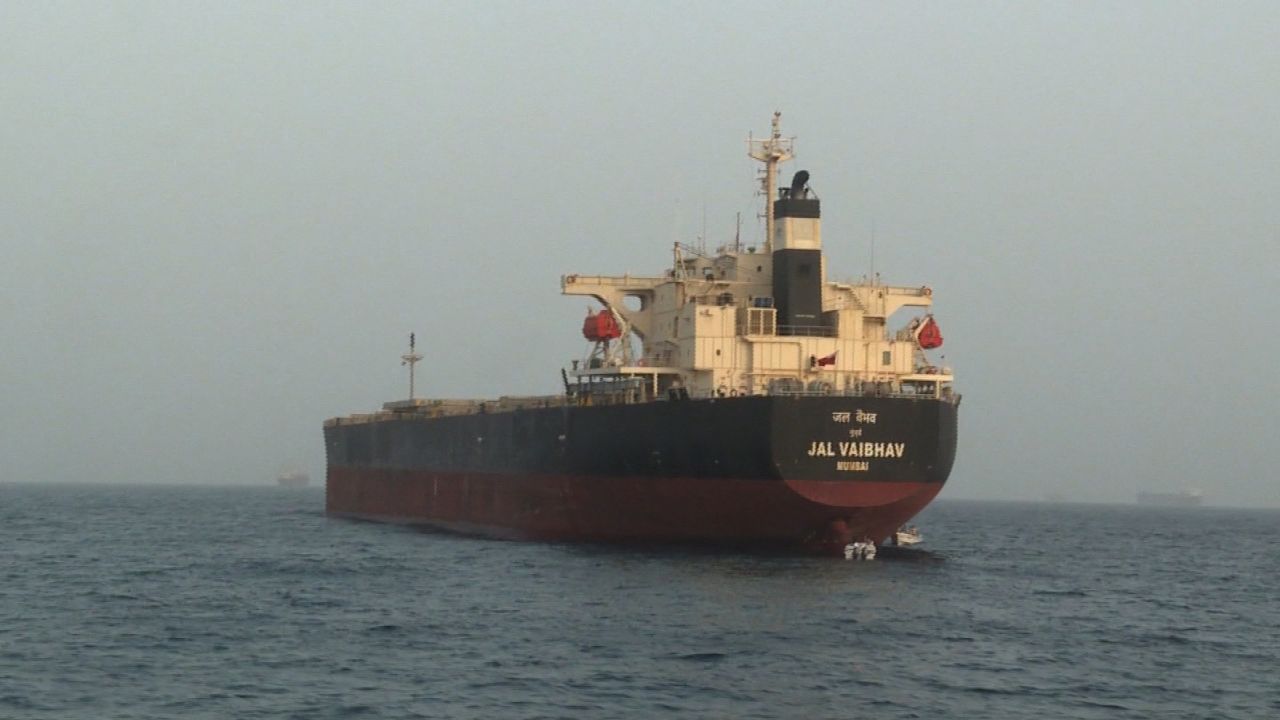
The escalation of hostilities between Iran and Gulf-aligned interests during Ramadan introduces a structural threat to India’s energy security and its "Link West" policy. When the Ministry of External Affairs (MEA) issues a call for restraint, it is not merely a diplomatic formality; it is a calculated response to a multi-vector crisis that threatens to disrupt 30% of global oil transit and the safety of 9 million Indian expatriates. The stability of the West Asian region functions as a critical input for India’s GDP growth, making any regional friction a direct domestic economic headwind.
The Geopolitical Cost Function of Regional Instability
India’s diplomatic posture is dictated by three non-negotiable variables: energy dependency, remittance flows, and maritime security. Any shift in the Iran-Gulf power balance alters the pricing of these variables.
The Energy Security Variable
India imports over 80% of its crude oil, with a significant portion passing through the Strait of Hormuz. A localized conflict in the Gulf triggers a risk premium on Brent Crude, which translates to a widening Current Account Deficit (CAD) for New Delhi. The "Restraint" requested by the MEA is a demand for price stability. If the conflict moves from proxy skirmishes to direct state-on-state kinetic action, the insurance premiums for maritime freight (war risk surcharges) could render Indian refining margins unsustainable.
The Human Capital Bottleneck
The Gulf Cooperation Council (GCC) countries host a massive Indian diaspora. In a high-intensity conflict scenario, the MEA faces the logistical nightmare of "Operation Ajay" scale evacuations. Beyond the immediate physical safety of citizens, the disruption of banking systems and physical infrastructure in the Gulf would halt the flow of remittances, which serve as a vital foreign exchange cushion for the Indian Rupee.
The Ramadan Tactical Window
The timing of this escalation during the holy month of Ramadan adds a layer of sociological complexity to the military friction. In West Asian geopolitics, Ramadan often serves as a period of heightened emotional and religious mobilization. For India, the concern is that localized friction could catalyze broader regional unrest, moving beyond state actors to involve non-state militias in Lebanon, Iraq, and Yemen (the "Axis of Resistance").
The MEA’s specific mention of the holy month signals an awareness of the "escalation ladder." In conflict theory, the ladder moves from rhetoric to posturing, then to limited kinetic strikes, and finally to total war. By invoking the cultural significance of the period, India is attempting to provide a face-saving "off-ramp" for both Tehran and Riyadh/Abu Dhabi to de-escalate without appearing weak to their respective domestic audiences.
Maritime Choke Points and the Fragility of Trade
The conflict is not merely territorial; it is a battle over the "Global Commons." The Red Sea and the Gulf of Oman are the primary arteries for Indian exports to Europe and the US East Coast.
- The Bab-el-Mandeb Strait: If Iranian-backed Houthi forces increase activity in response to Gulf tensions, the Suez Canal route becomes prohibitively expensive due to rerouting around the Cape of Good Hope.
- The Port of Jebel Ali: As a transshipment hub, any threat to UAE waters disrupts the "just-in-time" supply chains of Indian small and medium enterprises (SMEs) that rely on Dubai as a re-export gateway.
India’s naval presence in the region—via Mission Based Deployments—functions as a signal of "Strategic Autonomy." Unlike the US-led coalitions, India maintains a bifurcated relationship: it is a strategic partner to the UAE and Saudi Arabia while maintaining a deep, functional relationship with Iran through the Chabahar Port project. This dual-track diplomacy is currently under its greatest stress test since the 2019 tanker attacks.
The Logic of Strategic Neutrality
Critics often view India’s "calls for restraint" as passivity. However, in a multi-polar environment, neutrality is an active resource. By refusing to join a specific military bloc in the Gulf, India preserves its role as a "credible interlocutor."
The Three Pillars of Indian Mediation Logic
- Pillar 1: Decoupling Energy from Ideology. India treats its oil purchases from the GCC and its infrastructure investments in Iran as separate silos. This prevents a breakdown in one relationship from contaminating the other.
- Pillar 2: Non-Interference in Internal Governance. Unlike Western powers that often link security cooperation to internal political reforms, India’s "West Asia" policy is strictly transactional and security-centric. This makes New Delhi a preferred partner for monarchies and theocracies alike.
- Pillar 3: The Maritime Security Provider Role. Through the Indian Navy’s "Information Fusion Centre – Indian Ocean Region" (IFC-IOR), India provides real-time data to regional navies, positioning itself as a technical ally rather than a political one.
The Economic Consequences of Miscalculation
If the MEA’s call for restraint goes unheeded, the economic "Contagion Effect" will manifest through the following mechanisms:
Input Cost Inflation
Agricultural and industrial sectors in India are sensitive to diesel prices. A sustained $10/barrel increase in crude oil prices, triggered by a Gulf blockade, would likely force the Reserve Bank of India (RBI) to maintain higher interest rates to combat imported inflation, dampening domestic consumption.
The IMEC Corridor Delay
The India-Middle East-Europe Economic Corridor (IMEC), announced at the G20, relies on a stable geopolitical environment. Kinetic conflict between Iran and the Gulf states effectively kills the feasibility of this multi-modal rail and shipping link. The corridor requires the seamless integration of Israeli, Emirati, and Saudi infrastructure—a feat impossible if the region is in a state of active mobilization.
Strategic Forecast and Operational Imperatives
The current escalation indicates that the "Gray Zone" warfare—attacks that fall below the threshold of open war—is becoming the new baseline for West Asian interaction. India must move beyond periodic press releases and toward a more "Elastic Security Architecture."
The primary strategic move for the coming quarter must be the acceleration of the Strategic Petroleum Reserve (SPR) Phase II. Relying on "calls for restraint" is a diplomatic necessity, but physical stocks of crude provide the only true hedge against a Hormuz closure.
Simultaneously, India must leverage its position in the I2U2 (India, Israel, UAE, USA) and its recent BRICS+ expansion (which includes both Iran and the UAE) to create a "De-confliction Cell." This cell would focus not on resolving the deep-seated ideological rifts between the Gulf and Iran, but on the technical "Minimum Viable Stability" required to keep the sea lines of communication (SLOCs) open.
The window for de-escalation is narrowing as proxy capabilities increase. India’s next diplomatic move will likely involve high-level backchanneling in Tehran to ensure that the "Axis of Resistance" does not target Indian-flagged vessels or critical energy infrastructure. Failure to secure these guarantees would necessitate a more muscular maritime posture, shifting India from a "Security Partner" to an active "Security Enforcer" in the North Arabian Sea.
Would you like me to map the specific impact of a 15% disruption in the Strait of Hormuz on India's fiscal deficit projections for 2026?