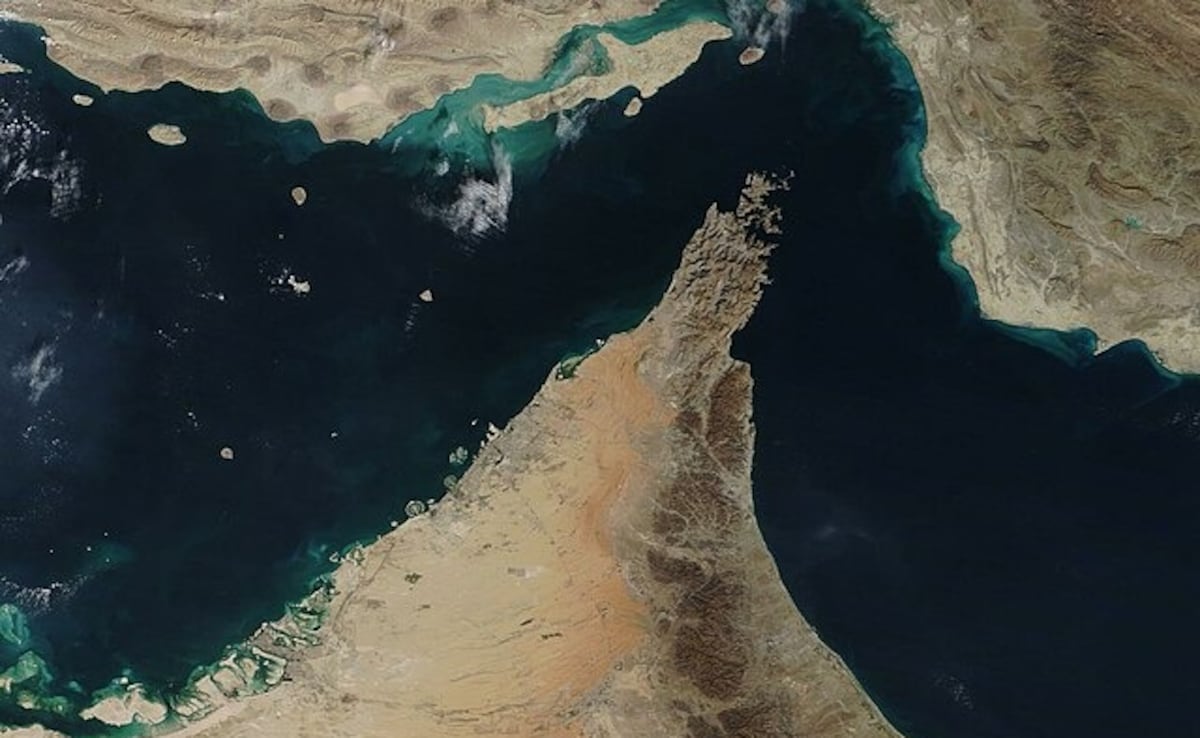
If you’re looking at a map of the Middle East, there’s a tiny, 21-mile-wide choke point that holds the global economy by the throat. It’s the Strait of Hormuz. Right now, tensions there aren't just a "geopolitical concern" for suit-wearing diplomats in Geneva. They’re a direct threat to the price of the gas in your car and the stability of the Indian economy.
One wrong move by a naval destroyer or a stray drone could send oil prices screaming past $100 a barrel. We’ve seen this movie before, but the 2026 version has much higher stakes. With global supply chains already frayed, a blockage here doesn't just slow things down. It stops them. For India, which imports over 80% of its crude oil, this isn't just news. It's an emergency.
Why this tiny stretch of water dictates global survival
The math is simple and terrifying. About a fifth of the world’s total oil consumption passes through this strait every single day. We’re talking roughly 20 to 21 million barrels of crude, condensate, and refined products. It’s the only way for tankers to get out of the Persian Gulf and into the open ocean.
If you sit on the coast of Oman or Iran and watch the horizon, you'll see a constant parade of massive ships. They carry oil from Saudi Arabia, Iraq, the UAE, and Kuwait. It’s not just oil, either. Qatar sends massive amounts of Liquified Natural Gas (LNG) through this gap. If the "tap" closes, the lights don't just go out in parts of Asia—the global manufacturing engine hits a brick wall.
Iran knows this. They’ve used the threat of closing the Strait as a trump card for decades. It’s their version of a "dead man’s switch." By harassing tankers or seizing ships, they remind the West that they can induce a global depression without firing a single nuclear missile.
The Indian Perspective is Brutal
India is uniquely vulnerable. While the U.S. has become a net exporter of energy thanks to shale, India’s hunger for oil only grows as its economy expands. Most of that hunger is fed by the Middle East. If the Strait of Hormuz sees a sustained conflict, India faces a three-pronged disaster.
First, there’s the immediate price shock. When oil prices spike, inflation in India follows almost instantly. Everything gets more expensive because everything requires transport. Your groceries, your Amazon deliveries, your daily commute—the costs explode.
Second, the Indian rupee takes a beating. As the country spends more US dollars to buy the same amount of oil, the trade deficit widens. This weakens the rupee, making all other imports even more expensive. It’s a vicious cycle that’s hard to break once it starts.
Third, there’s the human element. Millions of Indians live and work in the Gulf. They send billions of dollars back home in remittances. A hot war in the Strait doesn't just stop oil; it puts those citizens in the crossfire and threatens the steady flow of foreign exchange that keeps the Indian banking system healthy.
Misconceptions about "Alternative Routes"
You’ll hear some analysts talk about pipelines that bypass the Strait. It sounds good on paper. Saudi Arabia has the East-West Pipeline, and the UAE has a line that goes to Fujairah. But here’s the reality: these pipes can only handle a fraction of the volume.
- The total capacity of these bypass pipelines is maybe 6.5 million barrels per day.
- That leaves 14 million barrels with nowhere to go.
- Pipelines are also static targets. They’re easy to sabotage.
Thinking we can just "route around" the Strait of Hormuz is wishful thinking. It’s like trying to drain a swimming pool through a soda straw. It won't work in time to save the markets from a panic.
What happens if the "Big One" occurs
Let’s be direct. If a full-scale blockade happens, the insurance rates for tankers would skyrocket to the point where no captain would sail. We’d see a "maritime ghost town."
The U.S. Fifth Fleet, based in Bahrain, is tasked with keeping these lanes open. But modern warfare has changed. You don't need a massive navy to close a strait anymore. Cheap sea mines and swarms of fast-attack boats can do the job. Even the threat of land-based anti-ship missiles tucked into the jagged cliffs of the Iranian coastline is enough to halt commercial traffic.
For the average person, this looks like $5 or $6 per gallon gas in the West and a complete halt to fuel subsidies in developing nations. Air travel would become a luxury again. The "just-in-time" delivery model that brings you electronics and clothes would collapse.
Survival tactics for the current volatility
Waiting for the government to solve this isn't a strategy. If you’re running a business or managing a household, you have to assume energy costs are going to be a rollercoaster for the foreseeable future.
You should look at your energy dependency now. If you’re in India, the government’s push for green hydrogen and electric vehicles isn't just about the environment. It’s about national security. Every EV on the road is one less car dependent on a tanker passing through a war zone.
Diversify your investments. Companies that deal in domestic energy production or shipping insurance often hedge against these specific risks. Don't put all your chips on a stable, low-inflation future.
The Strait of Hormuz is the world’s most dangerous poker game. The players are aggressive, the stakes are trillions of dollars, and unfortunately, we’re all sitting at the table whether we like it or not. Watch the shipping insurance rates (War Risk Surcharges) and the Brent Crude futures. Those are the real indicators of how close we are to the edge.
Stop looking at the stock market as a reflection of "company value" and start looking at it as a reflection of energy security. If the Strait stays clear, we survive. If it doesn't, the global map gets redrawn overnight.