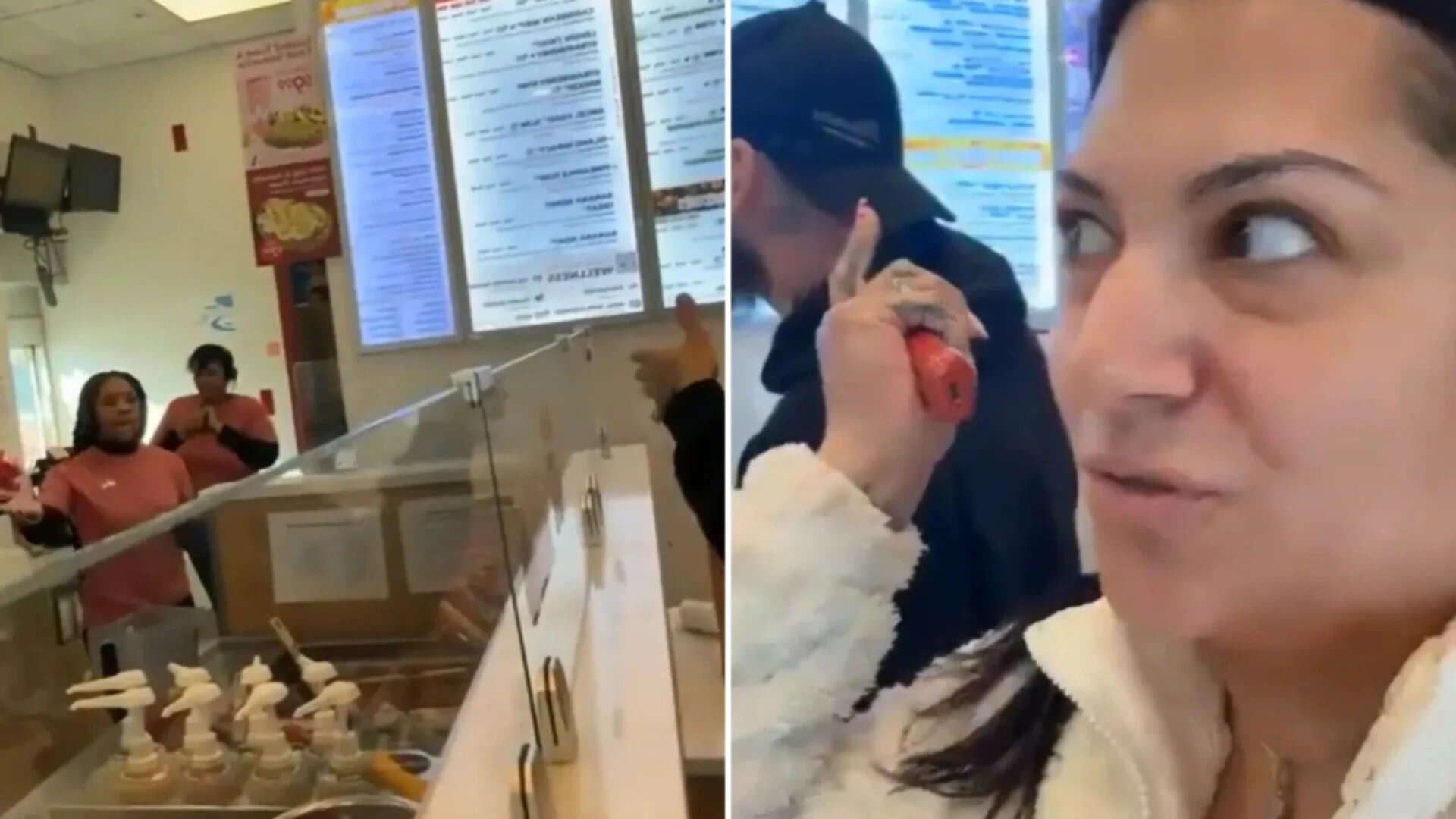
The air inside a smoothie shop usually smells like a sanitized tropical vacation—frozen strawberries, synthetic vanilla, and the high-pitched whine of industrial blades pulverizing ice. It is a neutral space. People enter in gym clothes, business suits, or pajamas, united by the simple, transactional desire for a cold drink. But on a Tuesday in a quiet suburb, that neutrality evaporated the moment a man in a red hoodie stepped up to the counter.
The hoodie bore a name that has become the most polarizing Rorschach test in American history: Trump.
What followed wasn't just a service breakdown. It was a collision. On one side of the counter stood a customer expecting a product in exchange for currency. On the other stood a group of young employees who saw not a customer, but a walking provocation. The blender stayed silent. The transaction stopped. The resulting silence resonated far beyond the storefront, echoing through the digital chambers of a nation that has forgotten how to share a sidewalk, let alone a beverage.
The Invisible Border at the Counter
When we talk about "refusal of service," we often get bogged down in the dry legalese of public accommodations and protected classes. We argue about the First Amendment. We cite corporate handbooks. But those are the post-hoc justifications for a much more primal human instinct: the urge to gatekeep our immediate reality.
In this Smoothie King, the employees didn't just see a piece of clothing. They saw a boundary they weren't willing to cross. Reports indicate that the staff laughed, made disparaging comments, and ultimately made it clear that the man’s money was no good there because of the symbols he chose to wear.
Consider the psychological weight of that moment. For the man in the hoodie, it is a sudden, sharp ejection from the "normal" world. One minute you are a guy looking for a Gladiator Strawberry; the next, you are an outcast in your own zip code. For the employees, it was likely a moment of perceived rebellion—a small, defiant "no" to a world they find disagreeable.
But there is a hidden cost to these small rebellions. Every time a retail counter becomes a battleground, the fabric of the "public square" thins a little more. We are moving toward a future where we don't just live in different information bubbles, but where we can’t even buy a snack without a political vetting process.
The Corporate Panic and the Human Reality
Smoothie King’s corporate office did what every modern corporation does when a viral video starts hemorrhaging brand sentiment: they fired the employees and issued a statement. They spoke about "inclusion" and "diversity" and "respect."
It’s easy to write a press release. It is significantly harder to manage the boiling point of a generation that has been told that everything—every purchase, every song, every hat—is a moral manifesto.
If we look at the statistics of workplace friction over the last five years, we see a jagged upward trend. It isn't just about politics. It's about the exhaustion of the front-line worker meeting the entitlement of the modern consumer. However, when you layer partisan identity over that existing tension, you create a volatile chemical reaction. The employees in this scenario weren't just "bad at their jobs" in a vacuum. They were products of a culture that rewards tribalism over professional neutrality.
They felt justified. That is the most dangerous part of the story.
When people feel that their "moral" standing outweighs their professional obligations, the very concept of service collapses. If the barista can refuse you for a Trump hat, can the mechanic refuse the barista for a pride flag? Can the pharmacist refuse the mechanic for a "Thin Blue Line" sticker? This isn't a slippery slope; it's a vertical drop into a fractured society where commerce is only possible between the like-minded.
The Ghost of the Third Place
Sociologists often talk about the "Third Place"—the social surroundings separate from the two usual social environments of home ("first place") and the office ("second place"). Think coffee shops, libraries, parks, and yes, even smoothie joints. These are the places where democracy actually happens, not in the voting booth, but in the mundane act of existing alongside people who aren't like you.
When a man is refused a smoothie because of his hoodie, the Third Place dies. It becomes just another "First Place" for whoever happens to be working there that day. It becomes an extension of their living room, where they get to decide who is welcome and who is an intruder.
The man in the red hoodie eventually left. The video went viral. The comments sections exploded into a predictable war of "he got what he deserved" versus "this is the end of America." But if you look past the shouting, you see a much quieter, sadder reality. We are losing the ability to be bored in each other's presence. We are losing the grace of the transaction—the simple, beautiful fact that I don't have to like your politics to sell you a sandwich, and you don't have to love my lifestyle to pay me for it.
The Long Shadow of the Viral Video
We live in an era of "The Recorded Conflict." Nothing happens in isolation anymore. Every sneer from a cashier and every indignant retort from a customer is captured in 4K and uploaded to the altar of public opinion.
In the case of this Smoothie King row, the digital aftermath was far more intense than the physical encounter. The employees were doxxed. The store was harassed. The man in the hoodie became a mascot for one side and a villain for the other.
But what about the next day? What about the 19-year-old kid starting their first day at a different franchise, now terrified that a customer’s wardrobe might be a trap, or that their own reaction might end their career?
The stakes aren't just about a $7 drink. The stakes are about whether we can maintain a society that functions on a level of basic, professional courtesy. If we lose that, we don't just lose "service." We lose the ability to navigate the world without a suit of armor.
The man walked out of the store without his drink. The employees walked out without their jobs. The corporation walked away with a bruised reputation. Nobody won. We are all just standing in the lobby, watching the ice melt in an unblended cup, wondering when the simple act of being a neighbor became a revolutionary act.
The blender remains unplugged. The line is out the door. And we are all still waiting to see if anyone is actually going to get served.