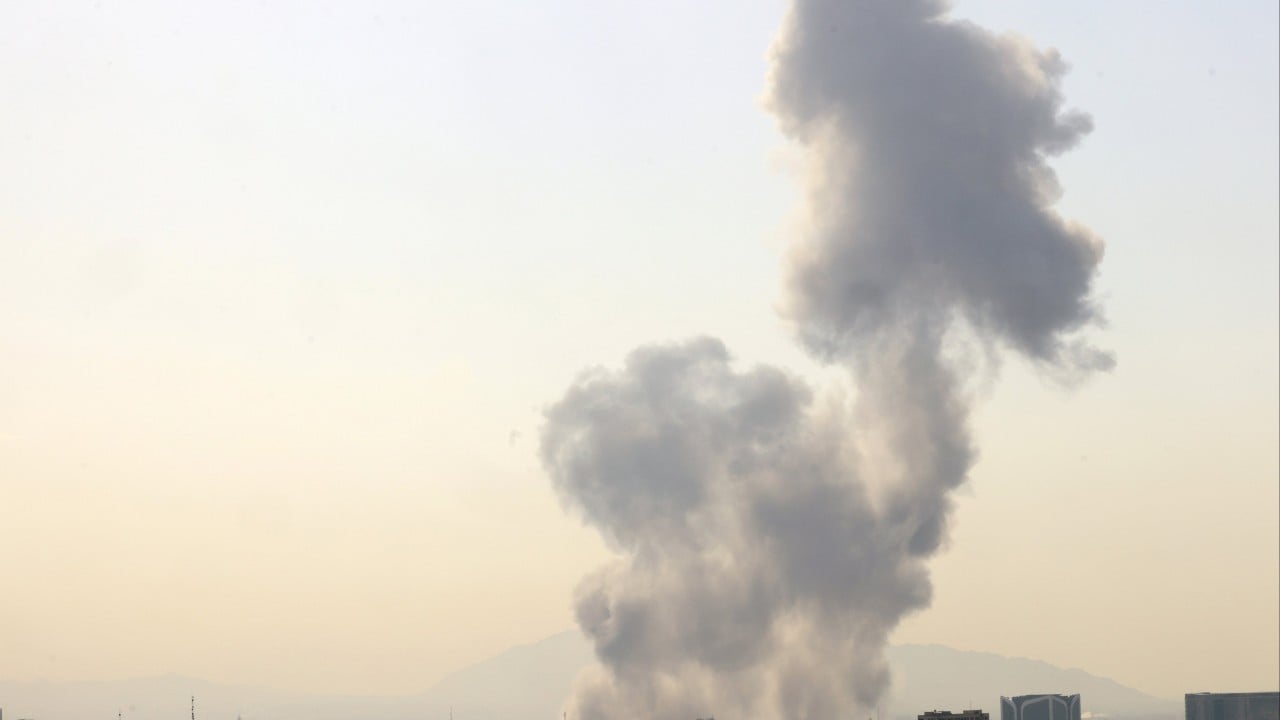
The chatter about a "blitz" against Tehran isn't just campaign trail bluster anymore. It’s a fundamental shift in how Washington plans to handle the Middle East. If you’ve been watching the headlines, you've seen the aggressive leaks about "decapitation strikes" and "annihilating the regime." But what's actually happening behind the curtain is far more calculated than a simple aerial bombardment. The goal isn't just to break things; it's to dismantle the entire structural influence of the Islamic Revolutionary Guard Corps (IRGC) in one coordinated push.
Donald Trump's approach to Iran has always been about maximum pressure, but the 2026 version of this strategy looks less like a slow squeeze and more like a lightning strike. We're talking about a multi-layered plan that targets the financial arteries of the Ayatollah’s inner circle while simultaneously positioning kinetic assets to neutralize their regional proxies. It’s a high-stakes gamble that assumes the Iranian leadership will buckle if the "head of the snake" is sufficiently bruised.
Why the First Wave Targets the Henchmen
Military strategists often talk about "center of gravity." For Iran, that isn't just a nuclear facility in Natanz. It’s the network of commanders and financiers who keep the IRGC functioning. The current plan focuses on these mid-to-high-level "henchmen" because they are the ones who actually execute Tehran's orders in Lebanon, Yemen, and Iraq.
By removing the operational layer of the IRGC, the U.S. effectively paralyzes the regime's ability to retaliate. You can't order a drone strike if your communications officer is in hiding or your logistics guy just lost his bank access. This isn't just about dropping bombs. It’s about a synchronized cyber and financial offensive that turns the regime’s own infrastructure against it.
The logic is simple. If you take out the architects of regional chaos, the building falls down. We saw a prototype of this with the Soleimani strike in 2020. That wasn't a one-off; it was a proof of concept. The new "blitz" strategy scales that up. It aims to create a leadership vacuum so vast that the supreme leader finds himself screaming into a void.
Money as a Weapon of War
Everyone talks about the military side, but the real "snake-cutting" happens in the banking system. The U.S. Treasury has more power to destabilize Tehran than a carrier strike group does. The current strategy involves a total blockade of "ghost fleets" carrying Iranian oil to China.
By aggressively targeting the shipping companies and the literal hulls of the ships involved, the administration intends to starve the IRGC of its primary source of off-the-books funding. When the money stops, the loyalty of the internal security forces starts to waver. You can't pay a riot police officer with ideology alone. They need hard currency.
This financial strangulation is designed to trigger internal dissent. The hope is that the Iranian people, already exhausted by inflation and social restrictions, will see the regime's weakness as an invitation. It’s a dangerous game. It relies on the assumption that the "henchmen" care more about their Swiss bank accounts than their revolutionary zeal. Usually, they do.
The Proxy Problem and the First Blitz
You can't talk about Iran without talking about Hezbollah and the Houthis. They’re the "tentacles" of the snake. The "blitz" strategy includes a massive uptick in intelligence sharing with regional allies like Israel and the UAE to hit these groups simultaneously.
The idea is to force Iran to choose. Do they defend their own borders, or do they keep sending missiles to their proxies? By hitting both at once, the U.S. creates a "dilemma of many fronts."
- Cyber Warfare: Shutting down the command-and-control servers that link Tehran to its regional cells.
- Naval Interdiction: A heavy-handed presence in the Red Sea to ensure no resupply reaches Yemen.
- Targeted Sanctions: Freezing the assets of any commercial entity doing business with IRGC-linked firms.
This isn't just theory. We're seeing the buildup in real-time. The deployment of additional F-35 squadrons to the region and the tightening of maritime patrols aren't accidents. They're prep work for a coordinated move.
Misconceptions About Regime Collapse
A lot of people think "annihilating the regime" means a full-scale ground invasion like Iraq in 2003. That’s a mistake. Nobody wants boots on the ground in the Iranian highlands. The "blitz" is designed to be an external shock that causes an internal fracture.
The risk is that a wounded animal is the most dangerous. If the Ayatollah feels the "head of the snake" is truly under threat, the "breakout" toward a nuclear weapon becomes a very real possibility. This is the part the hawks don't like to discuss. If the blitz fails to be decisive, it could trigger the very war it’s trying to avoid by forcing Iran’s hand.
Experts from the Foundation for Defense of Democracies (FDD) have long argued that the regime only understands strength. But strength requires a follow-through. If the first wave of "henchman" targets doesn't break the chain of command, the U.S. might find itself in a cycle of escalation that is hard to exit.
The Role of Regional Alliances
Washington isn't doing this alone. The Abraham Accords changed the math. Now, you have a coalition of nations that are just as eager to see the IRGC dismantled as the U.S. is. This provides a geographic and logistical advantage that wasn't there ten years ago.
Basing rights, refueling, and intelligence gathering are now a shared burden. This makes the "blitz" more sustainable. It also sends a message to Tehran that they aren't just fighting the "Great Satan"—they’re fighting their own neighbors.
This regional buy-in is the secret sauce. Without it, any move against Iran looks like Western imperialism. With it, it looks like regional stabilization. The difference is massive when it comes to international law and global perception.
What This Means for Global Markets
You should expect volatility. Any time the "head of the snake" is mentioned in the same sentence as "blitz," oil prices are going to jump. If the Strait of Hormuz is even threatened, we’re looking at a global energy shock.
However, the administration’s bet is that the shock will be short-lived. If the strike is truly a "blitz" and the regime’s ability to disrupt shipping is neutralized early, the markets might actually stabilize faster than people expect. It’s a "rip the band-aid off" philosophy.
Investors are already hedging. Gold is up, and defense stocks are seeing a surge in volume. This isn't just speculation; it’s a reaction to the very real movement of hardware in the Middle East.
The Human Element in Tehran
We can't ignore the people living there. The strategy depends on a clear distinction between the "henchmen" and the civilians. If the U.S. hits the wrong targets and kills civilians, the "annihilate the regime" narrative fails. It turns the population against the West instead of against their leaders.
Precision is the only way this works. The intelligence has to be perfect. The timing has to be flawless. One mistake, and you've turned a strategic strike into a recruitment tool for the very extremists you’re trying to remove.
The IRGC knows this. They often hide their assets in civilian areas for exactly this reason. They want the U.S. to make a mistake. Avoiding that trap is the hardest part of the entire "plot."
Final Realities of the Conflict
The "head of the snake" metaphor is catchy, but snakes have a habit of biting back before they die. The coming months will determine if this is a masterclass in coercive diplomacy or a slide into a generational conflict.
The focus on the "henchmen" is a smart move tactically. It degrades the enemy without requiring a massive footprint. But tactics aren't a strategy. The strategy has to include a plan for what happens the day after the blitz ends. If there’s a power vacuum, who fills it?
You need to keep a close eye on the rhetoric coming out of the State Department versus the Pentagon. When they align, the "blitz" is imminent. When they don't, it’s just noise. Right now, they’re starting to sound very similar.
Watch the following indicators:
- Movements of carrier strike groups into the North Arabian Sea.
- Sudden "maintenance" shutdowns of major Iranian government websites.
- Rapid shifts in the exchange rate of the Iranian Rial.
- New executive orders targeting third-party shipping insurers.
The pieces are on the board. The players are ready. The only thing left is to see who blinks first.