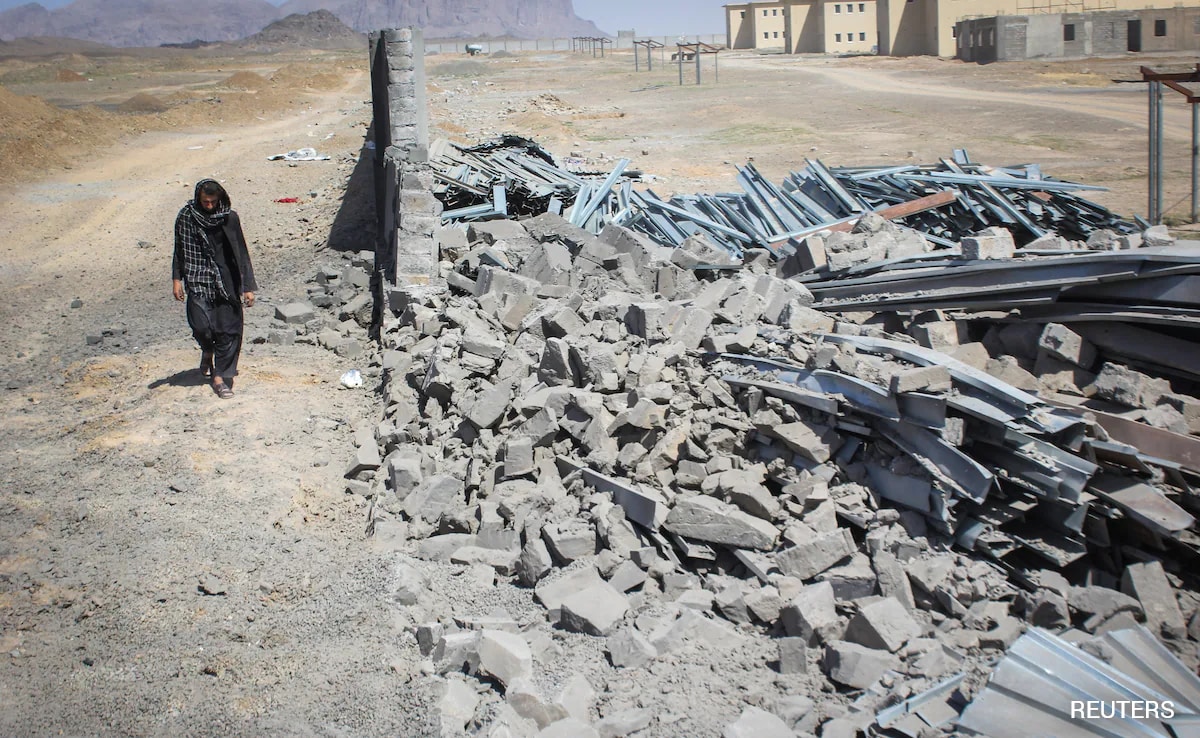
In late February 2026, the diplomatic fiction of "brotherly neighbors" finally dissolved. Following a series of devastating TTP suicide bombings in Islamabad and retaliatory Pakistani airstrikes on Kabul and Kandahar, Pakistan’s Defense Ministry formally declared a state of "open war" with the Taliban. For two weeks, the Durand Line has been a live front of artillery duels and asymmetric drone strikes, threatening to destabilize the central nervous system of Beijing’s Belt and Road Initiative.
Beijing has now moved from quiet concern to aggressive shuttle diplomacy. This week, three Pakistani government officials confirmed that Chinese intervention, including a direct personal message from President Xi Jinping to Prime Minister Shehbaz Sharif, has finally managed to quiet the batteries. While the guns are momentarily silent, this is not a peace deal; it is a desperate triage of a regional strategy that is rapidly hemorrhaging credibility.
The Infrastructure Trap
China’s role as a mediator is not a pursuit of altruism. It is a defense of the China-Pakistan Economic Corridor (CPEC), a $65 billion investment that becomes a collection of expensive ruins if the border remains a war zone.
For the past decade, Beijing operated on the "connectivity doctrine"—the belief that high-speed rail, fiber optics, and energy pipelines would eventually force tribal and ideological rivals into a state of mutual economic dependence. The current war along the Durand Line proves that ideology still outpaces infrastructure. When Pakistan launched Operation Ghazab Lil Haq (Righteous Fury) in late February, it was striking at the very geographic heart of where CPEC is supposed to expand into Central Asia.
Beijing’s special envoy for Afghanistan, Yue Xiaoyong, has been shuttling between Kabul and Islamabad because China’s exposure is now structural. If the Taliban and Pakistan remain at war, the following Chinese interests are directly in the crosshairs:
- Mineral Security: China is eyeing Afghanistan’s lithium and rare earth reserves to fuel its global dominance in the green energy sector.
- Personnel Safety: The October 2025 suicide bombing near Karachi’s Jinnah International Airport, which killed several Chinese engineers, proved that the Pakistani state can no longer guarantee the safety of Beijing’s workers.
- Territorial Integrity: Any spillover from the TTP (Tehreek-e-Taliban Pakistan) into China’s Xinjiang province via the Wakhan Corridor is a red line that Beijing will use any amount of leverage to protect.
Why the Taliban Won't Budge
The core of the conflict is the TTP, a group that shares deep ideological and tribal DNA with the Afghan Taliban. Pakistan demands a total crackdown; the Taliban offers only vague promises.
The Taliban leadership in Kabul, led by Emir Hibatullah Akhundzada, faces a "cohesion crisis." If they turn their guns on the TTP to appease Islamabad or Beijing, they risk a massive internal mutiny. Fighters would likely defect to ISIS-K, a group that is even more radical and views the Taliban’s diplomatic engagement with "infidel" powers like China as a betrayal.
Kabul’s strategy is a calculated ambiguity. They deny operational collaboration with the TTP while simultaneously using the group as a lever against Pakistan’s influence. This has forced Pakistan into a corner, leading to the "open war" declaration. The military establishment in Rawalpindi has concluded that the Taliban is no longer a strategic asset but a primary threat.
The New Tools of Asymmetric War
This conflict has revealed a significant shift in regional military technology. While Pakistan maintains absolute air superiority with its JF-17s and F-16s, the Taliban has responded with a surprisingly effective unmanned aerial vehicle (UAV) campaign.
In early March, Taliban-operated drones struck targets deep inside Pakistani territory, reaching as far as Abbottabad and Nowshera. This capability has unnerved the Pakistani public and forced a total ban on civilian drones within the country. It signals that even a "primitive" insurgency can now project power across a modern border using low-cost, off-the-shelf technology modified for warfare.
Beijing is watching this technical escalation with particular interest. China is a primary supplier of drone technology to Pakistan, yet it now sees similar technology—potentially sourced through third-party black markets—being used to destabilize its most important regional partner.
The Diplomatic Vacuum
While China has stepped in to mediate, it is doing so in a vacuum left by other regional players. Historically, Qatar, Saudi Arabia, and Türkiye have acted as the primary conduits for Afghan negotiations. However, the ongoing escalation in the Middle East has diverted their attention and resources.
India’s role is the great "known unknown" in this equation. Islamabad has repeatedly accused the Taliban of acting as an Indian proxy, citing New Delhi’s recent diplomatic outreach to Kabul. In October 2025, Prime Minister Narendra Modi welcomed a Taliban delegation to New Delhi, a move that sent shockwaves through the Pakistani intelligence community.
For Beijing, the nightmare scenario is a regional realignment where India replaces Pakistan as the primary influential power in Kabul. This fear is driving the urgency of China’s current mediation. Beijing isn't just trying to stop the fighting; it is trying to prevent a total strategic collapse of its western flank.
Leverage Without Control
The fundamental problem for China is that its leverage is primarily economic, while the conflict is fundamentally existential and ideological.
Beijing has reportedly promised additional investment and "security guarantees" if both sides return to the negotiating table. But the Pakistani military, facing a 34 percent increase in terror attacks in 2025, is less interested in new highways than in the elimination of TTP sanctuaries. Conversely, the Taliban is more concerned with its domestic religious legitimacy than with CPEC dividends.
China’s mediation has achieved a temporary de-escalation, but the structural causes of the war remain untouched. The Durand Line is no longer just a disputed border; it is a fault line in the global order. If Beijing cannot find a way to reconcile its economic ambitions with the reality of a state-on-state war between its two neighbors, the Belt and Road may have found its terminal point in the mountains of the Hindu Kush.
The current pause in hostilities is fragile. Both sides are currently regrouping rather than retreating. Unless a formal mechanism is established to address the TTP presence in Afghanistan and the legitimacy of the border itself, the next round of fighting will likely be even more conventional and far more destructive. Beijing has bought itself time, but it has not bought peace.



:max_bytes(150000):strip_icc()/SL_SYMPATHYQUOTES13_seesomelight1-911d48843f214da88d2a46a372d80f9b.jpg)