The Blue Glow of Modern Anxiety
It starts with a notification. A vibration against a nightstand. Or perhaps a hushed whisper across a dinner table that suddenly goes cold. Somewhere in the dark expanse between the Mediterranean and the Persian Gulf, the air has shifted.
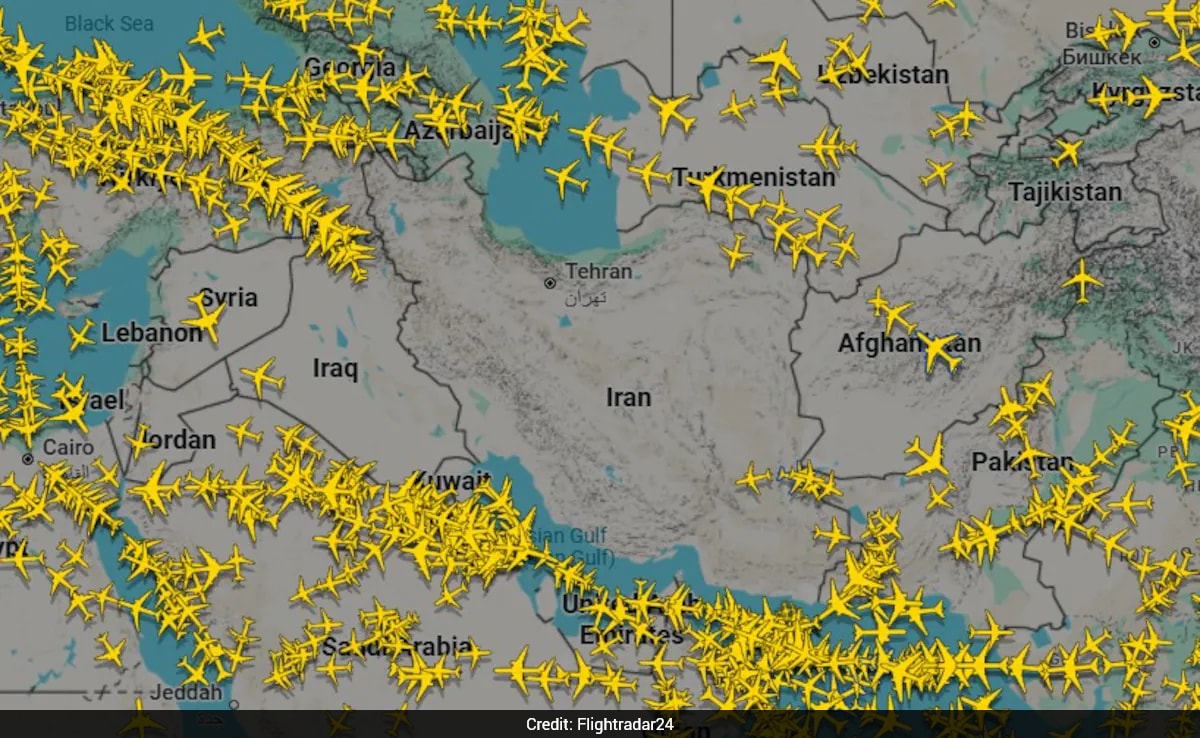
On a Tuesday night, as rumors of missiles and retaliatory strikes between the United States, Israel, and Iran began to bleed from intelligence briefings into public consciousness, millions of people didn't reach for their bibles or their history books. They reached for an app. Specifically, they reached for Flightradar24.
There is a peculiar, modern intimacy in watching a tiny yellow icon crawl across a digital map. We aren't just looking at data points. We are looking at a pressurized metal tube holding three hundred souls, suspended 35,000 feet above a geopolitical fault line. When the world feels like it is tilting on its axis, we look to the sky to see if the planes are still flying.
But on this particular night, the sky went dark—not because the planes stopped, but because the observers became too many for the servers to hold.
The Infrastructure of Our Collective Fear
Flightradar24 is built on a network of terrestrial receivers—small, often hobbyist-run boxes that catch the ADS-B signals broadcast by aircraft. It is a miracle of crowdsourced transparency. Under normal circumstances, it is a tool for aviation geeks to identify a passing Dreamliner or for families to check if a grandmother’s flight from Chicago has touched down.
When the geopolitical tension spikes, the platform transforms. It becomes a scoreboard for a game where the stakes are human lives and global stability.
As reports of explosions near Isfahan circulated, the surge was instantaneous. Imagine a narrow doorway designed for a trickle of people suddenly facing a stampede of millions. The digital infrastructure groaned. The maps froze. The "Error 502" screen became the most-viewed page on the internet.
The site didn't fail because of a cyberattack. It failed because of us. It failed because, in a moment of existential uncertainty, we all wanted to see the same thing at the exact same time: Is the airspace empty? Are the tankers refueling? Is the path to Tehran clear, or is it cluttered with the ghosts of impending conflict?
The Invisible Stakes of a Flight Path
Consider a hypothetical traveler. We’ll call her Elara. She is sitting in seat 14A on a long-haul flight from Dubai to London. She is blissfully unaware that, beneath her, the world is holding its breath. She is watching a romantic comedy and debating whether to have the chicken or the pasta.
Meanwhile, thousands of miles away, a teenager in a bedroom in Ohio is staring at Elara's flight icon. He sees her plane make a sharp, unexplained bank to the west. He sees the "Squawk 7700" code flash red—the universal signal for an emergency. Within seconds, that red icon is shared to millions on social media.
This is the new reality of war. It is televised, yes, but it is also tracked in real-time by amateurs with better data than many mid-century generals.
The "crash" of Flightradar24 is a symptom of a deeper human need. We crave the illusion of control. If we can see the plane, we feel we understand the threat. If we can track the rerouting of Lufthansa or Emirates flights away from Iranian airspace, we can map the borders of the danger zone from the safety of our couches.
But when the screen goes blank, the anxiety doubles. The darkness of the app reflects the darkness of the situation. Without the data, we are left only with our imaginations, and our imaginations are rarely kind.
The Ghost Planes and the Fog of Apps
The technical reality of flight tracking during a conflict is messier than the slick interface suggests. During the strikes, users weren't just looking for commercial jets. They were hunting for "ghosts"—military transponders that flicker on and off, tankers that circle in patterns resembling a frantic heartbeat, and the sudden, tell-tale vacuum of empty space where a bustling corridor used to be.
Modern warfare thrives on the "fog of war," a term Carl von Clausewitz coined to describe the uncertainty faced by participants in a conflict. Today, that fog has moved. It is no longer just on the battlefield; it is in our pockets.
When the servers crashed, it created a secondary fog. Was the site down because of traffic, or had a government forced it offline to hide troop movements? The vacuum of information was immediately filled by speculation, much of it incorrect, all of it fueled by the adrenaline of the moment.
The Weight of the World on a Server Rack
The engineers at Flightradar24 are essentially the lighthouse keepers of the digital age. When the storm hits, their job isn't just to keep the lights on; it’s to ensure the light doesn't lie.
Maintaining a global map of 200,000 flights a day is a feat of engineering. Maintaining it while ten million people try to refresh the same square inch of Iranian airspace is a nightmare. The sheer volume of data requests acts like a self-inflicted Distributed Denial of Service (DDoS) attack. We, the concerned public, effectively shut down our own windows into the conflict through the sheer weight of our collective gaze.
This isn't just about a website being slow. It’s about the fragility of our connection to reality. In an era where "fake news" can be generated by an algorithm in seconds, the raw, unvarnished data of a transponder signal is one of the few things people still trust. When that trust is interrupted by a spinning loading icon, the sense of isolation is profound.
The Quiet After the Surge
Eventually, the servers were patched, the traffic throttled, and the map returned. The tiny yellow icons reappeared, crawling across the screen with their usual, indifferent steady pace.
For the aviation enthusiast, it was a return to business as usual. For the rest of the world, it was a sobering reminder of how thin the veil is between our digital lives and the physical realities of global power.
We live in a world where a conflict in a desert halfway across the globe can break a server in a cool, air-conditioned data center in Europe. We are connected not just by trade or by politics, but by the very signals we use to watch each other.
The next time the map freezes, remember that the silence isn't just technical. It is the sound of millions of people holding their breath, waiting for the icons to move again, hoping that the sky remains crowded with travelers rather than empty for the engines of war.
We watch the planes because we want to believe that the world is still moving, that the schedules are being kept, and that Elara in seat 14A is still just deciding between the chicken and the pasta. The crash of a website is a small thing, but the reason it crashes is everything. It is the digital footprint of a planet that is terrified of the dark.
The screen flickers back to life. A single jet turns south. The world continues to watch.
Would you like me to look into the specific technical hurdles of ADS-B signal jamming in active conflict zones?