The coffee in the chipped ceramic mug was still warm when the first streak of light cut across the Tel Aviv skyline. It wasn't the sun. It was the jagged, artificial brilliance of an interceptor meeting its mark. For decades, the shadow war between the United States, Israel, and Iran was a series of whispers in dark rooms, a dance of cyber-attacks and maritime posturing. Now, the whispers have become a roar. We are forty-eight hours into a conflict that many spent their entire careers trying to prevent.
To understand these first two days, you have to look past the tactical maps and the grainy satellite footage of smoldering tarmac. You have to look at the people. Consider a hypothetical family in Isfahan, huddled in a basement as the low hum of drones vibrates through the floorboards. Then, consider a reservist in Haifa, kissing his children goodbye while the air-raid sirens provide a haunting, rhythmic soundtrack to his departure.
The distance between these two scenes is closing. The abstract has become physical.
The End of the Threshold
For years, there was a rule. It was unwritten, but it was absolute. You could strike a proxy, but you did not strike the heart. You could disable a centrifuge with a line of code, but you did not send a cruise missile into a sovereign city.
The first forty-eight hours have shattered that rule. We are seeing a direct, kinetic confrontation between the U.S.-Israeli alliance and Iranian domestic infrastructure. This is no longer a proxy war fought in the deserts of Syria or the mountains of Yemen. The geographic distance that once provided a cushion of deniability has evaporated.
The logic of "proportionality" is the first casualty of such a shift. When the first wave of Iranian ballistic missiles crossed the border, the response from the U.S. and Israel wasn't just a defensive shield. It was a clear signal that the era of the "gray zone"—that murky space where wars are fought without being declared—is over. Total transparency is terrifying. It means every strike is an escalation, and every silence is a preparation for something worse.
The Invisible Shield and the Rain of Fire
On paper, the statistics are staggering. Reports indicate an interception rate that would have seemed like science fiction twenty years ago. But statistics are cold comfort when you are the one standing under the debris.
The technology governing these two days is a testament to human ingenuity and a grim reminder of our capacity for destruction. The "Arrow" and "Patriot" systems are performing a high-stakes ballet in the upper atmosphere. Each successful hit is a triumph of physics. Yet, there is a psychological cost to this safety. Living under a "dome" creates a strange, brittle sense of security. You watch the explosions in the sky like they are fireworks, until the shockwave hits your windows and the glass begins to rattle.
The U.S. involvement has been more than just a supportive nod. Carrier strike groups in the Mediterranean and the Red Sea have turned the region into the most densely monitored airspace on the planet. This isn't just about shooting down missiles; it’s about the massive data flow. Every launch is tracked, analyzed, and countered in milliseconds.
But technology has a limit. It can stop a missile, but it cannot stop the intent behind it.
The Economic Ripple in the Grocery Aisle
While the headlines focus on the blast zones, a different kind of war is being fought in the global markets. You might not see the fire, but you will feel the heat at the gas pump and in the price of your morning toast.
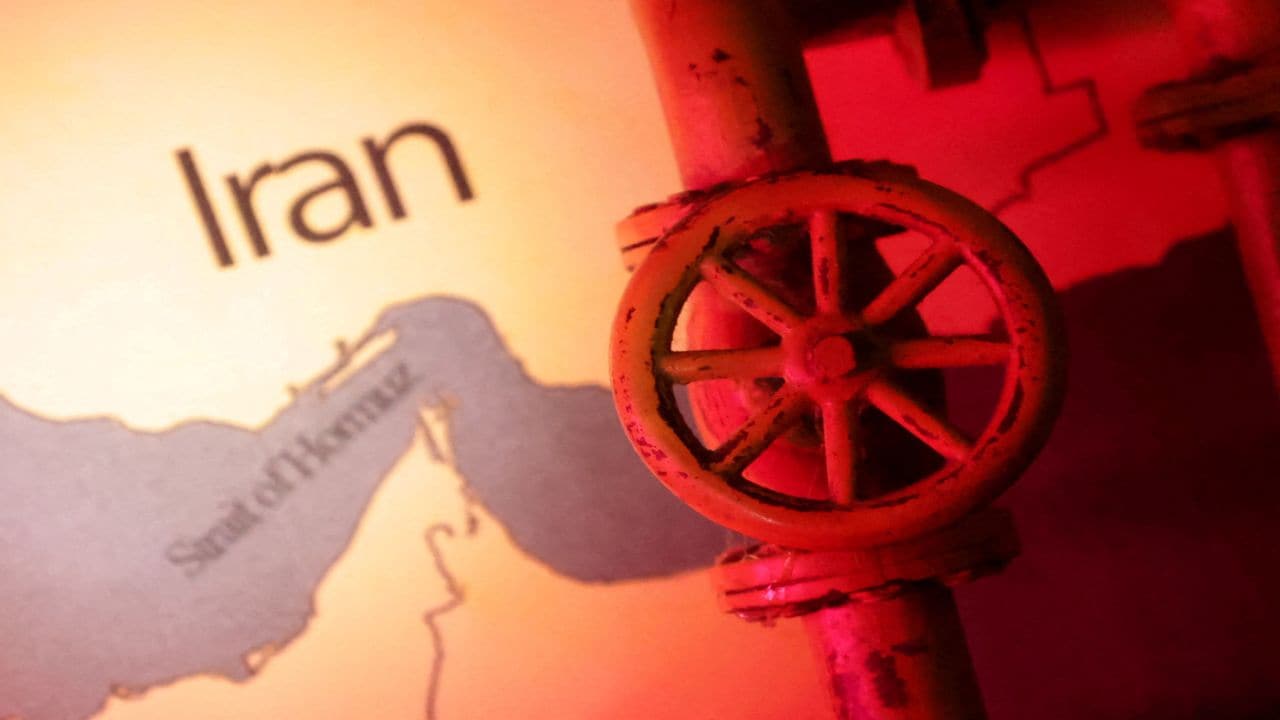
The Strait of Hormuz is a narrow stretch of water, a jugular vein for the global energy supply. In these first forty-eight hours, the mere threat of its closure has sent tremors through the boardrooms of London and New York. This is the "hidden stake" of the conflict. It isn't just a regional spat; it is a systemic shock to a world economy that is already hyper-fragile.
Think of a small business owner in a suburb of Chicago. They have no stake in the geopolitics of the Middle East. They don't know the names of the Iranian generals or the specifics of the Israeli cabinet. But when shipping insurance rates for tankers skyrocket, the cost of the plastic they use for their products climbs. The war travels through the supply chain like a fever. It is a reminder that in 2026, no border is thick enough to keep a conflict contained.
The Human Cost of Miscalculation
War is often described as a chess match, but that is a lie. In chess, the pieces don't bleed. The most haunting takeaway from these first two days is the sheer speed of the human toll.
Displaced families are moving in the dark. Communication networks are flickering as cyber-offensives target civilian power grids. In the age of the smartphone, we are seeing the war in real-time—raw, unedited, and terrifying. We see the dust-covered faces of children and the frantic efforts of first responders. These images bypass the analytical brain and strike directly at the gut.
There is a profound sense of uncertainty. In previous conflicts, there was usually a clear "off-ramp," a diplomatic path that both sides could take to save face. Now, the rhetoric is so absolute that finding a middle ground feels like trying to stand on a needle. The "red lines" have been crossed so many times they’ve blurred into a single, bloody smear.
The Silence After the Siren
Perhaps the most significant development is something that hasn't happened yet. There has been no massive, global outcry for a return to the status quo. It’s as if the world has been holding its breath for so long that it finally accepted the exhale of violence.
The silence between the sirens is when the real weight of the situation sinks in. It’s the moment a mother realizes her son’s school is now a shelter. It’s the moment a pilot realizes he might not be coming home to the life he knew. These forty-eight hours have remapped the world, not just in terms of territory, but in terms of what we consider "normal."
We are watching the old world order dissolve in a flash of magnesium and steel. The facts tell us how many missiles were fired and which bases were hit. But the story—the real story—is about the sudden, jarring realization that the safety we took for granted was always a fragile illusion.
The sun is beginning to set over the Mediterranean again. The sky is a bruised purple, beautiful and deceptively calm. Somewhere, a finger hovers over a launch button. Somewhere else, a child asks if it’s safe to come out from under the bed. The answer, for the first time in a generation, is a definitive "we don't know."
The light on the horizon isn't the morning. It's the glow of a world that has finally caught fire, and we are all standing much closer to the flames than we ever cared to admit.