Benjamin Netanyahu just went for the throat. For decades, the Israeli Prime Minister has talked about the "existential threat" of a nuclear Iran, but his recent rhetoric and military maneuvers suggest he’s no longer interested in just containing the problem. He wants the whole house to come down. This isn't just about a few more bunkers getting hit with GBU-72 busters. It's an active, high-stakes gamble to force a regime change in Tehran.
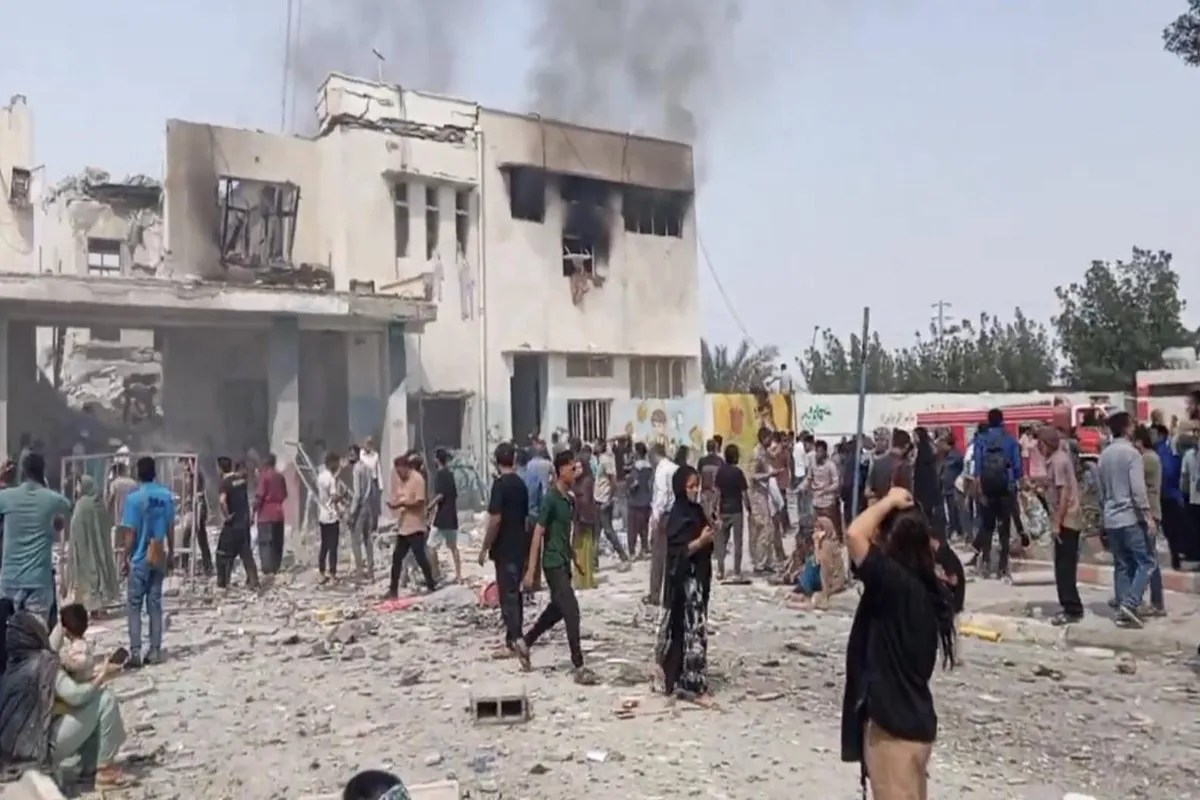
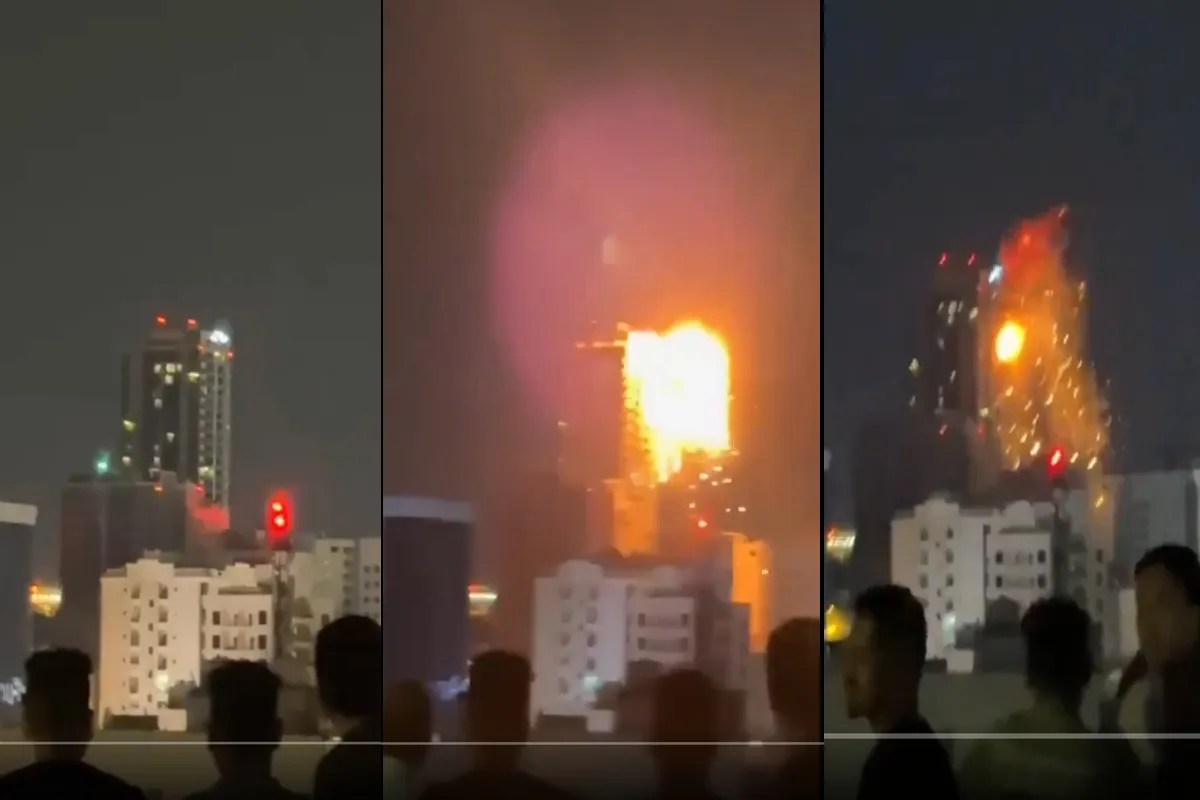
If you've followed Netanyahu's career, you know he's always been the guy at the UN with the cartoon bomb drawings. But today, the vibe is different. On February 28, 2026, Israel and the US launched "Operation Roaring Lion," a massive coordinated strike that didn't just target centrifuges. It targeted the leadership. With reports swirling that Supreme Leader Ali Khamenei didn't survive the initial barrage on his compound, Netanyahu is now telling the Iranian people that "help has arrived." It's a bold, possibly reckless, move that moves the Middle East into uncharted territory.
The end of the shadow war
For years, Israel and Iran played a deadly game of tag. A cyberattack here, a scientist assassinated there, a drone strike on a proxy in Lebanon. That's over. By openly calling for the Iranian people to "flood the streets and finish the job," Netanyahu has discarded the cloak of deniability.
He’s betting that the Iranian regime is a hollow shell, held together only by fear and the dwindling funds of the IRGC. He pointed out in a recent address that the billions spent on Bashar al-Assad, Hamas, and Hezbollah "literally went up in smoke." To Netanyahu, the collapse of these proxies in late 2024 and 2025 was the proof of concept. If the satellites can fall, why not the planet they orbit?
However, betting on a popular uprising to finish what F-35s started is a massive risk. We've seen this movie before in the Middle East. Often, when you decapitate a regime without a clear successor, you don't get a Jeffersonian democracy. You get a vacuum. Or worse, you get "IRGCistan"—a even more radicalized military junta that has nothing left to lose.
Why now is the moment for Israel
Why did Netanyahu choose this specific window? It’s not just one thing; it’s a perfect storm of geography and timing.
- The Trump Factor: Having Donald Trump back in the White House changed the math. Trump’s "Operation Epic Fury" provided the heavy lifting that Israel couldn't do alone. Israel doesn't have the heavy bombers required to reach the deepest Iranian facilities like Fordow. The US does.
- Proxy Collapse: With Hezbollah’s leadership decimated and Hamas in ruins after the 2024 campaigns, Iran’s "ring of fire" around Israel has been extinguished. For the first time in decades, Israel doesn't have to worry about 150,000 rockets raining down from Lebanon if they strike Tehran.
- Internal Unrest: Iran has been simmering with dissent since the "Woman, Life, Freedom" protests. Netanyahu isn't just a military strategist; he’s a student of Iranian domestic pain. He knows the economy is trashed and the youth are fed up.
The Fordow problem and the limits of air power
Don't let the headlines fool you—destroying a nuclear program with just planes is incredibly hard. Sites like the Fordow Fuel Enrichment Facility are buried under 80 meters of solid rock. Even the best bunker-busters in the Israeli arsenal can only dig through about 5 or 6 meters of reinforced concrete.
To actually kill the program, you need to destroy the "intellectual core"—the scientists and the generals. This is exactly what we're seeing. The strikes aren't just hitting pipes and valves; they’re hitting the people who know how to put them back together. Netanyahu is banking on the idea that if you kill the brain, the body won't remember how to build a bomb.
The day after the Ayatollah
The biggest criticism of Netanyahu’s strategy is the lack of a "Day After" plan. If the Islamic Republic actually collapses, who takes the keys?
There are a few scenarios, and none of them are guaranteed to be "peaceful." You could see a fragmented Iran where different IRGC factions fight for control of the remaining missile stockpiles. You could see ethnic minorities in regions like Sistan and Baluchestan or Khuzestan trying to break away.
Netanyahu’s gamble is that any chaos in Iran is better for Israel than a stable, nuclear-armed Iran. It's a cold, hard calculation. He’s willing to trade regional instability for the removal of an existential threat. Whether the rest of the world—or even the Israeli public—is ready for the fallout of a collapsed 85-million-person state is another question entirely.
What this means for you
The ripple effects are already hitting. Oil prices are jittery because a cornered Iran might still try to choke the Strait of Hormuz. If you're invested in energy or international markets, expect a wild ride.
On a geopolitical level, the "rules" have changed. Preemption is the new deterrence. If this works, Netanyahu becomes the man who reshaped the Middle East. If it fails, he might have started a "forever war" that makes the last two decades look like a warm-up act.
Keep a close eye on the streets of Tehran over the next 48 hours. That's where the real answer lies. If the Iranian people don't rise up as Netanyahu hopes, this "biggest decision" might just be a very expensive, very loud stalemate. Watch the movement of the US Gerald R. Ford carrier strike group—it's the ultimate insurance policy if things get messy.