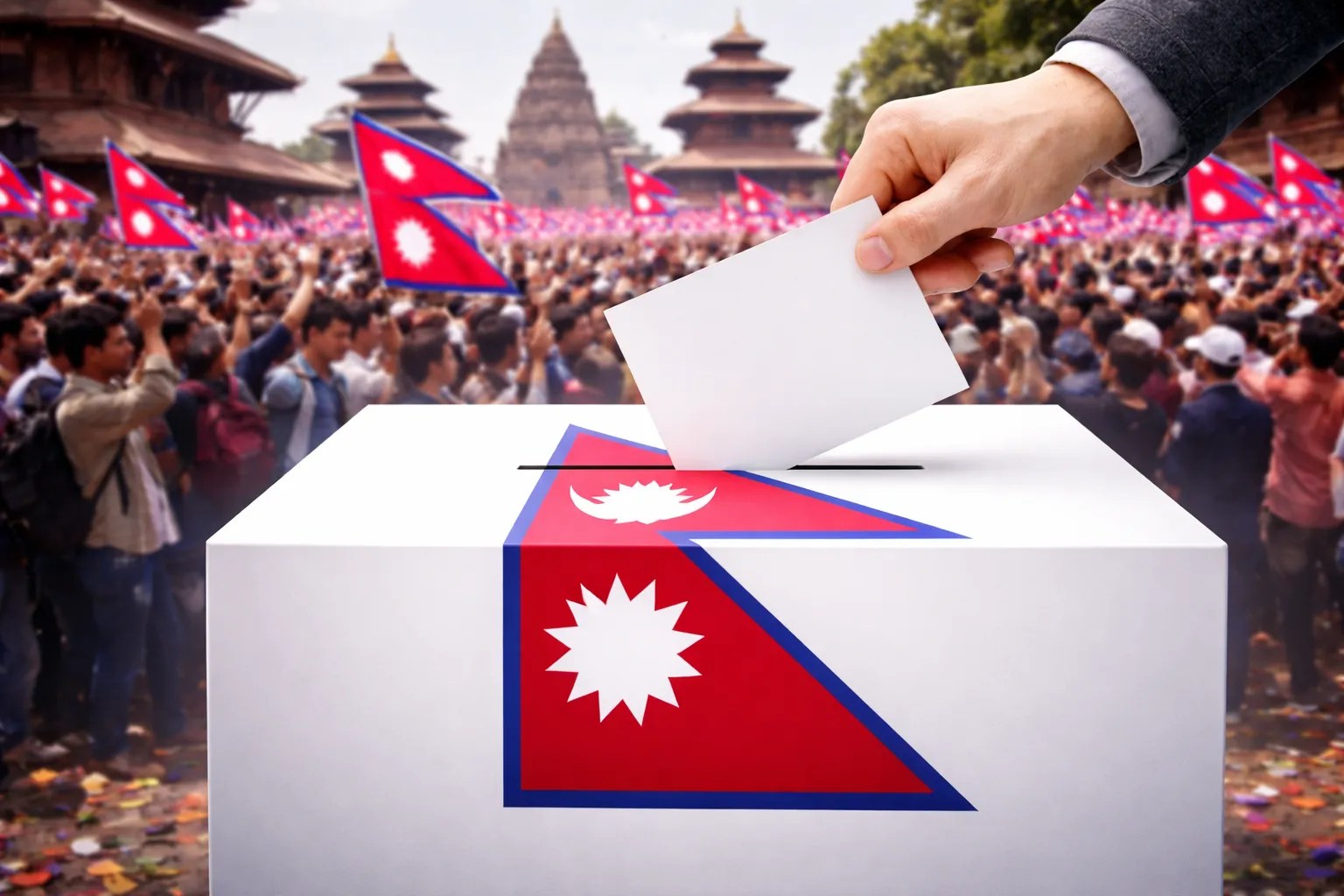
The international press is currently salivating over a narrative that doesn't exist. They see the March 5 elections in Nepal as a "Gen-Z uprising," a digital-first revolution where TikTok stars and independent firebrands finally topple the geriatric "Syndicate" that has choked Kathmandu for thirty years. They are looking at the surface ripples and missing the tectonic plates.
If you believe this election is about "new faces," you are being sold a fairy tale.
This isn't an evolution; it’s a sophisticated rebranding of the same extractive political economy. The "youth movement" being touted by analysts is largely a pressure valve designed to let off steam without actually breaking the machine. I have watched these cycles play out from the inside—where the rhetoric of the street meets the cold reality of the "Bhote Bahal" (the backroom deals).
The status quo isn't scared. It’s laughing.
The Gen-Z Trap: Why "New" Isn't "Different"
The common consensus is that the rise of the Rastriya Swatantra Party (RSP) and various independent "Balen-style" candidates signifies the end of the traditional Big Three—the Nepali Congress (NC), the CPN-UML, and the Maoist Center.
This logic is flawed because it ignores how power actually functions in the Himalayas. Nepal is not a functional democracy in the Western sense; it is a competitive oligarchy. The Big Three don't just hold seats; they hold the keys to the bureaucracy, the judiciary, and the procurement contracts that keep the country’s elite fed.
A handful of 30-something MPs winning seats in the Pratinidhi Sabha doesn't disrupt a patronage network that has roots forty years deep. In fact, the "Independent" wave often serves the old guard. By splitting the disgruntled urban vote, these newcomers frequently ensure that the organized, cadre-based machines of the UML or the Congress win via a simple plurality.
We saw this in the last local elections. The hype was around the independents, but the math favored the machines.
The Illusion of Ideology
Commentators spend hours debating whether a "left-right" coalition is stable. It’s a waste of breath. There is no ideology in Kathmandu. There is only Rent-Seeking.
Whether it’s Sher Bahadur Deuba, KP Sharma Oli, or Prachanda, the goal is the same: control the Ministry of Physical Infrastructure and Transport. That is where the money is. The ideological labels—"Communist," "Socialist," "Democrat"—are merely brand skins for the same underlying operating system of distributive politics.
If you think a March 5 victory for a "new" coalition will change Nepal’s $40 billion GDP trajectory, you don't understand the debt-to-remittance trap.
The Remittance Parasite
While the world focuses on ballot boxes, the real "election" happens every day at the Tribhuvan International Airport departure gate.
Nepal’s economy is a hollow shell supported by the sweat of three million young men and women in the Gulf and Malaysia. Remittance accounts for nearly 25% to 30% of the GDP. This is the ultimate "get out of jail free" card for the political class.
- Brain Drain as a Policy: The government has no incentive to create jobs. If the youth stay, they protest. If they leave, they send back USD and Qatar Riyals that the government can use to fund its trade deficit.
- The Consumption Trap: Those funds aren't being invested in Nepali manufacturing. They are spent on imported iPhones, Indian gold, and Chinese electronics.
- Taxing the Exit: The state essentially taxes the poverty of its citizens by collecting fees at every stage of the migration process.
Any candidate—Gen Z or otherwise—who claims they will "bring the youth back" without dismantling the import-licensing cartels is lying. You cannot build an industrial base when the country’s most powerful business houses are also the primary importers of the very goods you’d try to manufacture. It is cheaper to buy from a cartel than to build a factory.
The Geopolitical Pincer: India vs. China
The competitor's view treats this election as a domestic affair. It isn't. Nepal is the frontline of a quiet, brutal proxy war.
India views Nepal as its "strategic backyard" and uses its control over transit points and petroleum supply as a lever. China, through its Belt and Road Initiative (BRI), views Nepal as a crucial gateway to South Asia.
Every major candidate on the March 5 ballot is being vetted by New Delhi and Beijing.
- The MCC vs. BRI Tug-of-War: The $500 million American MCC grant wasn't about electricity; it was a litmus test for US influence. The backlash wasn't grassroots; it was orchestrated.
- Hydropower Hegemony: Nepal has the theoretical potential to be the "Battery of Asia." But look at who owns the licenses. Most are held by "paper developers" with ties to political leaders, waiting to flip the license to a foreign firm for a massive kickback.
When you vote on March 5, you aren't just choosing a local representative. You are choosing which foreign power’s billionaire-backed infrastructure company gets to dam the next river.
The "Balen Effect" is a Statistical Outlier
Everyone points to Balen Shah, the Mayor of Kathmandu, as proof that the system is breaking. They are wrong. Balen is a miracle of specific urban frustration, not a scalable national model.
Kathmandu is an island. The rest of Nepal is governed by "The Chairmanship." In rural districts, your access to fertilizer, your child’s school funding, and even the local police's cooperation depend on your loyalty to the local party boss.
An independent candidate in Kalikot or Humla doesn't just need "likes" on social media; they need a shadow government to protect their voters from intimidation. The RSP and other "new" parties haven't built that infrastructure. They are fighting a 21st-century media war against a 19th-century feudal machine.
The Math of the "Hung Parliament"
Expect a fragmented result. No one will have a majority.
In a Western democracy, a hung parliament leads to soul-searching. In Nepal, it leads to the "Horse Trading Season." This is the most lucrative time for a politician. This is when a party with 10 seats can demand the Home Ministry or the Finance Ministry in exchange for support.
The March 5 election will likely result in a government that is even more unstable than the last one. We are looking at a coalition of 5 or 6 parties with diametrically opposed "platforms" but a shared appetite for the treasury.
Stop Asking if the Election is "Fair"
The question isn't whether the votes are counted correctly. They usually are. The question is whether the choice is meaningful.
If you are choosing between a 78-year-old who has been Prime Minister five times and a 70-year-old who has been Prime Minister three times, "fairness" is a secondary concern. The systemic exclusion of anyone outside the Khas-Arya male elite is the real rigging.
The Madhesi movements, the Dalit struggles, and the Janajati demands have been systematically co-opted or crushed. The "Gen-Z" movement currently dominating the headlines is largely a movement of the urban elite children of the same people who ran the country for decades. It is an internal coup within the upper class, not a revolution of the masses.
How to Actually Analyze March 5
If you want to know who is winning, don't look at the rallies. Look at these three metrics:
- The "Bagman" Shuffle: Follow the money. Which business houses (Golyan, Chaudhary, Dugad) are hedging their bets? They never lose. If they are funding a "new" candidate, that candidate is already compromised.
- The Border Traffic: Are the transit points with India seeing "technical delays" leading up to the vote? This is the classic signal of external pressure.
- The Judicial Appointments: Watch who gets nominated to the Supreme Court in the weeks following the election. That is the real insurance policy for the Syndicate.
The Brutal Reality of "Stability"
The international community wants "stability" in Nepal because they fear a failed state between two nuclear powers. But stability in Nepal is exactly what is killing it.
The stability of the Big Three is the stability of a stagnant pond. It is the stability of a country where the only growth industry is the "Manpower Agency."
Until the cost of holding power exceeds the profit of corruption, nothing changes. The March 5 election won't raise that cost; it will just distribute the profits among a slightly larger, slightly younger group of people.
Stop looking for a hero in a waistcoat or a rapper’s cap. The machine is designed to consume them. By the time the results are in on March 6, the deals will already have been signed in the five-star hotels of Kathmandu, far away from the ballot boxes.
The electorate isn't choosing a leader; they are choosing their next landlord.
Go ahead and celebrate the "youth turnout" if it makes you feel better. But while you're watching the exit polls, the old men are already drafting the next budget to ensure that no matter who wins, the money flows exactly where it always has.
Check the flight schedules on March 6. The most ambitious young Nepalis won't be waiting for the results. They'll be checking in for their flights to Dubai. That is the only vote that counts.


