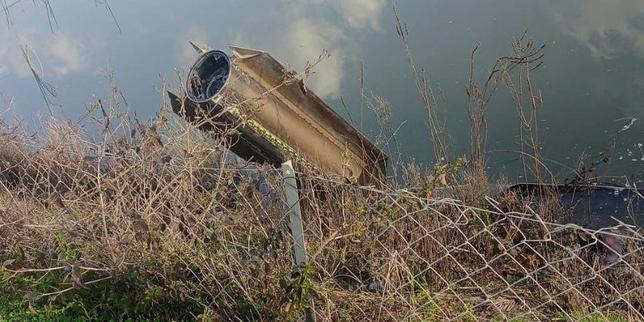
The flash over the Turkish border was not a malfunction or a meteor. It was a high-stakes kinetic interception of an Iranian missile by NATO-linked defense systems, a moment that stripped away the diplomatic veneer of "restraint" currently dominating headlines. While official channels often scramble to downplay these events as routine defensive postures, this specific engagement reveals a terrifying narrowing of the gap between proxy friction and direct regional warfare. The interception proves that the integrated missile shield across Europe’s southeastern flank is no longer just a deterrent. It is actively engaged in a hot war that the public is only seeing in glimpses.
Understanding this event requires looking past the immediate explosion in the sky. Turkey, a NATO member with a complex, often contradictory relationship with Tehran, finds itself at the literal center of a ballistic trajectory. The missile, identified by early telemetry as a medium-range variant launched from western Iran, was neutralized before it could impact its intended target or stray into populated Turkish infrastructure. This wasn't just a win for the Aegis Ashore system or the localized Patriot batteries; it was a loud, clear signal to Tehran that the "axis of resistance" has hit a hard ceiling of Western hardware.
The Mechanics of the Shield
The interception was a masterpiece of distributed sensor data and split-second execution. When an Iranian missile leaves its pad, it is immediately tracked by a network of satellites and ground-based radar, including the AN/TPY-2 radar station in Kürecik, Turkey. This facility is the eyes of the operation. It feeds data into the wider NATO Integrated Air and Missile Defense (IAMD) system, allowing for a "launch-on-remote" capability.
This means the interceptor doesn't necessarily need to see the target with its own radar immediately. It relies on the Kürecik data to fly to a predicted point in space.
The physics of this are unforgiving. To hit a target traveling at several times the speed of sound, the interceptor must perform a series of calculations that account for atmospheric drag, gravity, and potential evasive maneuvers by the reentry vehicle. On this occasion, the system worked perfectly. But reliance on a single node like Kürecik creates a massive strategic vulnerability. If that radar goes dark through sabotage or a localized strike, the entire defensive umbrella for Southern Europe begins to fold.
Turkey’s Tightrope Between Tehran and Brussels
Ankara's position is unenviable. President Erdoğan has spent years attempting to balance his role as a NATO heavyweight with his desire to lead an independent Islamic foreign policy. This interception forces his hand. By allowing NATO systems on Turkish soil to down an Iranian projectile, Turkey has effectively picked a side in a way that rhetoric cannot mask.
Tehran sees the Kürecik radar as a direct threat to its national security, often labeling it a "Zionist-American" tool. For the Iranian Revolutionary Guard Corps (IRGC), the failure of this missile to reach its vicinity is a data point in a larger calculation. They are testing the edges. They want to know exactly how many interceptors are in a battery, how fast the reaction time is, and what the saturation point looks like.
Every "successful" defense provides the attacker with a roadmap for the next attempt. They aren't just firing missiles; they are conducting live-fire stress tests on Western technology.
The Saturation Problem
Defense analysts have long warned about the "cost-exchange ratio" of missile defense. A single interceptor, like the SM-3 or a PAC-3 MSE, costs significantly more than the primitive ballistic missile it is designed to destroy. Iran can produce dozens of "Fatteh" or "Shahab" variants for the price of one high-end NATO defensive volley.
If Tehran decides to stop firing single shots and instead launches a coordinated swarm of fifty missiles combined with low-flying suicide drones, the math changes. The defense system is finite. Once the magazines are empty, the shield is gone. This interception was a tactical success but a strategic warning: the West is currently using a gilded sword to swat away cheap flies, and the flies are becoming more numerous.
Intelligence Failures and Foresight
There is a nagging question that the official briefings ignored: Why was this missile fired now? Intelligence circles suggest this wasn't a random escalation but a response to a specific, non-publicized operation within Iranian borders. The narrative that Iran acts purely out of ideological fervor is a simplification that ignores the internal pressures of the IRGC. They are losing mid-level commanders to precision strikes and cyber-sabotage. A missile launch toward a NATO-guarded corridor is a desperate attempt to regain domestic "face" and prove they can still project power beyond their borders.
However, the fact that the missile was intercepted so cleanly suggests that NATO intelligence had a "left-of-launch" indication. They likely knew the fuel trucks were moving before the missile even stood on its launcher. This level of transparency into Iranian movements makes a mockery of Tehran's claims of a "surprise" retaliatory strike.
The New Cold War in the Middle East
We are no longer in an era of insurgencies and IEDs. We have entered a period of industrial-scale kinetic competition. The border between Turkey and Iran is the new Fulda Gap.
The hardware involved—the radars, the interceptors, the command-and-control satellites—represents the most advanced engineering humanity has ever produced. But it is being managed by the same old geopolitical fears that defined the 20th century. The danger is that we become overconfident in the technology. We see a successful interception and believe we are safe, forgetting that defense must be perfect 100% of the time, while an attacker only needs to be lucky once.
The Role of Non-State Actors
While this specific event involved a state-launched missile, the line between state and proxy is blurring. Iran frequently shares this ballistic technology with groups like the Houthis or Hezbollah. If a proxy had fired this missile from a different vector, the political fallout would be easier to manage. By firing from their own soil toward a NATO trajectory, Iran has signaled that they are willing to bypass the middleman. This is a shift in doctrine that the Pentagon is currently scrambling to address.
The "gray zone" of conflict is turning bright red. When a missile is intercepted over a country like Turkey, it isn't just a military event; it’s an economic one. Insurance premiums for shipping lanes spike. Foreign investment in "stable" border regions dries up. The ripples of this single explosion will be felt in the boardrooms of Istanbul and London long after the debris has been cleared from the desert floor.
Redefining the Defensive Perimeter
The current NATO strategy relies on a "tiered" defense, but this recent engagement suggests the tiers are being bypassed. If an Iranian missile can get close enough to Turkish airspace to require an active kinetic kill, the "outer" layers of diplomacy and deterrence have already failed. We are relying on the final, most expensive line of defense because the earlier stages of the strategy are effectively dead.
This isn't a problem that can be solved with more batteries or better radar. It is a fundamental shift in the regional power dynamic. Iran has realized that while they cannot win a conventional war against NATO, they can make the cost of "peace" prohibitively high. They are forcing the West to stay in a state of constant, high-alert readiness that is both mentally and financially draining for the personnel involved.
The Invisible Casualties
No one died in this interception, but the casualty list is still growing. The casualty is the idea of a stable, predictable Middle East. The casualty is the hope that Turkey could act as a neutral bridge between East and West. Every time an interceptor leaves a rail in Turkey, Ankara’s ability to play both sides diminishes.
The debris from the intercepted missile fell in an unpopulated area, but the political fallout has landed directly on the desks of every leader in the alliance. They now have to face the reality that the "missile threat" is no longer a theoretical bullet point in a briefing—it is a reality that is rattling windows in Turkish border towns.
The next time a missile is detected, the response might not be so cleanly defensive. There is a growing faction within NATO that argues for "proactive" defense—striking the launchers before the button is even pushed. This is the ultimate escalation trap. If you wait, you risk a hit. If you strike first, you start the very war you were trying to prevent.
The interception over Turkey was a technical triumph that masked a profound strategic failure. We have built a world where the only thing standing between us and a regional conflagration is a series of algorithms and a few kilograms of high-explosive propellant.
Check the readiness of your local civil defense units; the "shield" is much thinner than the press releases suggest.
***