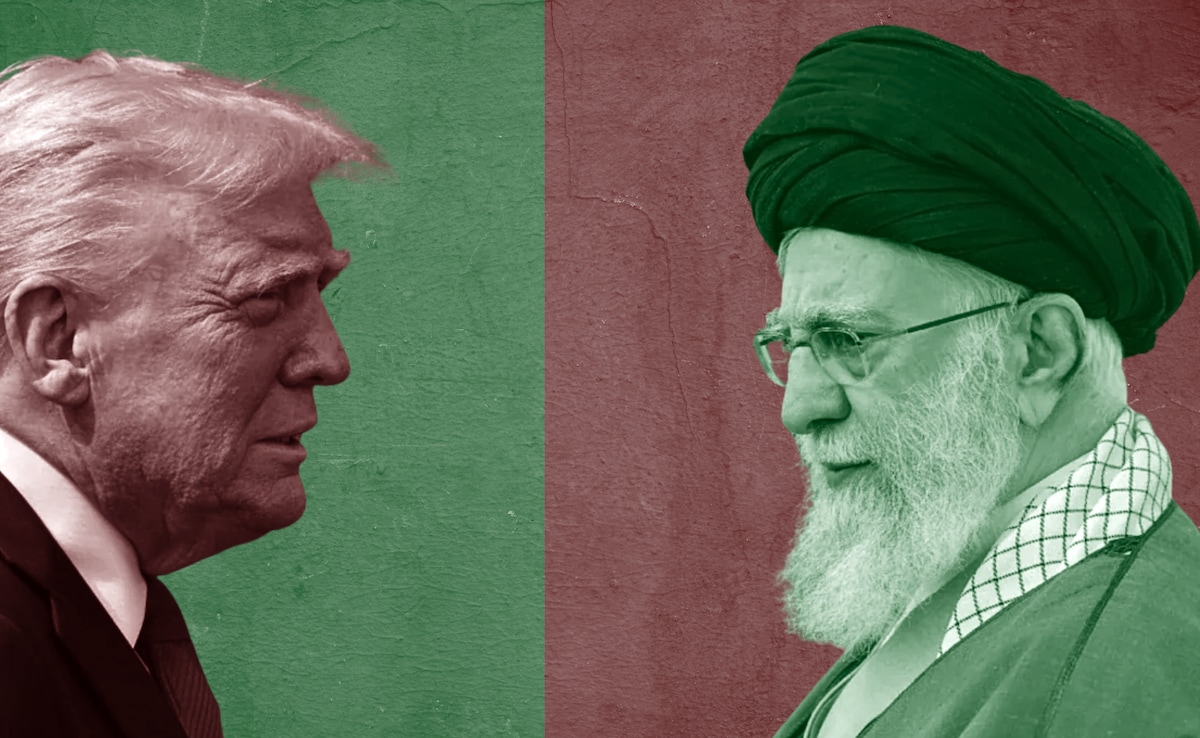
The 47-year shadow of the Islamic Republic has technically shortened, but the ground remains scorched. On March 1, 2026, the Iranian government finally confirmed what satellite imagery and White House social media posts had signaled for 24 hours: Ayatollah Ali Khamenei is dead. He was killed in a massive joint U.S.-Israeli decapitation strike, dubbed Operation Epic Fury, that leveled his residence in Tehran and claimed the lives of several top-tier commanders. For President Donald Trump, this is the ultimate "promises kept" moment, a cinematic victory intended to collapse the "Axis of Resistance" in a single afternoon.
But history rarely follows a Hollywood script. While the Supreme Leader’s seat is physically empty, the machinery of the Iranian state—specifically the Islamic Revolutionary Guard Corps (IRGC)—is already hardening into a defensive shell. The death of the figurehead does not automatically trigger the death of the system. In fact, the removal of the one man who balanced the competing factions of the Iranian deep state may have just uncorked a far more volatile and unpredictable brand of chaos. Trump’s "Iran problem" has not been solved; it has been fundamentally re-engineered into a multi-front crisis of succession, insurgency, and nuclear desperation.
The Vacuum and the Triumvirate
The Iranian constitution provides a roadmap for this exact moment, but the roadmap is currently underwater. Under Article 111, an interim leadership council has assumed power. This council is a fragile tripod consisting of President Masoud Pezeshkian, Chief Justice Gholam-Hossein Mohseni-Eje’i, and Alireza Arafi, a high-ranking cleric from the Guardian Council.
This is not a government of national unity; it is a committee of survivors.
Mohseni-Eje’i, the judiciary chief, represents the hardline security apparatus that just oversaw the brutal suppression of the "Winter 2026" protests, where an estimated 30,000 Iranians were killed or disappeared. His presence on the council ensures that any "freedom" offered by the U.S. strikes will be met with immediate domestic terror to maintain order. The interim council has 50 days to organize an election for a permanent successor through the Assembly of Experts, yet the very people meant to vote are currently in hiding or targeted by ongoing "pinpoint" bombing runs.
The Frontrunners in the Smoke
- Mojtaba Khamenei: The late leader’s son. Long rumored to be the "shadow" successor, his path to power is now complicated by the optics of a hereditary monarchy—the very thing the 1979 Revolution sought to destroy.
- Alireza Arafi: As the head of Iran’s seminaries, he provides the religious legitimacy the IRGC needs to keep the rank-and-file loyal.
- The IRGC Junta: This is the most likely "silent" winner. If the clerical leadership cannot find a consensus candidate quickly, the military wing will likely bypass the constitution entirely, establishing a de facto military dictatorship under the guise of "national emergency."
The Intelligence Coup That Changed the Rules
The strike that killed Khamenei was not a lucky shot. It was the culmination of a massive intelligence failure within the Iranian security apparatus. According to leaked reports, the CIA and Mossad utilized a combination of signal intelligence and high-level human assets to pinpoint a gathering of the regime’s inner circle.
The precision of the attack suggests that the IRGC's internal communications are no longer secure. This creates a paralyzing "paranoia loop" for the remaining leadership. If they cannot trust their own radios or their own aides, they cannot coordinate a coherent military response. However, a paralyzed tiger is still a tiger. The Iranian navy, though degraded, still possesses the capability to harass global shipping in the Strait of Hormuz, and the "Axis of Resistance"—Hezbollah, the Houthis, and various militias in Iraq—no longer has a central authority to restrain their more radical impulses.
The Nuclear Brinkmanship
The most terrifying variable in the post-Khamenei era is the status of the nuclear program. For years, Khamenei held a fatwa against the production of nuclear weapons—a theological barrier that many analysts believed was a thin veil, but a barrier nonetheless. With him gone, that religious restraint evaporates.
Hardline elements within the Atomic Energy Organization of Iran (AEOI) may now see a "breakout" as their only survival strategy. If the regime feels its existence is truly terminal, the incentive to weaponize their remaining stockpiles of 60% enriched uranium becomes absolute. Trump’s gamble is that the strikes destroyed the "brain" of the program. The reality is that the "body" of the program—the centrifuges and the scientists—is dispersed in deep, hardened facilities like Fordow that are notoriously difficult to neutralize from the air.
The Street vs. The State
While images of Iranians cheering in the streets of Tehran have surfaced, they are often followed by footage of IRGC "Basij" militias opening fire. The Iranian public is exhausted. The economy has been in a freefall, with food inflation topping 70% earlier this year. The collapse of the Rial in January 2026 was the spark that led to the largest protests in the country's history.
| Economic Indicator (March 2026) | Status | Impact on Stability |
|---|---|---|
| National Currency (Rial) | Record Low | Destroyed middle-class savings; fueled protests |
| Oil Export Revenue | -45% YoY | Stripped the IRGC of its funding for proxies |
| Internet Access | Targeted Blackouts | Hindered protest coordination and digital economy |
| Unemployment (Youth) | ~40% | Created a permanent class of disillusioned revolutionaries |
Trump’s address on Truth Social called this a "Berlin Wall moment," but the Berlin Wall fell because the Soviet Union chose not to shoot. The IRGC has shown no such restraint. By killing the Supreme Leader but leaving the security apparatus mostly intact, the U.S. may have accidentally created a "wounded animal" scenario where the regime’s survival instinct overrides any remaining diplomatic guardrails.
The Geopolitical Ripple Effect
The reaction from the East has been chillingly consistent. China condemned the killing as a "serious violation of sovereignty," while Russia remains preoccupied with its own regional interests. The real danger lies in the "orphan" proxies. Hezbollah’s Naim Qassem has already vowed "unlimited retaliation." Without Khamenei’s specific, often cautious, strategic guidance, these groups may launch independent strikes against U.S. bases or Israeli cities, dragging Washington into the very "open-ended Middle East war" that critics of the operation feared.
The Trump administration’s doctrine of "Peace Through Strength" is being tested in its most extreme form. The administration argues that by removing the head, the body will wither. Yet, the history of the Middle East suggests that decapitation strikes often lead to hydra-headed insurgencies.
We are currently in the "golden hour" of the transition. If a moderate or pragmatist somehow emerges from the Assembly of Experts, there is a narrow window for de-escalation. But if the IRGC formalizes its grip on power, the death of Ali Khamenei will not be remembered as the end of the Iran problem—it will be remembered as the beginning of its most violent chapter.
Would you like me to analyze the specific impact of these strikes on global oil prices and the projected volatility of the Strait of Hormuz over the next 30 days?