The air in the Situation Room is recycled, cool, and carries the faint, metallic scent of electronics running at high capacity. It is a room where the clocks on the wall don't just tell time; they measure the distance between peace and the unthinkable. On January 8, 2020, those clocks ticked with a weight that felt heavy enough to crack the floorboards.
Hours earlier, the sky over Iraq had been torn apart.
Iran had launched more than a dozen ballistic missiles at the Al-Asad and Erbil airbases, housing American and coalition forces. It was a direct, state-on-state kinetic strike. For decades, the shadow war between Washington and Tehran had been fought in the dark—through proxies, through cyber-attacks, through the whispered instructions of intelligence officers. But that night, the shadow was gone. The world watched the grainy footage of plumes of fire, waiting for the sound of the other shoe dropping. We waited for the casualty counts. We waited for the inevitable declaration that the cycle of escalation had finally reached the point of no return.
Then came the morning.
The Calculus of Restraint
When the President stepped toward the podium in the Grand Foyer of the White House, the atmosphere wasn't one of immediate fire and fury. It was something else. To understand the gravity of that moment, you have to look past the teleprompter and into the strategic math that governs global power.
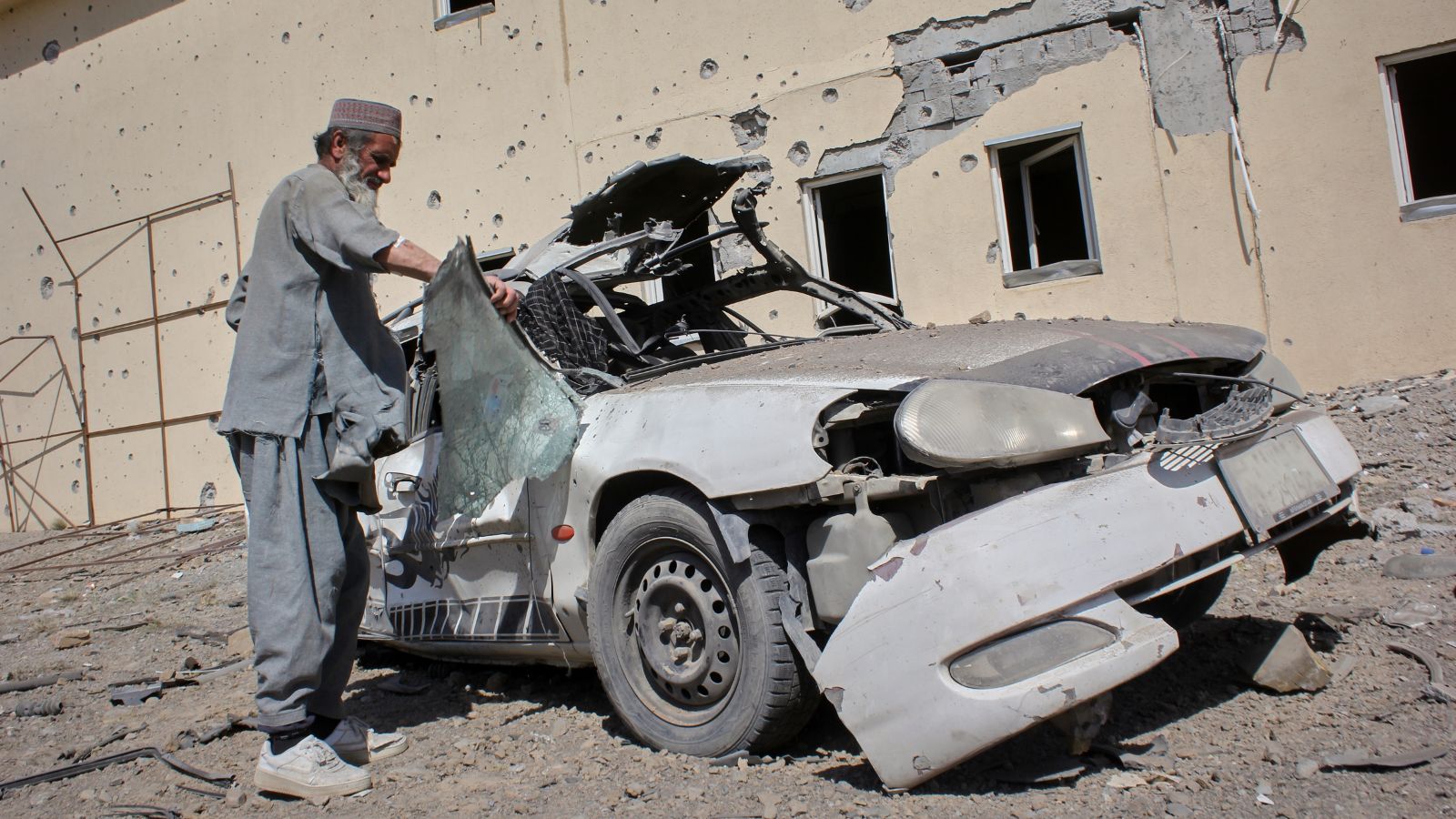
The immediate facts were stark. Iran had blinked, but they had also roared. They fired. Yet, miraculously—or perhaps by design—no American or Iraqi lives were lost. The early warning systems had worked. Our soldiers had scrambled into bunkers, feeling the earth shudder as 1,000-pound warheads cratered the desert nearby.
The statement delivered that morning was a pivot point in modern history. It began not with a threat, but with a condition: "As long as I am President of the United States, Iran will never be allowed to have a nuclear weapon."
This wasn't just rhetoric. It was the boundary line.
Consider a hypothetical sergeant stationed at Al-Asad. Let's call him Miller. Miller isn't thinking about the Joint Comprehensive Plan of Action (JCPOA) or the intricacies of the Strait of Hormuz. He is thinking about the thickness of the concrete above his head. He is thinking about the letter he didn't write to his wife because he didn't want to spook her. When the "all clear" sounds, Miller isn't looking for a victory parade. He is looking for a way home. The President’s speech was, in many ways, addressed to the Millers of the world, but it was heard most loudly in the halls of power in Tehran.
The Ghost in the Room
You cannot talk about the January 8 statement without talking about the man who wasn't there: Qasem Soleimani.
The strikes were a direct response to the killing of the IRGC commander days prior. Soleimani was more than a general; he was the architect of Iran’s regional influence, a figure draped in a shroud of perceived invincibility. By removing him from the board, the United States had shattered a long-standing status quo.
The Iranian missile response was their attempt to reclaim face. It was a theatrical display of force meant to satisfy a grieving domestic audience while signaling to the Pentagon that they could reach out and touch US assets if pushed.
The speech reflected a realization that the "maximum pressure" campaign had reached its most dangerous friction point. The President noted that Iran appeared to be "standing down," a phrase that acted as a pressure valve. It was an invitation to de-escalate without either side having to admit defeat.
The Economic Sword
War is usually imagined as steel meeting steel. But in the modern age, the most devastating weapons are often digital and financial.
Instead of ordering a retaliatory air strike—which would have almost certainly triggered a regional conflagration—the administration reached for the Treasury Department’s toolkit. New, punishing economic sanctions were announced.
Imagine a shopkeeper in Isfahan. He doesn't care about the range of a Fateh-110 missile. He cares about the price of flour. He cares that the Rial is losing value faster than he can count it. By choosing sanctions over Tomahawks, the US was betting that the internal pressure within Iran would eventually outweigh its desire for external expansion.
This is the invisible front. It doesn't make for good television. There are no night-vision camera feeds of explosions. There is only the slow, grinding reality of a nation’s economy being decoupled from the world. It is a quiet form of combat, but it is no less potent.
A Broken Agreement and a New Path
The elephant in the Grand Foyer was the 2015 nuclear deal. The speech was a final, public burial of that agreement. The argument was simple: the deal was "profoundly flawed" because it gave Iran a clear path to a nuclear breakout while funding the very terrorism that led to the current crisis.
The call was for the UK, France, Germany, China, and Russia to "recognize this reality." It was an appeal to move past the wreckage of the JCPOA and toward a new deal that would make the world safer and more peaceful.
But how do you build a bridge when the ground is still smoking?
Trust is a currency that has been out of circulation between DC and Tehran since 1979. The speech attempted to speak directly to the Iranian people, promising them a "great future" and prosperity if their leaders chose peace. It was a classic "hearts and minds" play, though delivered from a position of overwhelming military superiority.
The rhetoric highlighted the contrast:
- American military strength (mentioning the "big, powerful, accurate, lethal, and fast" missiles under construction).
- The desire for a shared future based on common interests.
It was the carrot and the stick, held by a hand that had just shown it was willing to use the stick.
The Sound of What Didn't Happen
We often measure history by the events that occur. We remember the dates of battles, the names of fallen leaders, and the boundaries of reshaped maps.
But sometimes, the most important moments are the ones where nothing happened.
January 8, 2020, could have been the start of World War III. It could have been the day the oil fields of the Middle East went up in flames, sending the global economy into a tailspin. It could have been the day thousands of families received the knock on the door that every military spouse dreads.
Instead, it was a day of words.
The speech was a gamble. It was a bet that the Iranian leadership valued survival more than revenge. It was a bet that the American public had no appetite for another "forever war" in the Middle East.
As the President finished his remarks and walked back into the residence, the tension didn't vanish, but it shifted. The immediate threat of a massive, regional war had been avoided through a combination of luck, tactical precision, and a willingness to offer an exit ramp at the final second.
The world took a collective breath.
The missiles had fallen, the craters were being inspected, and the dead were—miraculously—zero. In the cold light of the morning, the silence wasn't the silence of the grave, but the silence of a held breath. The game of high-stakes poker continued, the chips were still on the table, but for one more day, the players had decided not to go all-in.
Somewhere in Iraq, Miller probably stepped out of his bunker, wiped the dust from his uniform, and looked at a sky that was finally, blessedly, empty.