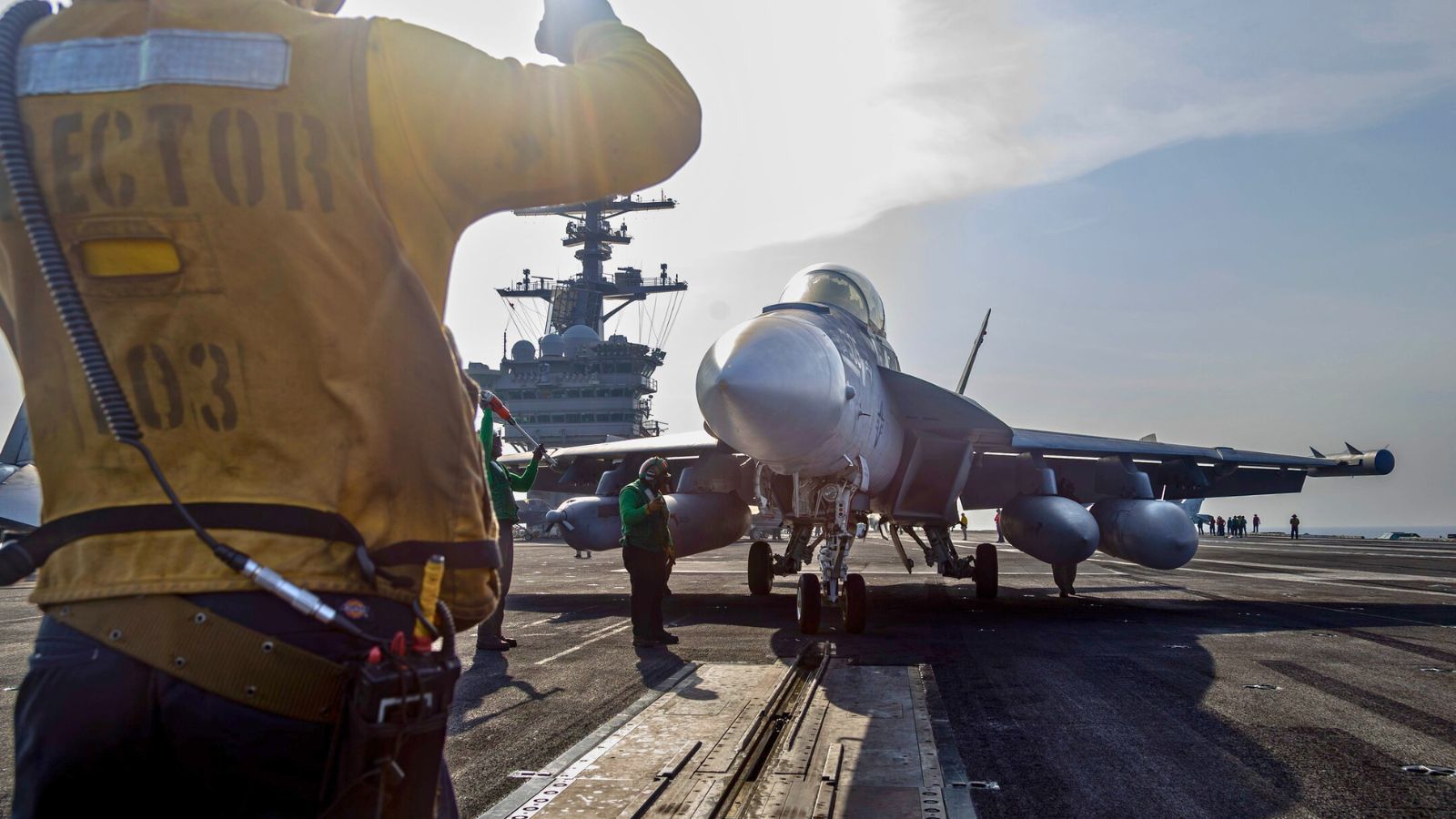
Iran’s Revolutionary Guard Corps (IRGC) just grabbed global headlines by claiming they successfully targeted the USS Abraham Lincoln with a barrage of ballistic missiles and drones. If you've been following the tension in the Arabian Sea, you know this isn't just another routine military exercise. It's a massive escalation in rhetoric, if not in reality. But before you start worrying about a full-scale naval war, let’s look at the numbers and the geography.
The IRGC says they forced the American carrier to retreat after a "precise" operation. Washington, however, remains remarkably quiet on the supposed damage. That’s usually your first clue. When a 100,000-ton floating airfield gets hit by a ballistic missile, people notice. Satellite imagery doesn't lie, and so far, the deck of the Lincoln looks pristine. Read more on a similar subject: this related article.
The Strategy Behind the Smoke and Mirrors
Tehran isn't just firing missiles; they're firing a PR campaign. By claiming a hit on a Nimitz-class carrier, the IRGC builds its "resistance" brand across the Middle East. It’s about optics. Even if the missiles missed by a mile, the headline "US Carrier Targeted" serves their purpose. It tells their domestic audience and regional proxies that the US isn't untouchable.
You have to understand the hardware involved here. The IRGC typically uses anti-ship ballistic missiles (ASBMs) like the Khalij Fars. These are based on the Fateh-110 platform. They’re fast. They’re scary. But hitting a moving target in the middle of the ocean is a nightmare for guidance systems. Additional reporting by The Guardian highlights comparable perspectives on this issue.
Why Ballistic Missiles Struggle with Moving Ships
A carrier isn't a stationary building in a desert. It’s moving at 30 knots. It’s zigzagging. To hit it, a missile needs mid-course corrections and a terminal seeker that can distinguish a ship from a wave in the final seconds of flight.
Most experts believe Iran’s "targeting" consists of firing at the general area where the carrier was spotted by a drone an hour earlier. By the time the missile arrives, the Lincoln is miles away. The IRGC knows this. They just don't care because the political win happens the moment the "launch" button is pressed.
The Aegis Shield and Why it Matters
The USS Abraham Lincoln doesn't travel alone. It’s the centerpiece of a Carrier Strike Group (CSG). That means it’s surrounded by destroyers and cruisers equipped with the Aegis Combat System. We’re talking about the SPY-1 radar and SM-6 interceptors designed specifically to swat down ballistic threats.
If the IRGC actually launched a coordinated strike, the sky would have been filled with American interceptors. We haven't seen evidence of that level of kinetic activity. It suggests that either the "attack" was much smaller than claimed, or it happened so far away from the ship that it wasn't even considered a threat.
The US Navy’s layered defense is arguably the most sophisticated tech on the planet. To get through, you’d need a "saturation attack"—hundreds of missiles at once. Iran didn't do that. They launched a handful, likely into the water, and called it a victory.
Comparing Recent Red Sea Encounters
We've seen this play out with the Houthis in the Red Sea over the last year. They’ve fired dozens of Iranian-supplied missiles at US ships. The result? Almost zero successful hits on warships. The tech gap is still a canyon.
- Intercept Rate: US destroyers like the USS Carney and USS Mason have maintained a near-perfect record against these types of threats.
- Electronic Warfare: It's not just about shooting things down. The US uses "soft kill" measures to confuse the missile's radar before it even gets close.
- Detection Range: With Hawkeye aircraft in the air, the US sees the launch the second the engine ignites.
The Real Threat is Not the Missile
The real danger isn't that a lone Iranian missile sinks a carrier. It's the "lucky shot" or the drone swarm that overwhelms the defense. While the IRGC claims of "targeting" the Lincoln are likely exaggerated for the 2026 political cycle, the persistence of these attempts shouldn't be ignored.
Every time Iran fires, they collect data. They watch how the US responds. They note the radar frequencies used. They’re practicing. It’s a long-term game of cat and mouse where the cat has a nuclear-powered engine and the mouse has a lot of cheap, fast rockets.
Navigating the Propaganda Landscape
When you read these reports, check the source. If it’s coming from Tasnim News Agency or Fars News, it’s coming straight from the IRGC. They have every reason to lie about their effectiveness. Conversely, the Pentagon often downplays close calls to avoid being forced into a retaliatory cycle they don't want.
Don't expect a clear answer from either side immediately. Instead, look at ship tracking data. If the Lincoln stays in the area and continues flight operations, the IRGC's claim is bunk. If the carrier speeds toward a friendly port for "unscheduled maintenance," then we have a story.
Right now, the Lincoln is still operating. The planes are still taking off. The IRGC got their headline, and the US Navy kept its ship.
Keep an eye on satellite providers like Maxar or Planet Labs over the next 48 hours. Independent analysts use these to verify "scorch marks" or deck damage. That’s where the truth usually lives. If you see people on social media claiming a carrier was sunk without a single cell phone video from the 5,000 sailors on board, you’re looking at fake news. Plain and simple.
The next step for anyone following this is to monitor the United States Central Command (CENTCOM) official feeds. They usually release "gun camera" or radar footage when they actually engage a threat. If they stay silent, it’s because there wasn't even a threat worth mentioning.