The 7.8% year-on-year increase in Hong Kong’s retail sales value for January signals a structural shift in the territory’s economic recovery, yet the raw figure masks a complex interplay between seasonal distortions and changing consumer velocity. While the headline growth suggests a return to pre-pandemic vigor, a granular decomposition reveals that the recovery is localized within specific high-value categories, driven almost exclusively by the restoration of cross-border mobility. The sustainability of this growth depends not on "tourist spending" as a monolith, but on the specific delta between the "wealth effect" of Mainland visitors and the "leakage effect" of local residents traveling abroad.
The Lunar Calendar Distortion and Base Effects
The primary challenge in analyzing Hong Kong’s January performance is the shifting timing of the Lunar New Year. Because the holiday fell in February this year whereas it occupied late January in the prior period, the 7.8% growth rate ($36.5 billion HKD) is subject to a significant "base effect" bias. Retailers often experience a pre-holiday surge in purchasing; by comparing a pre-holiday January 2024 to a holiday-peak January 2023, the data actually reflects a stabilized floor rather than a runaway ceiling. Learn more on a connected subject: this related article.
To find the true signal, one must look at the Component Contribution Margin. The growth was not uniform across the 15 tracked categories. Instead, it was concentrated in "Jewellery, Watches and Clock, and Valuable Gifts," which surged 23.1%. This category functions as a proxy for Mainland Chinese luxury sentiment. When this outlier is stripped away, the performance of daily necessity sectors—such as supermarkets, which saw a double-digit decline—suggests that the domestic engine is actually cooling.
The Three Pillars of the Inbound Spending Model
The current retail trajectory is supported by three distinct pillars of capital inflow, each with different volatility profiles: More reporting by MarketWatch explores related views on the subject.
- The Luxury Wealth Effect: High-net-worth individuals from the Mainland utilize Hong Kong as a frictionless channel for hard-asset acquisition. This is less sensitive to local inflation and more sensitive to the Renminbi-to-HKD exchange rate.
- The Re-emergent Hospitality Loop: The 104% increase in clothing and footwear sales is directly correlated with the 154% increase in visitor arrivals. This is a volume-driven pillar; as hotel occupancy nears 90%, this segment hits a physical capacity limit.
- The Service-to-Product Ratio: Unlike 2018, the 2024 tourist is spending a higher percentage of their daily budget on "experiences" (dining and events) rather than "goods." This creates a structural headwind for traditional retailers who rely on high-margin physical inventory turnover.
The Leakage Function: The Northbound Consumption Bottleneck
A critical oversight in standard retail analysis is the failure to account for "Outbound Leakage." While inbound tourism rose, the volume of Hong Kong residents traveling to Shenzhen and Guangzhou for weekend consumption has reached record highs. This creates a Negative Retail Delta.
The cost-benefit analysis for a Hong Kong consumer is currently tilted toward mainland travel due to:
- Price Arbitrage: Goods and services in Shenzhen are often 30-50% cheaper due to lower labor and land costs.
- Service Quality Differential: Newer retail developments in the Greater Bay Area offer integrated entertainment options that Hong Kong’s aging mall infrastructure struggles to match.
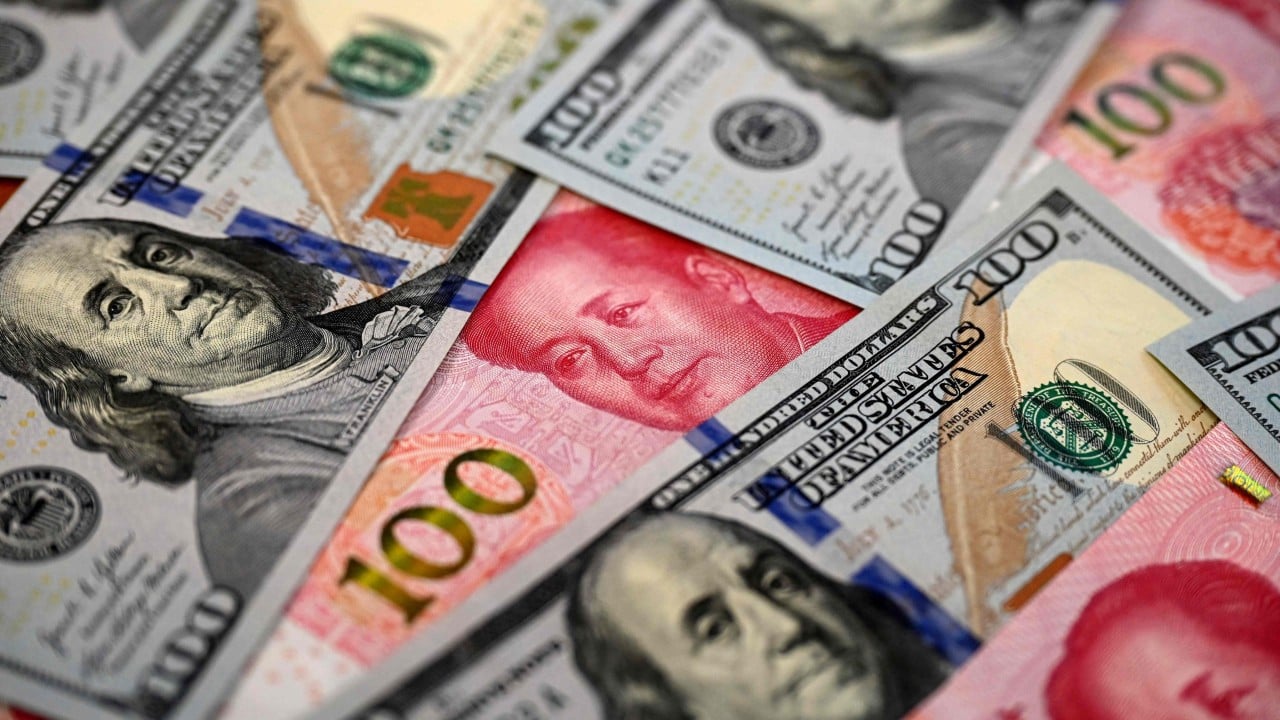
- Currency Friction: The strength of the HKD (pegged to the USD) against the RMB makes domestic spending expensive for locals while simultaneously making Hong Kong less attractive to budget-conscious mainlanders.
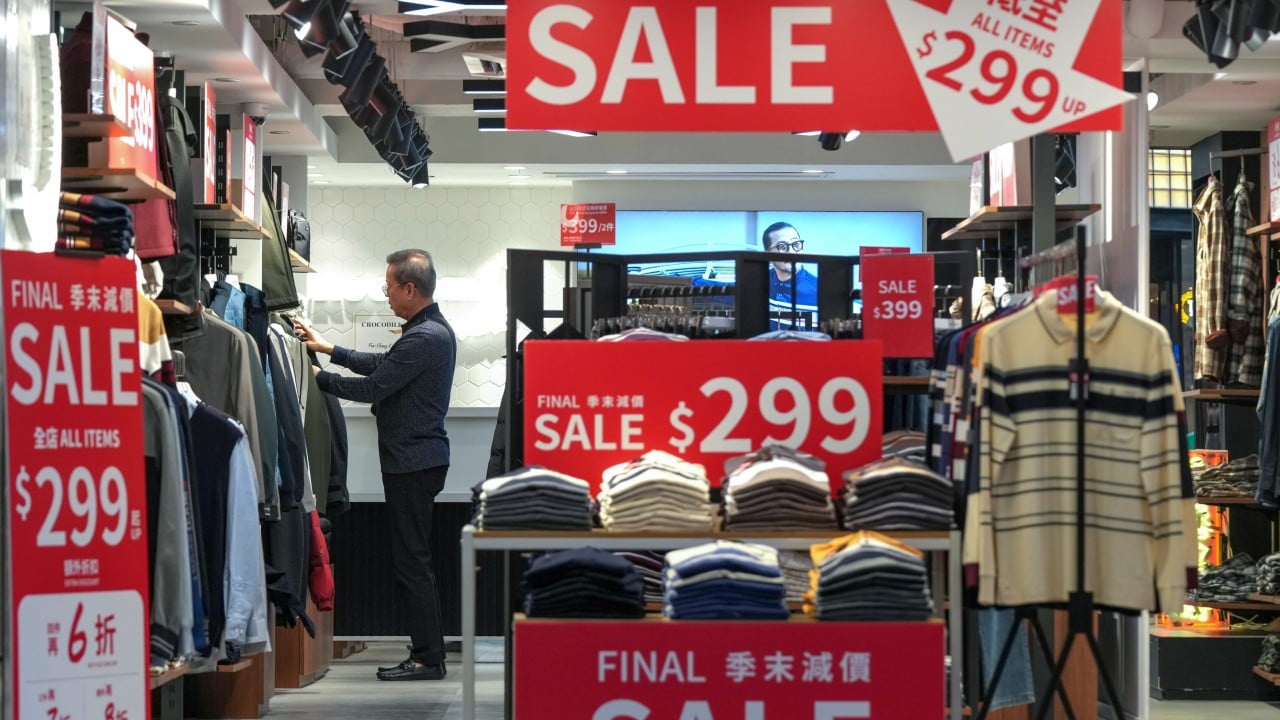
This leakage is most evident in the Supermarket and Department Store sectors, which fell by 9.3% and 9.2% respectively. These are the categories most sensitive to local resident behavior. The data confirms a "hollowed-out" middle market: luxury thrives on visitors, but the daily retail fabric is being eroded by the ease of cross-border transport.
The Inventory-to-Sales Trap
Retailers facing a 7.8% growth headline may be tempted to increase inventory orders for the second quarter. However, the Inventory-to-Sales (I/S) Ratio must be managed with extreme caution. The Lunar New Year distortion means that the February data—likely to show a contraction or stagnation—will provide the necessary counter-balance to January.
The mechanism at work here is the Mean Reversion of Tourism Spending. Initial "revenge spending" following the border reopening has largely subsided. What remains is a structural shift toward "purposeful travel," where visitors come for specific events (concerts, art fairs, sports) rather than general shopping. Retailers who fail to pivot their floor space from "product-heavy" to "engagement-heavy" will find themselves holding depreciating stock in a high-rent environment.
Operational Constraints and the Labor Bottleneck
Even as sales value rises, the Operating Margin for Hong Kong retailers is under assault. The labor shortage in the service sector acts as a hard cap on growth. If a luxury boutique cannot staff its floor to provide the expected level of service, the "conversion rate" per visitor drops.
The "Labor-to-Revenue Sensitivity" in Hong Kong is currently at its highest point in a decade. Retailers are forced to offer higher base salaries to compete with the hospitality and public sectors, which eats into the 7.8% revenue gain. In real terms, when adjusted for increased labor costs and utility inflation, many retailers are seeing flat or even declining net profits despite higher top-line numbers.
Strategic Allocation of Capital for Q3 and Q4
The data dictates a shift in capital expenditure. Traditional brick-and-mortar expansion is no longer the path to alpha. Instead, the focus must shift to:
- OMNI-Channel Integration: Capturing the Mainland consumer before they cross the border via social commerce (Little Red Book/WeChat) to ensure the Hong Kong visit is a fulfillment point rather than a discovery point.
- Niche Luxury Curation: Expanding footprints in "Hard Luxury" (watches/jewelry) while downsizing "Fast Fashion" footprints which are being cannibalized by e-commerce and Northbound travel.
- The "Mega Event" Linkage: Aligning inventory cycles with the government’s Mega Events Calendar. The correlation between large-scale events and immediate retail spikes is now more reliable than seasonal trends.
The 7.8% growth is a reprieve, not a recovery. The "Golden Age" of Hong Kong retail, defined by mass-market Mainland shopping, has been replaced by a bifurcated reality. Success now requires a clinical focus on the high-end visitor while simultaneously defending against the domestic exodus to the Greater Bay Area. Firms must prioritize margin protection over volume expansion, as the volatility of the RMB and the persistence of high interest rates will likely compress the HKD-based purchasing power in the coming months.
Deploying capital into experience-led flagship stores while aggressively cutting overhead in secondary locations is the only viable path to maintaining a positive Return on Invested Capital (ROIC). The window to pivot from a "volume-based" model to a "value-per-visitor" model is closing; those who remain anchored to the 2018 playbook will find the 2026 environment uninhabitable.