The headlines are predictable. They are mourning a "fourth straight year of decline" in the Maine lobster haul as if we are witnessing the collapse of the Atlantic ecosystem. Critics point to the raw tonnage, see a downward-sloping line, and scream that the sky is falling. They blame overfishing. They blame warming waters. They treat the lobster boat as a dinosaur on its way to extinction.
They are wrong. They are looking at the wrong metrics, asking the flawed questions, and fundamentally misunderstanding the economics of a luxury biological resource.
If you look at the raw catch numbers in isolation, you aren't an analyst; you’re a bookkeeper with no context. The "decline" isn't a failure of conservation or a sign of a dying industry. It is a correction from an absolute biological anomaly—a "lobster boom" that was never sustainable and, frankly, wasn't even healthy for the market.
The Myth of the Baseline
Most journalists covering the Gulf of Maine have the memory of a goldfish. They use the mid-2010s as their "normal" baseline. In 2016, Maine landed roughly 132 million pounds of lobster. That wasn't a standard year; it was a freak occurrence.
Before the late 1990s, a "good" year in Maine was 20 million to 30 million pounds. We spent a decade living in a supply-side hallucination caused by the "predator vacuum." By overfishing cod and other groundfish in the 20th century, humans accidentally created a massive, protected nursery for lobsters. We removed their natural enemies. We turned the seafloor into an all-you-can-eat buffet of herring bait and safety.
What we are seeing now isn't a collapse. It is a return to a sane, manageable reality. To call 90 million pounds a "failure" when it's still triple the historical average is statistically illiterate.
Overfishing Is the Lazy Man’s Explanation
The "overfishing" narrative is the easiest one to sell to a public that wants a villain. It’s also the least supported by the actual mechanics of the Maine fishery.
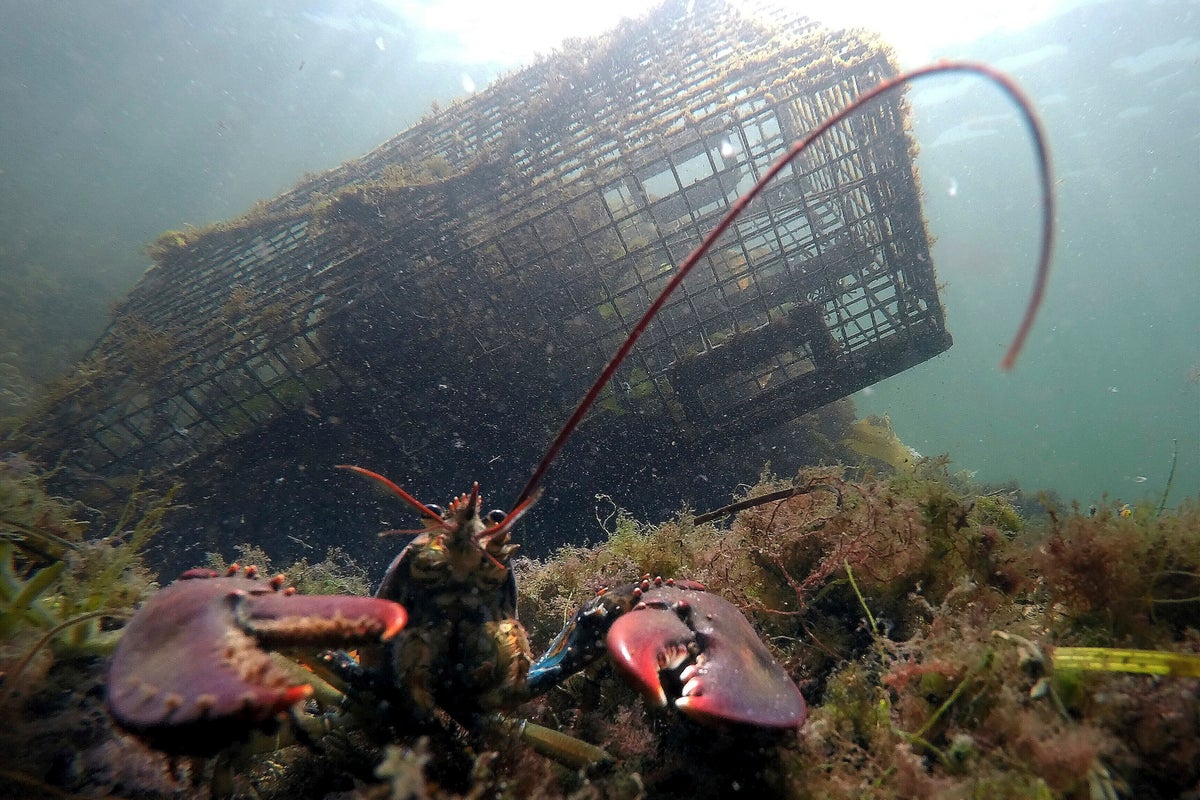
Maine has some of the most restrictive, self-policed conservation laws in the world. The "double-gauge" system ensures that we don't touch the juveniles and we don't touch the massive, high-fertility "breeders." If a female is caught with eggs, she gets notched in the tail and sent back. That notch protects her for years.
I have stood on those docks. I have talked to the guys who have been pulling traps since the 70s. They aren't "overharvesting" the stock; they are operating within a biological bottleneck. The warming of the Gulf of Maine—which is happening faster than almost anywhere else on Earth—isn't just "killing" lobsters. It’s moving them.
Lobsters are sensitive to bottom temperatures. They are moving deeper and further north. The "haul" is declining in traditional areas because the lobsters have changed their zip code to find a better climate. If the catch is down in the mid-coast but the biomass is shifting toward the Maritimes, that’s a geographical migration, not an extinction event.
Efficiency Over Volume: The Luxury Pivot
The industry is finally learning a lesson that high-end watchmakers and Napa Valley vintners figured out decades ago: Volume is the enemy of value.
When Maine was hauling 130 million pounds, the price per pound plummeted. Lobsters were being sold as a commodity—processed into "lobster mac and cheese" or frozen into generic tails for suburban chain restaurants. The brand was being diluted.
Today, with a lower haul, the "boat price" (what the fisherman actually gets paid) has often remained resilient or even spiked. In 2021, even as the catch volume trended down from the peak, the total value of the Maine lobster harvest hit an all-time record of over $700 million.
Would you rather work twice as hard to catch 200 lobsters you sell for $3 each, or half as hard to catch 100 lobsters you sell for $8 each?
The "decline" is forcing the industry to stop acting like a mass-market factory and start acting like a boutique luxury provider. We should want fewer lobsters caught at higher prices. It reduces the carbon footprint of the fleet, lowers the risk of right whale entanglements (a massive regulatory headache), and increases the prestige of the product.
The Right Whale Distraction
You cannot talk about the Maine lobster haul without addressing the regulatory war over the North Atlantic right whale. The federal government has tried to implement draconian gear restrictions that assume Maine's vertical lines are the primary cause of whale mortality.
The data doesn't back it up. There hasn't been a documented entanglement in Maine lobster gear in nearly two decades. Most strikes happen in shipping lanes or with heavy snow crab gear in Canadian waters. Yet, the "decline" in catch is often used by activists as a reason to "shut it down anyway" because the industry is supposedly "failing."
This is a predatory use of statistics. They want to use a natural biological correction as a pretext for a regulatory execution. If the haul is down, the argument goes, we might as well pivot to offshore wind or other uses of the ocean.
That is a catastrophic misunderstanding of the coastal economy. Maine’s identity isn't just "built" on lobster; it is sustained by it. Every boat supports a mechanic, a bait dealer, a trap builder, and a trucking firm.
Why Your "Cheap Lobster" Fixation is Part of the Problem
If you are complaining that lobster rolls now cost $35, you are the problem.
Lobster is a wild-caught, hand-harvested protein that requires a human being to head out into the North Atlantic on a diesel-burning vessel to check individual traps one by one. It is not chicken. It is not farm-raised tilapia. It should be expensive.
The era of "cheap lobster" was a biological fluke. It was a glitch in the Matrix. It was the result of a temporary ecological imbalance that we exploited to the point of absurdity. The current decline in landings is the ocean's way of rebalancing the books.
The Real Threat Nobody Admits
If you want to worry about something, don't worry about the number of lobsters in the traps. Worry about the "graying of the fleet."
The barrier to entry for a young fisherman is now astronomical. A coastal home in Maine is no longer affordable on a fisherman’s salary because of the influx of remote workers and "summer people" who want the view without the smell of bait. The "haul" is declining partly because the infrastructure of the working waterfront is being cannibalized by real estate interests.
We are losing wharf space to condos. We are losing bait sheds to "artisan boutiques." When you lose the wharf, you lose the boat. When you lose the boat, the haul goes down. This isn't a biological crisis; it's a gentrification crisis.
Stop Mourning the Peak
We need to stop treating 2016 as the goal. It was an outlier.
The industry is currently in a "sweet spot" of sustainability. The catch levels we see now—roughly 90 million to 100 million pounds—are perfectly healthy. They represent a fishery that isn't being pushed to the brink of a collapse, but rather one that is settling into a long-term, high-value equilibrium.
The "decline" is actually a stabilization. It’s a sign that the "gold rush" is over and the professional era has begun. We are moving from a "catch as much as possible" mentality to a "maximize the value of every claw" mentality.
If the catch continues to drop another 10%, but the price per pound rises 15%, the industry wins. The ocean wins. The fisherman wins.
The only people who lose are the casual observers who think a line going down on a chart always means a tragedy. In this case, the line going down is the sound of an industry finally finding its level.
If you can’t afford the $35 lobster roll, buy a burger. The Maine lobster industry doesn't owe you a cheap lunch; it owes the ocean a sustainable future.
Stop asking why the haul is declining. Start asking why we ever thought the peak was normal.
The "shortage" is a ghost. The profit is real. The sustainability is finally within reach.
Get off the dock if you can't handle the tide.