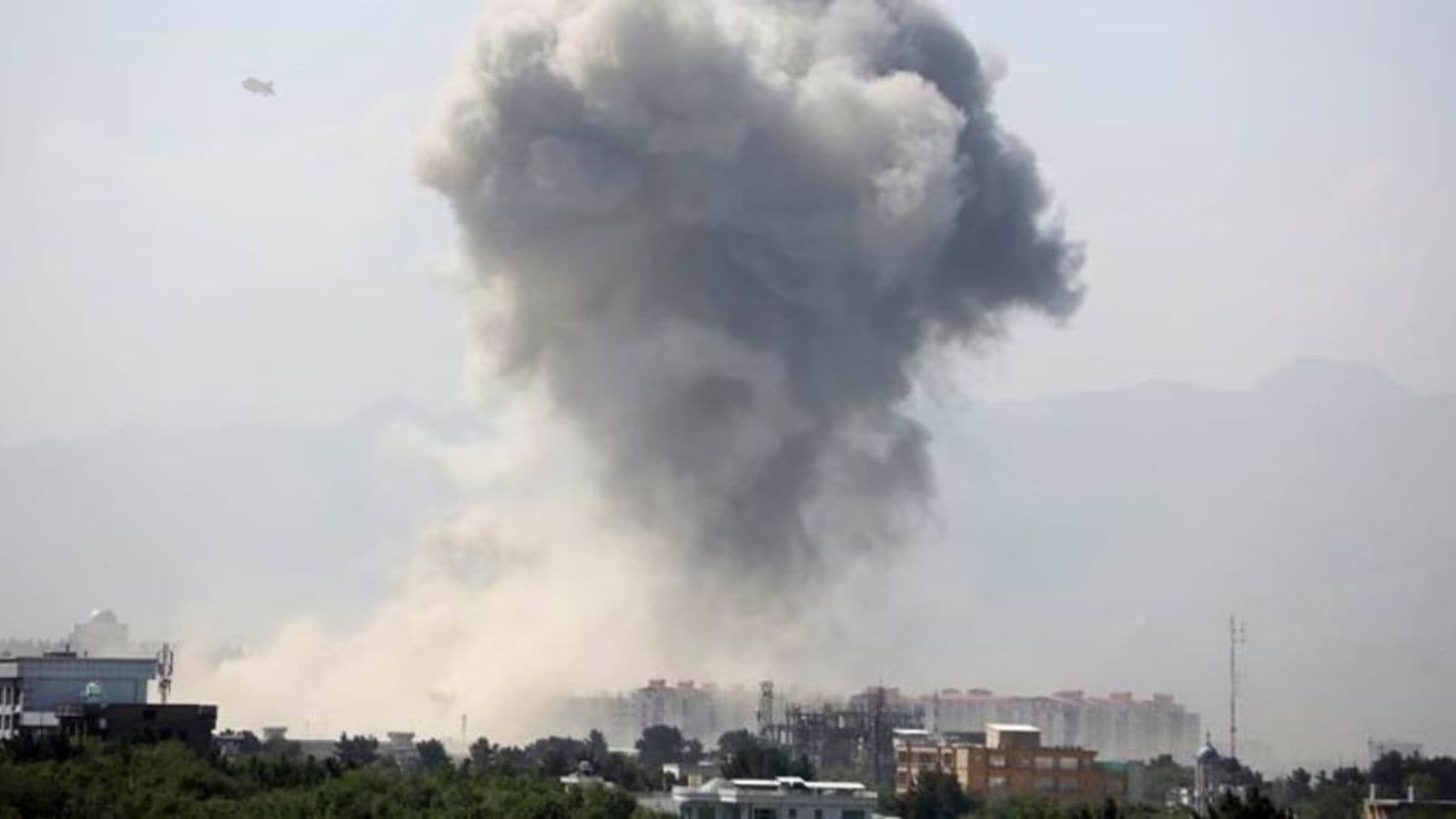
The explosions over Kabul weren’t a declaration of war. They were a performance.
When Zabiullah Mujahid steps to the microphone to tell the world a Pakistani aircraft was swatted out of the sky and adds a casual "do not panic," he isn't just delivering a status report. He is executing a masterclass in psychological sovereignty. Most newsrooms are currently scrambling to verify tail numbers or track flight paths. They are missing the point. The "lazy consensus" in global reporting is that this is a sign of a collapsing regional security framework or an accidental escalation.
It is neither. It is the calculated use of kinetic theater to solidify internal legitimacy.
The Myth of the Accidental Dogfight
Most analysts treat border skirmishes and airspace violations between the Taliban and Pakistan as "deteriorating relations." That is a sanitized, academic way of saying they don't understand the theater of operations. In this region, friction is the fuel.
The Taliban government doesn't need a stable border; it needs a visible enemy that justifies its standing army. By announcing the downing of a neighbor’s asset, Mujahid isn't reporting a military victory. He is selling a narrative of "The Invincible Emirate."
- Logic Check: If Pakistan intended to launch a serious air campaign, Kabul wouldn't hear a few stray bangs.
- The Nuance: Modern air superiority isn't achieved by single sorties that get caught by localized anti-air fire.
- The Reality: These events are "border signaling." Both sides are using the Kabul skyline as a whiteboard to write messages they can't send through diplomatic cables.
Stop Asking if the Plane was Actually Shot Down
The most common "People Also Ask" query right now is: Was a Pakistani jet really shot down?
You are asking the wrong question. In the digital-first information war, the wreckage is secondary to the press release. If Mujahid says it happened, the domestic audience believes it happened. By the time any satellite imagery or black-box data could possibly refute the claim, the political objective—rallying the base and signaling defiance to Islamabad—has already been achieved.
I have watched regional actors burn through millions in "perception management" budgets just to achieve the level of narrative control the Taliban gets with a single tweet. They don't care about your "fact-check." They care about the fact that for three hours, every person in Kabul was looking at the sky and thinking about the strength of the Emirate rather than the price of bread.
The Failed Logic of "Do Not Panic"
When a spokesperson tells a city of five million people "do not panic" after explosions, they are intentionally inducing a low-level state of alert. It is a psychological priming technique. It reminds the populace that danger exists, but only the current administration stands between them and chaos.
The "consensus" view is that this is a calming measure. That is naive. It is an activation measure.
- Dependency: It reinforces that the state is the only reliable source of truth during a crisis.
- Validation: It validates the sound of the explosion. "Yes, you heard that, and yes, we handled it."
- Contrast: It paints the previous regime as weak and the current one as capable of defending the literal air the citizens breathe.
Why Pakistan Won't (and Can't) Respond Proportionally
The second-tier misconception is that this leads to a full-scale war. It won't.
Pakistan is currently a state held together by debt cycles and internal political fracturing. They cannot afford a prolonged kinetic engagement with a non-state actor that now has state-level resources. The Taliban knows this. They are poking a giant that has its hands tied behind its back by the IMF.
Imagine a scenario where a neighbor keeps throwing stones at your windows. You have a shotgun, but if you fire it, your landlord (the international community) will evict you, and your bank (the IMF) will freeze your accounts. You just sit there and take the broken glass. That is Pakistan's current strategic depth.
The Intelligence Gap You’re Ignoring
We need to talk about the hardware. The Taliban inherited a graveyard of Western tech and a smattering of Soviet-era relics. Their ability to actually track and engage a modern fighter jet is, on paper, negligible.
If a plane actually went down, it wasn't because of a sophisticated S-300 battery. It was likely a lucky shot or a mechanical failure rebranded as a military triumph. But the "industry experts" on cable news want to talk about "escalating capabilities."
Don't buy it. This isn't a shift in military power. It’s a shift in audacity.
The Taliban are the first group in the modern era to realize that you don't need a superior Air Force if you have a superior grasp of the 24-hour news cycle. They are fighting a 5th-generation war with 2nd-generation tools, and they are winning because the West and its neighbors are still playing by the rules of the 1990s.
The Cost of the "Quiet Skies" Policy
Everyone wants a stable Afghanistan. But "stability" is a code word for "predictability."
By creating these flashes of kinetic conflict, the Taliban are intentionally becoming unpredictable. It is their only leverage. If they are predictable, they are ignored. If they are ignored, the aid stops, and the diplomatic pressure increases.
Every explosion in Kabul is a reminder to the UN, to Washington, and to Beijing that this region can go "loud" at any moment. It is a protection racket played out in the stratosphere.
Your New Framework for Middle East/South Asia News
Stop reading the headlines as "Event A happened, therefore Event B will follow."
Instead, look at the incentive structure.
- Who benefits from the "panic" that Mujahid is supposedly trying to prevent?
- What bill is being debated in Islamabad that this "border incident" helps distract from?
- Which faction within the Taliban is trying to prove their martial prowess this week?
The truth isn't found in the smoke over Kabul. It's found in the silence that follows the "do not panic" order. That silence is where the real policy is made, far away from the cameras and the wreckage of whatever may or may not have fallen from the sky.
The next time you hear about an "unconfirmed" shoot-down, don't wait for the confirmation. Look for the motive. The metal is irrelevant; the message is everything.
Stop looking for the plane. Start looking for the puppet strings.