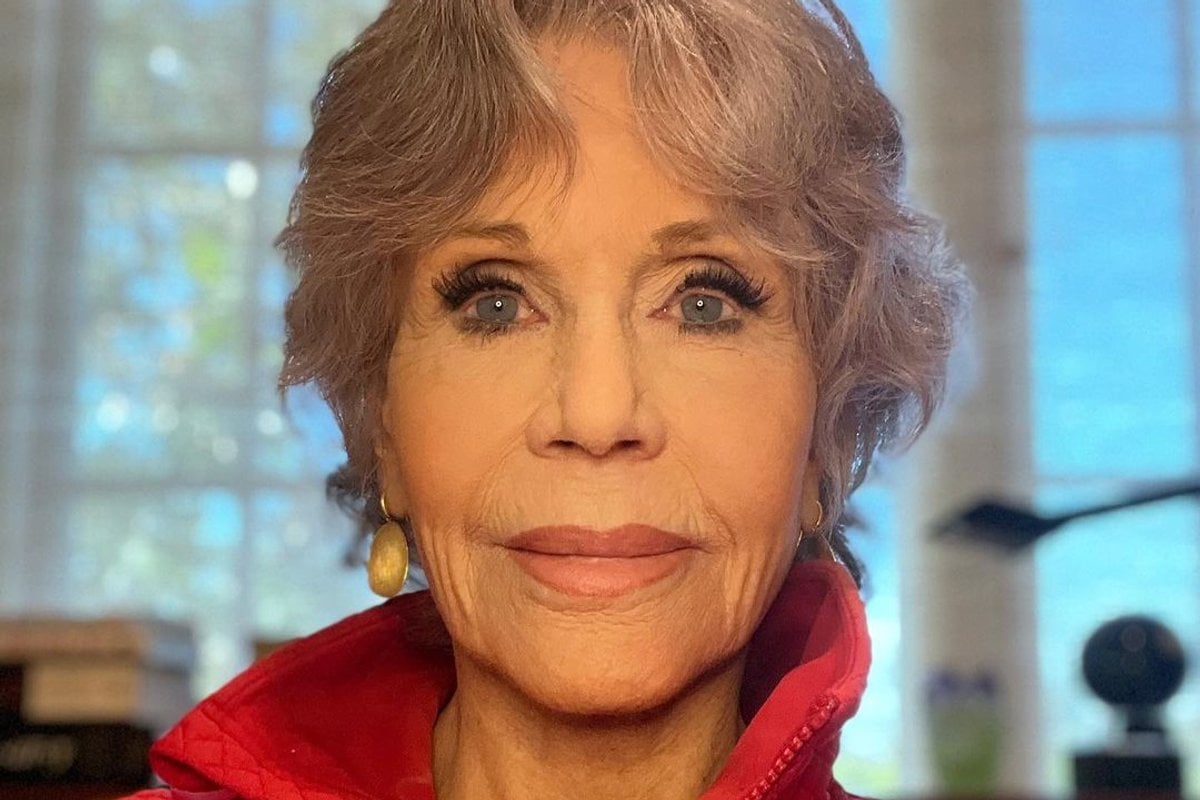
Political tribalism usually dictates that if one side loves an idea, the other must find it repulsive. It’s the standard operating procedure in Washington. But every once in a while, a specific issue acts like a magnet, pulling the furthest edges of the left and right into a strange, unified front. We saw this clearly when figures as fundamentally different as Jane Fonda and Tucker Carlson found themselves standing on the same side of a potential war with Iran. They aren't sharing brunch, but they are sharing a very specific brand of fury over military intervention.
This isn't about a sudden friendship. It's about a shared exhaustion with "forever wars" and a belief that the promises made to the American public have been systematically broken. When a Hollywood activist known for Vietnam-era protests and a populist conservative commentator reach the same conclusion, it’s a signal that the old hawks in the basement of the Pentagon are losing their grip on the narrative. Learn more on a similar topic: this related article.
The Populist Right Meets the Anti War Left
The traditional divide used to be simple. The Right was for a strong, interventionist military. The Left was for peace and diplomacy. That roadmap is essentially trash now. Tucker Carlson’s skepticism of the strike on Qasem Soleimani and subsequent escalations wasn't an outlier. It was a reflection of a growing "America First" sentiment that views Middle Eastern entanglements as a drain on national resources and a distraction from domestic decay.
Carlson’s argument often centers on the idea of betrayal. He argues that voters were promised a departure from the nation-building projects of the Bush and Obama eras. When leadership leans into a conflict with Tehran, he sees it as the "Deep State" or the permanent political class dragging a reluctant public into another meat grinder. More journalism by The New York Times delves into related perspectives on the subject.
Jane Fonda comes at it from a different historical lens, yet the destination is the same. Her activism has always been rooted in the human cost and the ecological disaster of war. To her, an Iran conflict is just the latest chapter in a long book of imperial overreach. She sees the same pattern repeating: manufactured urgency, questionable intelligence, and a total lack of a realistic exit strategy.
Why the Betrayal Narrative Sticks
Both sides feel lied to. That's the glue. For the anti-war Left, the betrayal is humanitarian and moral. They see the devastating impact of sanctions on Iranian civilians and the potential for a refugee crisis that would dwarf anything we've seen this century. They feel the government prioritizes defense contractor profits over climate action or healthcare.
For the populist Right, the betrayal is about the "forgotten man." They look at small towns in the Midwest where the biggest employer is the military recruiter and ask why those kids are being sent to die for a border in the Middle East when our own borders feel porous. They see the trillions of dollars spent in Iraq and Afghanistan as money stolen from American infrastructure.
When Trump took out Soleimani, the immediate reaction from the DC establishment was a mix of cheers and "it’s about time." But the backlash from the fringes was immediate. Carlson famously used his platform to question the strategic value of the move, asking his viewers if Iran actually poses a direct threat to their neighborhood. He wasn't defending the Iranian regime. He was defending the idea that American blood shouldn't be cheap.
The Ghost of 2003
You can't talk about this without talking about Iraq. The 2003 invasion is the original sin that informs every modern Middle East debate. Fonda lived through the protests of that era, and Carlson, like many on the right, eventually came to regret his early support for that war.
That shared regret is powerful. It creates a high bar for evidence. When officials claim an "imminent threat" today, the public no longer defaults to belief. We remember the mobile weapons labs that didn't exist. We remember the "Mission Accomplished" banners that were decades premature.
The sheer scale of the potential conflict is what brings these two worlds together. Iran is not Iraq. It is larger, more mountainous, and far more capable of asymmetric warfare. An all-out war would likely involve:
- Total disruption of the Strait of Hormuz, where about 20% of the world's oil passes.
- Global gas price spikes that would cripple Western economies.
- Cyberattacks on American infrastructure.
- A regional proxy war involving Lebanon, Syria, and Yemen.
The Political Realignment No One Expected
This alignment is the ultimate nightmare for the military-industrial complex. For decades, they could rely on the GOP to rubber-stamp defense spending and the Democrats to provide a "measured" opposition that usually folded under pressure. Now, the grassroots of both parties are saying "no."
It’s a weird reality where a MAGA hat wearer and a Greenpeace volunteer might agree on 5% of things, but that 5% involves the most expensive and deadly part of US foreign policy. They both see a leadership class that is insulated from the consequences of its own decisions. None of the people planning a strike on Iran are going to have their kids in the first wave of an amphibious assault.
This isn't just about Trump either. It's about a fundamental shift in how Americans view their role in the world. We are moving away from the "Global Policeman" era. The skepticism from Fonda and Carlson represents a "coming home" sentiment that transcends the usual blue vs. red theater.
What Happens When the Center Holds the Line
While the edges of the spectrum are screaming for restraint, the center of the political aisle—the "Blob," as Ben Rhodes famously called it—still leans toward intervention. They argue that Iranian aggression must be deterred to maintain global order. They see Fonda and Carlson as "isolationists" who don't understand the complexities of global power dynamics.
But the isolationist label is a lazy way to dismiss a valid concern. You don't have to be a pacifist to realize that a war with Iran would be a generational catastrophe. You just have to be able to read a map and a history book.
The consensus between these two figures is a warning. It shows that the public’s patience for "preventative" war is gone. If a conflict starts, the government won't just be fighting the Iranian Revolutionary Guard; they'll be fighting a domestic population that is deeply cynical about the motives behind the mission.
Stop Falling for the Binary
The biggest mistake you can make is thinking you have to pick a side between "War" and "Weakness." That’s the false choice the DC establishment loves to sell. The Fonda-Carlson overlap proves there is a third option: Strategic Realism.
This approach acknowledges that Iran is a bad actor but also realizes that a full-scale war makes everything worse. It's about protecting American interests without bankrupting the treasury or the moral standing of the country.
If you want to understand where the country is actually going, stop looking at the press briefings. Look at where the most vocal critics on the Left and Right are meeting. They are telling us that the era of blank checks for the Pentagon is over.
Pay attention to the rhetoric coming out of the next election cycle. Candidates who try to drum up support for "regime change" are going to find a very cold reception from a public that has finally started listening to the people they usually ignore. The cross-partisan fatigue is real, and it's the only thing currently standing between us and a catastrophic escalation in the Persian Gulf. Keep your eyes on the defense budget votes. That’s where the real story is hidden.
Don't let the noise of the 24-hour news cycle distract you from the fact that on the biggest issue of our time, the most unlikely people are finally speaking the same language. It's not a betrayal of their values; it's a rare moment of clarity in a town that thrives on confusion.


