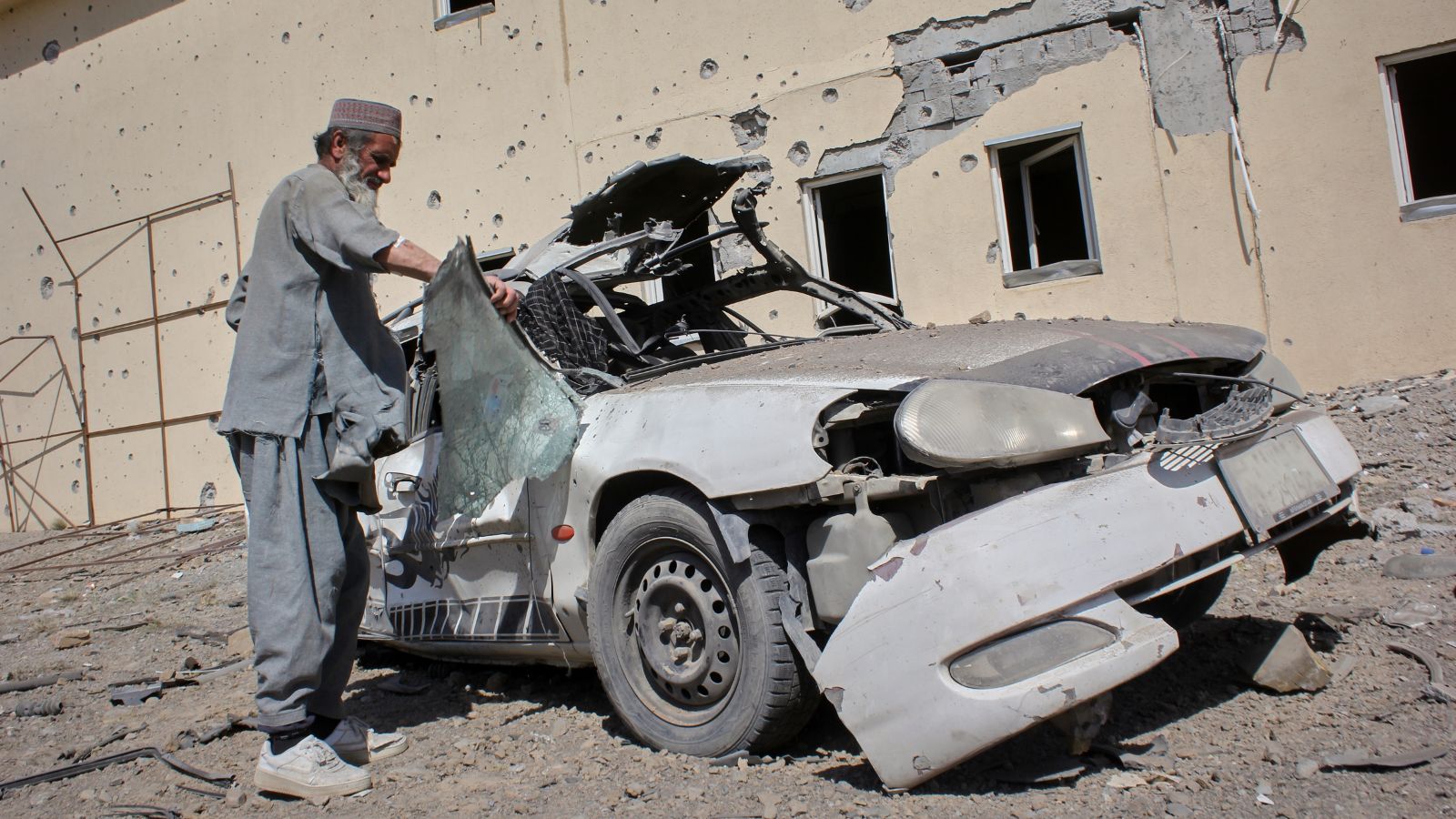
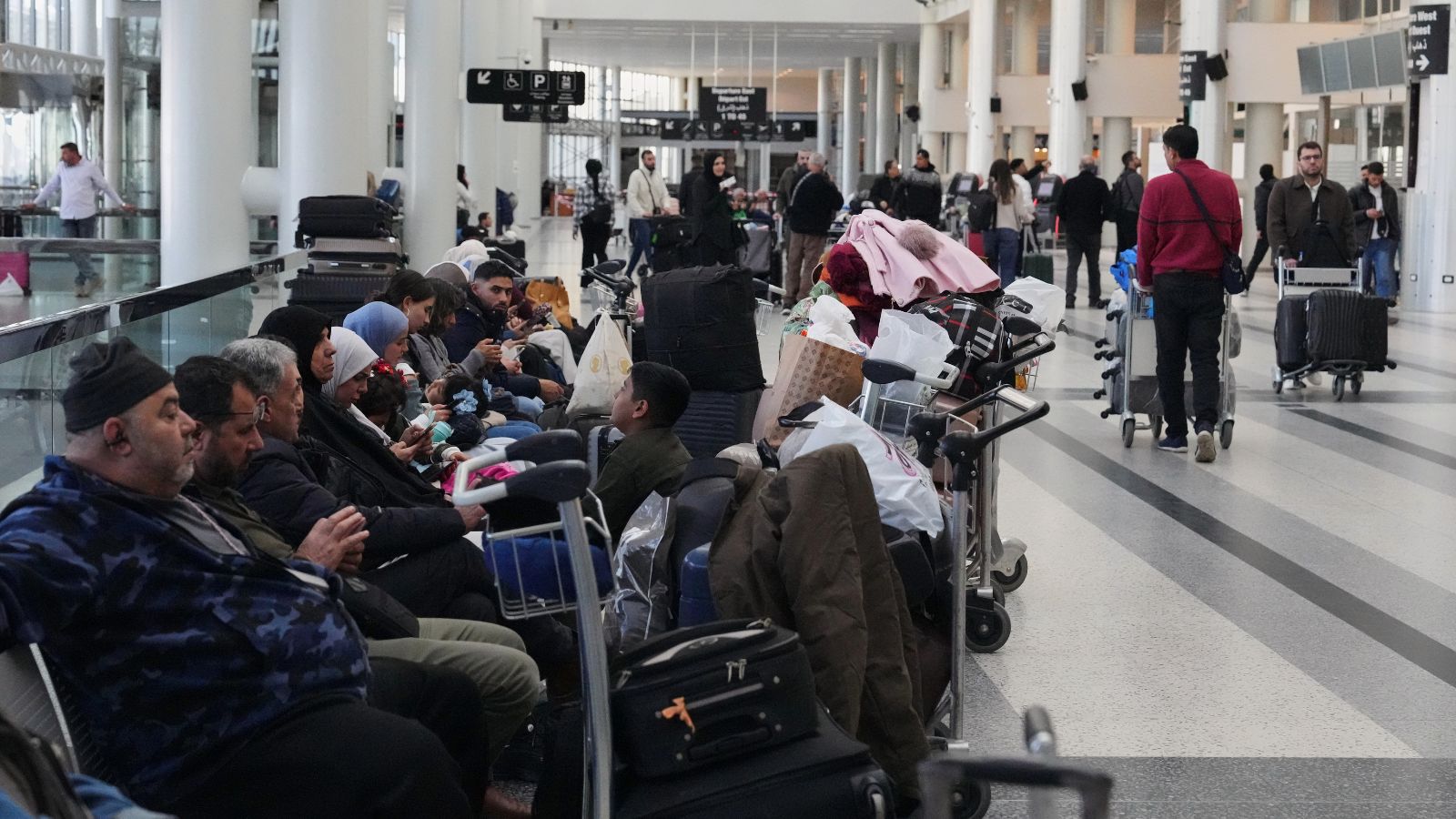
The map of the Middle East is shifting in ways that few predicted even six months ago. As U.S. and Israeli military operations continue to target strategic infrastructure within Iran, a significant political earthquake has occurred. An Iranian exile group has officially declared a provisional government. This isn't just a symbolic gesture in a Parisian ballroom. It's a calculated move to fill a looming power vacuum.
If you’ve been following the news, you know the situation is volatile. But the headlines often miss the "why" behind this specific timing. While missiles dominate the nightly broadcast, the real story is about who sits in the chairs if the current leadership in Tehran collapses. Transitioning from a revolutionary movement to a governing body is notoriously difficult. History is littered with exile groups that failed the moment they stepped back onto their home soil.
The group in question, long a thorn in the side of the Islamic Republic, claims it now has the coordination and the internal support to manage a transition. They aren't just talking about regime change anymore. They’re talking about logistics, water rights, and banking systems.
Why a Provisional Government Matters Right Now
Military pressure alone rarely brings stability. You can dismantle a command structure, but if you don't have a pre-packaged administrative layer ready to go, you get chaos. We saw this in Iraq. We saw it in Libya. The U.S. and Israel are currently engaged in high-intensity strikes against the Islamic Revolutionary Guard Corps (IRGC) assets. In this environment, the exile group's announcement serves as a signal to both the Iranian public and the international community.
They’re saying there is an alternative to the current clerical rule and the potential anarchy of a failed state. For the U.S. and Israel, this provides a potential "day after" partner. It changes the narrative from a foreign invasion to a domestic liberation supported by external allies. That distinction is everything in the world of international diplomacy and local hearts and minds.
Internal reports suggest that the provisional government has been in secret talks with mid-level bureaucrats inside Iran. These are the people who keep the lights on and the water running. If the top-tier leadership is neutralized, these bureaucrats need to know who their new boss is. The exile group is betting that these professionals prefer a structured transition over a bloody civil war.
The Reality of U.S. and Israeli Military Involvement
It's no secret that the current operations are some of the most sophisticated we've seen. We are talking about cyber-kinetic warfare that targets specific IRGC manufacturing hubs and drone launch sites. This isn't carpet bombing. It's a scalpel. Israel’s primary concern remains the nuclear program and the "ring of fire" created by proxies like Hezbollah. The U.S. is focused on regional stability and ensuring that global energy markets don't go into a total tailspin.
The coordination between Washington and Jerusalem is tighter than it's been in decades. They’re sharing intelligence in real-time, often acting on data that is only minutes old. This pressure has created the "cracks" that the exile group is now trying to wedge open. Without the military component, the provisional government would be ignored. Without the provisional government, the military strikes would have no political destination.
People often ask if this is just another "forever war." Honestly, it doesn't look like it. The objective seems to be the rapid degradation of the regime's ability to project power, followed by a hand-off. It's a high-stakes gamble. If the exile group is seen as nothing more than puppets, they’ll be rejected by the Iranian street.
Challenges to Legitimacy
Establishing a government in exile is easy. Getting people in Tehran, Isfahan, and Tabriz to follow your laws is the hard part. The Iranian public is rightfully skeptical of outside interference. They remember 1953. They remember the 1979 revolution's unfulfilled promises.
The provisional government has to prove three things very quickly:
- They can maintain basic services.
- They won't just swap one form of autocracy for another.
- They have the spine to stand up to their own benefactors if necessary.
The group has released a draft "Charter of Freedom" which includes a commitment to secular democracy and human rights. It’s a move designed to appeal to the Gen Z protesters who have been risking their lives on Iranian streets for years. These young people don't care about the ideological battles of the 1970s. They want high-speed internet, a functioning economy, and the right to dress how they choose.
The Economic Fallout and Reconstruction
Iran's economy was already struggling under the weight of sanctions and mismanagement. The current military conflict has made it worse. Any provisional government will inherit a currency in freefall and a crippled industrial sector. This is where the international community comes in.
Talks are already happening in London and Washington about a "Marshall Plan" for a post-regime Iran. The idea is to flood the country with humanitarian aid and technical expertise the moment a transition begins. This isn't charity. It’s a way to buy stability. If people have food and jobs, they’re less likely to take up arms for a counter-revolution.
The exile group has identified key economic advisors, many of whom are successful members of the Iranian diaspora. These are individuals who have run multi-billion dollar companies and worked at the highest levels of global finance. They bring a level of competence that the current regime simply can't match.
What Happens to the IRGC
This is the elephant in the room. The IRGC isn't just a military; it’s a massive business conglomerate. They own hotels, construction companies, and telecommunications firms. You can't just fire everyone in the IRGC and expect the country to function.
The provisional government’s plan involves a "truth and reconciliation" style process for the rank and file, while targeting the top leadership for prosecution. It’s a delicate balance. If you're too harsh, they’ll fight to the death. If you're too soft, the victims of the regime will feel betrayed.
Experts from the Carnegie Endowment for International Peace suggest that a "de-Baathification" style purge, like what happened in Iraq, would be a disaster. The goal is to integrate the professional military into a new national defense force while dismantling the ideological and economic wings of the Guard.
Moving Forward in a Fragmented Region
The situation is changing by the hour. While the provisional government prepares its cabinet, U.S. and Israeli jets remain in the air. The risk of a wider regional war is still on the table, especially if proxies in Lebanon or Yemen decide to go all-in.
For the average observer, the best thing to do is watch the internal Iranian reaction. Look at the Telegram channels. Look at the local strikes. If the Iranian people start to see the provisional government as a viable path out of the current nightmare, the regime's days are truly numbered.
Keep an eye on the diplomatic movements in neighboring countries like Saudi Arabia and the UAE. Their support—or at least their neutrality—is a prerequisite for any new government to survive. They don't want a democracy on their doorstep, but they want a stable, non-hostile Iran even more.
The next few weeks will determine the trajectory of the next few decades. We are watching a historical pivot point. This isn't just about who has the better missiles; it’s about who has a better vision for the future of 85 million people.
Stay updated on the latest shifts in Iranian internal politics by monitoring the official statements from the transitional council and the real-time reports from verified ground sources in major Iranian cities. Focus on changes in civil service operations and local law enforcement behavior, as these are the first signs of a shifting power structure. If you are analyzing the situation for investment or policy purposes, prioritize the technical readiness of the provisional government's economic team over the rhetoric of the military commanders.