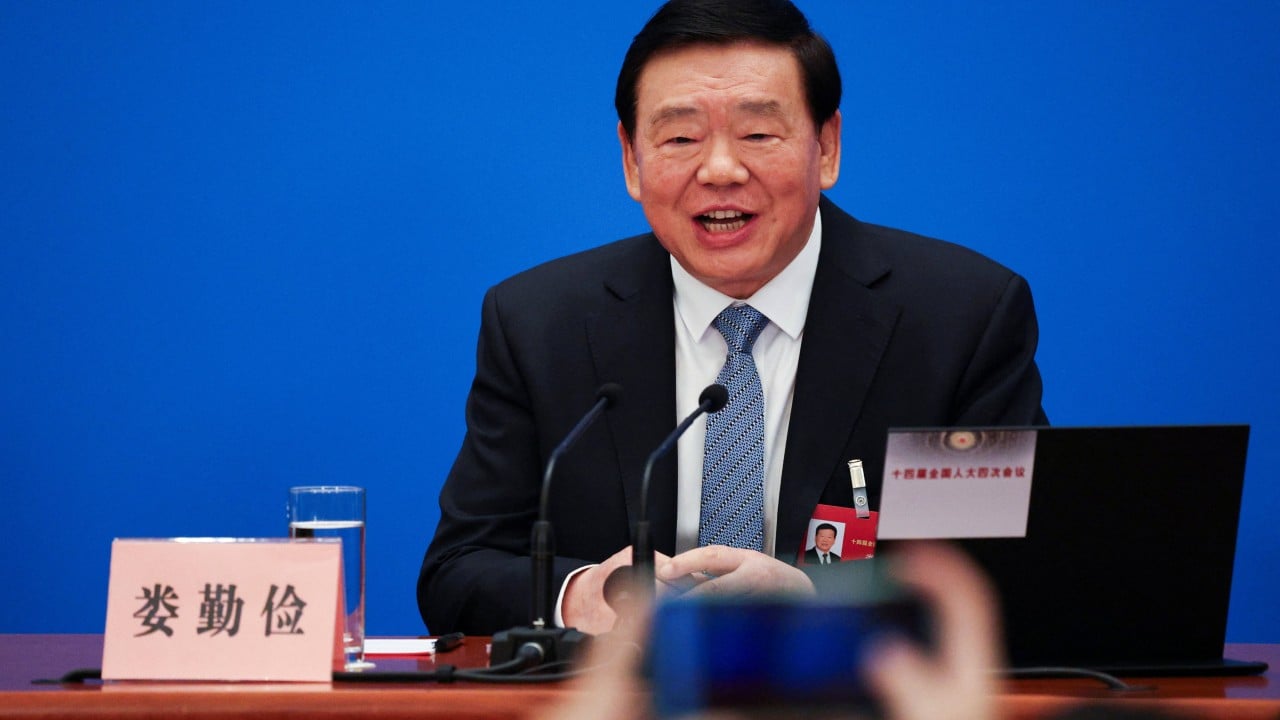
The Great Hall of the People in Beijing is currently a theater of studied calm, but the silence in the corridors masks a desperate pivot. As the 2026 "Two Sessions" begin, the ruling elite are not merely setting a GDP target; they are attempting to insulate an entire civilization against an unpredictable American administration. With Donald Trump scheduled to arrive in Beijing later this month, the Chinese leadership is front-loading a narrative of stability to hide a structural emergency.
The headline figures—a lowered growth target of 4.5% to 5%—are the least interesting part of the story. For decades, the "Two Sessions" functioned as a victory lap for a manufacturing juggernaut. Today, they are a defensive fortification. Beijing is shifting its entire economic weight toward "new quality productive forces," a coded admission that the old model of property-driven growth is dead. They are betting the future on quantum computing, nuclear fusion, and 6G, not because they want to, but because they no longer have a choice.
The Trump Shadow and the Sovereignty Trade
The upcoming visit by Donald Trump has forced Beijing into a "cautious diplomacy" phase. Publicly, the rhetoric is measured. Privately, there is a scramble to identify which transactional levers will work this time. Trump’s 2025 return to the White House immediately triggered a 32% drop in the China-US trade deficit, fueled by aggressive tariffs and a 90% duty on de minimis e-commerce shipments.
Beijing’s strategy is to "box him in" using a series of pre-scheduled 2026 summits. They want to trade soybean purchases and fentanyl crackdowns for a loosening of export controls on high-end semiconductors. It is a high-stakes poker game. While the US administration recently allowed the sale of Nvidia H200 chips to China, the legislative "guardrails" being built in Washington—such as the 2026 National Defense Authorization Act—suggest that any thaw in relations will be temporary and transactional.
The 15th Five-Year Plan is a War Map
This year marks the launch of the 15th Five-Year Plan (2026-2030). Do not view this as a dry policy document. It is a roadmap for technological "self-reliance" designed to survive a total decoupling from Western supply chains. The plan prioritizes:
- Industrial Upgrading: Shifting from low-end assembly to "smart" manufacturing using AI and robotics.
- Energy Autonomy: Aggressive expansion of nuclear fusion and hydrogen power to reduce reliance on imported oil.
- The Global South Pivot: Strengthening trade ties with the BRICS+ bloc to bypass Western-controlled financial systems.
The plan is designed to bridge the gap between today’s slowing growth and the 2035 goal of "socialist modernization." But the bridge is shaky. Youth unemployment and a rapidly aging population are creating a "scissors effect" where social spending requirements are rising just as tax revenues from the property sector have evaporated.
The Military Purge and Institutional Stability
While the delegates in the Great Hall discuss GDP, the shadow of a massive anti-corruption campaign in the People’s Liberation Army (PLA) hangs over the proceedings. The removal of top generals over the last year has hollowed out the military’s upper ranks. This isn't just about graft; it’s about ensuring absolute loyalty as the geopolitical temperature rises.
Xi Jinping is sending a clear message: the military must be a reliable tool of the Party, especially as the US focuses on "institutional velocity"—the ability to integrate AI into warfare faster than its rivals. The 2026 meetings are unlikely to announce major personnel shifts, but the "verbal comments" made in small group discussions will reveal how much the leadership fears a hollowed-out force.
The Consumption Crisis and the Orchid Indicator
On the ground, the reality is starker than the official reports. During the recent Lunar New Year, the price of orchids—a traditional symbol of prosperity—fell by 40%. Families are cutting back on everything. The government’s "anti-involution" campaign is a desperate attempt to stop price wars in the electric vehicle and solar panel sectors that are destroying profit margins.
If domestic consumption doesn't pick up, China's only path to growth is through exports. This sets them on a direct collision course with Trump’s "America First" trade policy. It is a classic trap. To save the economy, China must export its way out of trouble, which in turn triggers the very tariffs that threaten to sink it.
The Strategic Diversification of the Global South
Beijing is no longer waiting for a Western invitation to the global table. The 15th Five-Year Plan explicitly focuses on "building a community with a shared future" by integrating the economies of Southeast Asia, Africa, and the Middle East into a China-centric trade architecture.
They are investing heavily in:
- Digital Infrastructure: Exporting 6G and AI governance models to developing nations.
- The Blue Economy: Deep-sea mining and marine resource exploitation.
- Critical Minerals: Building refining capacity that bypasses US-aligned partners like Australia and Canada.
This is not just about finding new markets; it’s about creating a parallel world order where US sanctions no longer have teeth. As Washington focuses on national sovereignty and "transactional" diplomacy, Beijing is moving to fill the vacuum of global leadership, one infrastructure project at a time.
The "Two Sessions" are often dismissed as a rubber-stamp exercise. In 2026, they are something much more significant: a dress rehearsal for a world where the two largest economies no longer speak the same language. The stability being projected is a mask for a nation that is fundamentally re-engineering its DNA to survive a winter that may last a decade.
Would you like me to analyze the specific impact of the new US "COINS" framework on China’s 2026 semiconductor investments?


