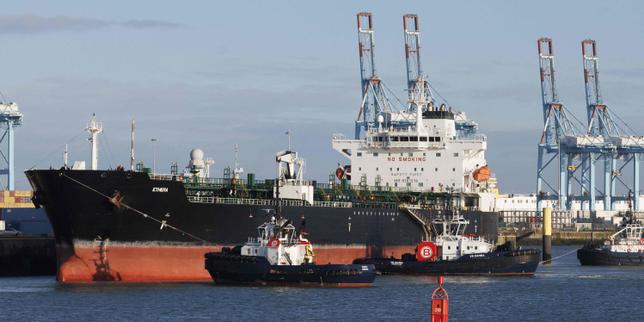
Belgium and France just hammered a wedge into Vladimir Putin’s maritime shadow cabinet. In a coordinated strike that signals a hardening European stance, maritime authorities recently intercepted a vessel in the North Sea suspected of operating within Russia’s "ghost fleet." This wasn’t just a routine safety check. It was a calculated message to the network of aging tankers and shell companies currently bypassing Western sanctions to fund the war in Ukraine.
The move targets a specific, dangerous loophole. By utilizing vessels with obscured ownership, expired insurance, and deactivated transponders, Russia has managed to move millions of barrels of oil beneath the radar of the G7 price cap. When Belgian and French officials stepped onto that deck, they weren't just looking for logbooks. They were hunting for the financial DNA of a rogue energy trade that keeps the Russian military machine lubricated.
The Mechanics of the North Sea Interception
The operation relied on sophisticated "dark ship" tracking. This isn't the stuff of Hollywood thrillers; it is a grueling process of data synthesis. Most ghost ships operate by turning off their Automatic Identification System (AIS) to disappear from standard monitoring screens. However, you cannot hide a 200-meter steel hull from synthetic aperture radar (SAR) or high-resolution satellite imagery.
European intelligence agencies have begun cross-referencing these gaps in AIS signals with thermal signatures and port records. When a ship "goes dark" in the Baltic and reappears near the English Channel with a different draft—indicating it has been loaded or unloaded—red flags go up. In this latest incident, the Belgian coast guard acted on intelligence that the vessel lacked credible Protection and Indemnity (P&I) insurance.
Without this insurance, a tanker is a floating environmental catastrophe. If a ghost ship leaks in the North Sea, there is no corporate entity to foot the bill. By boarding the vessel under the guise of safety and environmental compliance, Belgian and French authorities effectively used the law of the sea to bypass the diplomatic immunity often claimed by merchant vessels.
Why the Ghost Fleet Exists and Who Really Owns It
Russia did not build this fleet overnight. They bought it. Since the 2022 invasion of Ukraine, there has been a massive migration of aging tankers from reputable European owners to mysterious entities based in Dubai, Hong Kong, and Istanbul. These ships are often over fifteen years old—the age at which most major oil companies would sell them for scrap.
Instead of hitting the breaker's yard, these "rust buckets" are repurposed for the shadow trade. The ownership structures are intentionally labyrinthine. A ship might be owned by a company in the Marshall Islands, managed by an office in Dubai, and crewed by sailors recruited through a third-party agency in Vladivostok.
The Financial Shell Game
The goal is to circumvent the $60 per barrel price cap. If a Russian firm can sell oil at $75 by using its own "internal" fleet, it keeps the extra $15 out of reach of Western banks.
- Flagging Out: Many of these ships fly "flags of convenience" from nations like Gabon, Cameroon, or the Cook Islands. These registries often lack the oversight necessary to enforce international sanctions.
- Ship-to-Ship (STS) Transfers: This is the most common tactic. A Russian tanker meets a "clean" tanker in international waters—often off the coast of Greece or in the middle of the Atlantic—and pumps its cargo over. The second ship then claims the oil is from a different source.
- Asset Masking: Owners frequently rename vessels and change their IMO numbers in digital records, though the physical number welded to the hull remains the same.
The Belgian-French intervention marks a shift toward physical enforcement. It suggests that the "paper trail" strategy of sanctions is being supplemented by "boots on deck."
The Ecological Time Bomb in European Waters
The danger isn't just geopolitical. It is physical. The North Sea is one of the busiest and most ecologically sensitive shipping lanes on the planet. When a ghost ship enters these waters, it does so with questionable maintenance records and a crew that is often working outside the protection of international labor unions.
If a collision occurs, the "owners" will vanish into a cloud of deleted email accounts and dissolved shell corporations. The cost of a major oil spill—potentially billions of dollars—would fall squarely on the coastal nations of Europe. This is why Belgium and France are taking the lead. They are not just enforcing sanctions; they are protecting their coastlines from a disaster that has no liable party.
The Role of French Maritime Intelligence
France’s involvement is critical due to its extensive naval capabilities and its oversight of the Dover Strait. The Préfecture Maritime has some of the most advanced surveillance assets in the world. By sharing real-time satellite data with Belgian partners, they created a "net" that the suspect vessel could not slip through. This level of cooperation indicates that the European Union is moving toward a unified maritime policing strategy specifically aimed at Russian interests.
The Limits of Port State Control
We must be realistic about the effectiveness of these seizures. For every ship that Belgium boards, ten more are likely passing through the Atlantic or the Mediterranean. International maritime law—specifically the United Nations Convention on the Law of the Sea (UNCLOS)—is designed to protect the "innocent passage" of vessels.
Challenging a ship in international waters is a legal minefield. If a country gets it wrong, they face massive lawsuits and diplomatic fallout. Russia knows this. They rely on the West's commitment to the rule of law to protect their law-breaking fleet.
The current Belgian strategy relies on "Port State Control." If a ship enters a country's territorial waters or shows signs of mechanical distress, authorities have a much stronger legal standing to board. The "suspect" ship in this case was likely identified long before it reached Belgian waters, with authorities waiting for the precise moment it entered a jurisdiction where they could legally strike.
How the Shadow Fleet Reboots
Russia is already adapting. Reports suggest they are now looking into "peer-to-peer" insurance models, where a group of sanctioned entities essentially insure each other. This would remove the need for Western P&I clubs entirely.
Furthermore, the "dark" fleet is becoming more sophisticated in its spoofing technology. Some vessels now carry hardware that can broadcast a fake AIS signal, making it look like the ship is in the South China Sea when it is actually loading crude in Primorsk. This is an electronic arms race.
The Economic Impact of Aggressive Interdiction
If European nations continue to board and impound these ships, the cost of operating the ghost fleet will skyrocket. Insurance premiums for "gray market" shipping will rise, and the aging hulls will become even more of a liability.
The strategy here is attrition. You don't have to catch every ship; you just have to make the trade so expensive and risky that the profit margin for the Kremlin disappears. Every day a ship sits in a Belgian port under investigation is a day it isn't generating revenue for the Russian state.
Key Tactical Shifts to Watch
| Tactic | Previous State | Current Counter-Measure |
|---|---|---|
| AIS Spoofing | Ship disappears from GPS | Satellite SAR imagery confirms physical location |
| Flag Hopping | Changing country of registry | Targeted blacklisting of specific flags (e.g., Cameroon) |
| Shell Companies | Anonymous ownership | "Follow the money" audits of European bunker fuel suppliers |
The Confrontation Ahead
This interception is a harbinger of a more muscular European maritime policy. For years, the North Sea has been a corridor of commerce, governed by trust and established norms. Russia’s reliance on a shadow fleet has turned these waters into a theater of hybrid warfare.
The move by Belgium and France proves that the "ghosts" can be seen. It proves that the "dark" fleet can be brought into the light. However, the real test will be whether Europe has the stomach for a sustained campaign of boardings. If this was a one-off, it will be forgotten by next month. If it is the start of a systematic "stop and search" program for every vessel without clear insurance and ownership, the Kremlin’s primary revenue stream is in serious trouble.
The next move is a legal one. The owners of the seized vessel will likely challenge the detention in international maritime courts. Watch how Belgium defends its actions. If they successfully argue that "lack of transparent insurance" is a valid ground for indefinite detention, the legal precedent will do more damage to Putin’s oil trade than a dozen rounds of diplomatic sanctions.
The era of the untouchable ghost ship is ending. The question is whether the environmental and legal risks of stopping them are higher than the price of letting them sail. Europe has clearly decided that the risk of doing nothing is finally too great to bear.
Check the IMO registration numbers of tankers entering European economic zones against the updated EU and US sanctions lists to see which vessels are currently flagged for "enhanced scrutiny."