The United States is currently losing a decades-long industrial war that most Americans didn't realize was being fought until their car prices spiked and their electronics shipments stalled. While Washington focused on software, social media, and financial engineering, Beijing quietly spent forty years consolidating the physical foundations of the modern world. This is not a simple story of trade deficits or manufacturing shifts. It is a calculated, multi-generational capture of the critical mineral supply chain that now leaves Western defense, energy, and technology sectors at the mercy of a single strategic rival.
To understand why China dominates this space, you have to look past the dirt. Critical minerals like lithium, cobalt, nickel, and rare earth elements are the "oil" of the twenty-first century. Without them, there are no electric vehicle batteries, no high-performance jet engines, and no advanced missile guidance systems. China does not just dig these materials out of the ground. In many cases, they aren't even the top producer of the raw ore. Instead, they have built a functional monopoly on the middle of the chain—the refining and processing stages where raw rock is turned into high-purity industrial chemicals.
The Refining Bottleneck That Washington Ignored
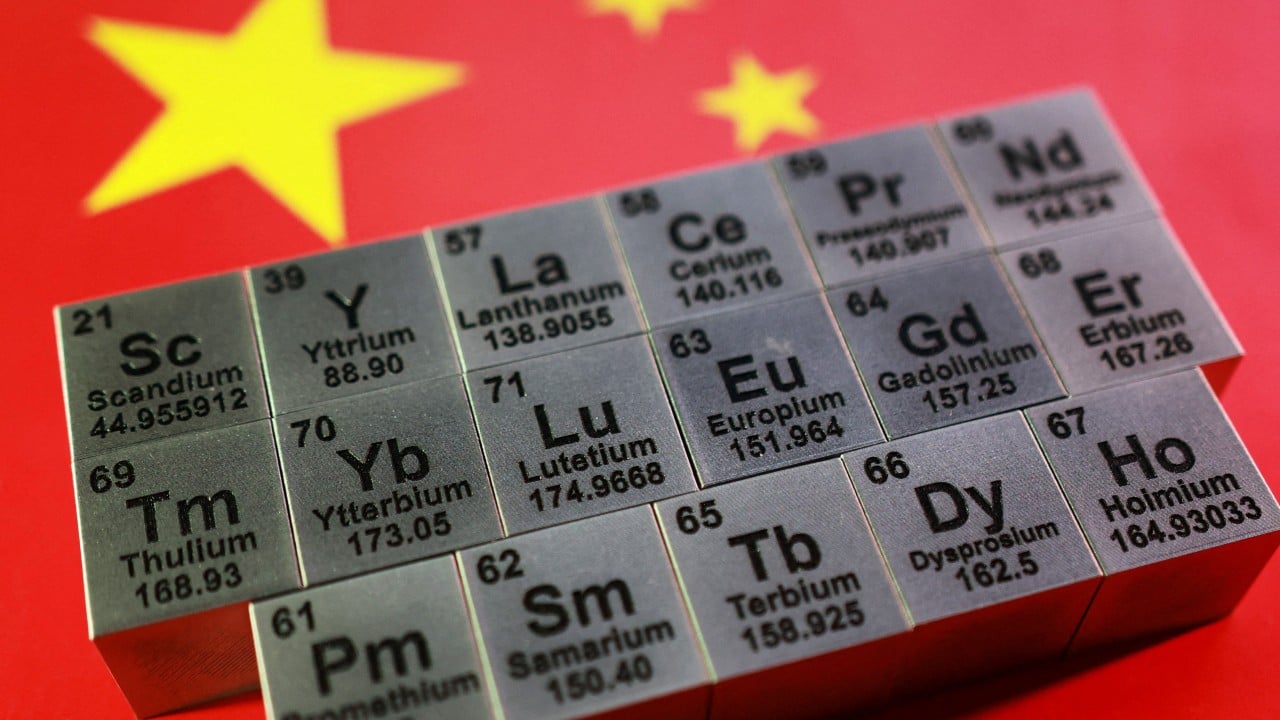
Most policy discussions focus on mining. This is a mistake. Mining is the easy part. The true power lies in the chemical processing plants that transform bulk concentrate into battery-grade materials. China currently controls roughly 60 percent of the world's lithium processing, 80 percent of cobalt refining, and nearly 90 percent of rare earth element processing.
Western companies often ship ore mined in Australia or South America directly to Chinese ports because there is nowhere else to send it. Building a refinery in the United States or Europe is a nightmare of environmental litigation, permitting delays, and high energy costs. China bypassed these hurdles by integrating their state-owned enterprises with massive subsidies and a "growth at any cost" environmental mandate. They were willing to accept the toxic byproduct of rare earth processing—thorium and acidic wastewater—while the West offshored those headaches to keep its own backyard clean.
The result is a structural dependency. Even if a new lithium mine opens in Nevada tomorrow, the material will likely still travel across the Pacific for processing before it ever sees the inside of a domestic battery factory. This creates a massive strategic vulnerability. If Beijing decides to restrict exports, as they have done with gallium and germanium, Western high-tech manufacturing simply grinds to a halt.
The Myth of Fast Decoupling
There is a comforting narrative circulating in boardrooms that the West can "decouple" or "de-risk" from Chinese minerals within a few years. This is a fantasy. Developing a single new mine in North America typically takes between 10 and 15 years from discovery to production. Refineries are slightly faster to build but require specialized chemical engineering talent that has largely migrated to Asia.
The Expertise Gap
We have a human capital problem. When an industry leaves a country, the knowledge base goes with it. The United States has plenty of software engineers, but it has a dwindling supply of metallurgical engineers who know how to manage the complex solvent extraction processes required for rare earth separation. China, meanwhile, has invested heavily in university programs specifically designed to master these materials. They aren't just winning on volume; they are winning on technical sophistication.
Market Volatility as a Weapon
China uses market pricing as a defensive tool. Whenever a Western startup secures funding to build a competing refinery, the global price of that specific mineral often mysteriously plummets. State-backed Chinese firms can weather these losses because they are subsidized. The Western startup, beholden to private equity or public markets, goes bankrupt. Once the competition is cleared, prices stabilize or rise again. This predatory pricing makes it nearly impossible for private capital to enter the market without massive, sustained government intervention.
Why Recycling is Not a Near-Term Solution
Environmental advocates often point to circular economies and battery recycling as the way out. While recycling is essential for long-term sustainability, it cannot bridge the current gap. There simply aren't enough old electric vehicles on the road yet to provide the volume of "black mass" (shredded battery material) needed to meet current demand.
We are decades away from having a large enough pool of scrap material to make a dent in the need for virgin mined minerals. Furthermore, the technology to recycle these minerals efficiently is itself heavily concentrated in—you guessed it—China. They are currently the world leader in pyrometallurgical and hydrometallurgical recycling techniques.
The African Front of the Mineral War
The Democratic Republic of Congo (DRC) produces about 70 percent of the world's cobalt. It is a brutal, complicated environment. For the last two decades, Chinese firms have been the primary investors in Congolese infrastructure, trading roads and bridges for long-term mineral rights.
While Western banks and investors shied away from the DRC due to ESG (Environmental, Social, and Governance) concerns and corruption risks, Chinese state-backed companies moved in with suitcases of cash and government backing. They now own or have a stake in 15 of the 19 primary cobalt-producing mines in the country. When a US electronics manufacturer buys cobalt, they are almost certainly paying a Chinese middleman, regardless of where the mine is located.
The High Cost of the Green Transition
The irony of the current energy transition is that it is trading a dependence on Middle Eastern oil for a dependence on Chinese minerals. A traditional internal combustion engine car requires roughly 35 kilograms of copper and manganese. An electric vehicle requires over 200 kilograms of a cocktail of minerals including lithium, cobalt, nickel, and copper.
The math of the Green New Deal is fundamentally Chinese. If the US government mandates a total shift to electric vehicles by 2035 without first securing a domestic or allied supply chain, it is effectively handing the keys to the national economy to the Chinese Communist Party. This is the "hard truth" that politicians often gloss over. You cannot have a green revolution without a massive, dirty, and intensive mining and refining build-out.
Breaking the Stranglehold
If the West wants to break this dominance, it requires a complete shift in industrial policy. The era of "just-in-time" supply chains and "lowest-cost-wins" procurement is over for critical materials.
- Strategic Stockpiling: The US must treat minerals with the same urgency as the Strategic Petroleum Reserve.
- Permitting Reform: It currently takes longer to get a mining permit in the US than it does in almost any other developed nation. Without streamlining this, domestic production is a pipe dream.
- Multilateral Processing Hubs: Instead of every country trying to build its own tiny refinery, the US and its allies (the "Mineral Security Partnership") need to build massive, shared processing hubs in regions with low energy costs and high regulatory standards.
The challenge is that these solutions are expensive and slow. They require taxpayers to accept that their electronics and cars might cost more in the short term to ensure national security in the long term.
The Technological Pivot
There is one wildcard: innovation. Scientists are working on "cobalt-free" batteries and lithium-sulfur chemistries that could bypass the current mineral requirements. However, laboratory success is very different from gigafactory-scale production. China is also the leader in battery R&D, meaning they are just as likely to invent the next generation of materials as we are.
This is a physical reality that cannot be disrupted by an app or a clever piece of code. It requires chemicals, heat, pressure, and massive amounts of electricity. The West is finally waking up to the fact that the virtual world is built on a physical one, and that physical world is currently owned by someone else.
Governments must stop treating mineral policy as a sub-set of environmental policy and start treating it as a branch of national defense. If a country does not control the inputs for its own power grid and military hardware, it is not truly sovereign. The leverage China holds is not just a business advantage; it is a geopolitical veto. Every day that passes without a massive, coordinated investment in domestic processing is a day the trap closes tighter.
Stop looking at the screen and start looking at what the screen is made of. The battle for the next century is being won in the refineries and the mud.