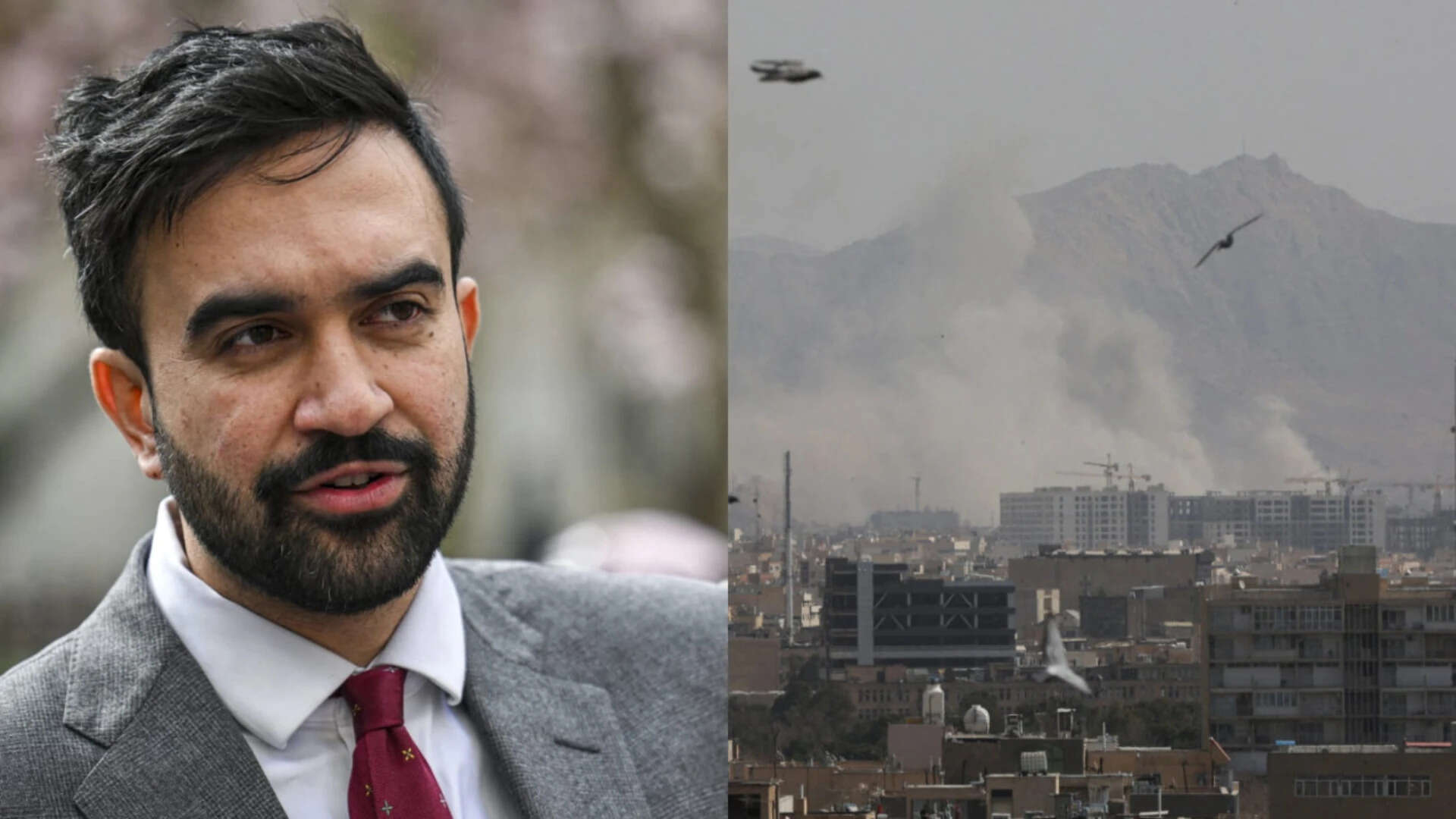
The internet has a recurring fever dream, and it usually involves a blind Bulgarian mystic predicting the end of the world. Every time a missile crosses a border in the Middle East or a drone swarms a power grid in Eastern Europe, the name Baba Vanga begins to trend. It is a predictable cycle of anxiety. Currently, social media algorithms are pushing claims that the "Nostradamus of the Balkans" foresaw a global conflagration triggered by the exact tensions we see today between the United States, Israel, and Iran.
But the reality is far more calculated than a blind woman’s vision from thirty years ago. What we are witnessing isn't prophecy; it is the sophisticated use of folklore as a psychological operation. In an era where information fatigue makes traditional propaganda easy to spot, these "ancient" predictions serve as a perfect vessel for spreading fatalism and fear. They bypass our logical filters because they feel like destiny rather than disinformation.
The Architecture of a Viral Prophecy
Prophecies attributed to Vangelia Pandeva Gushterova, who died in 1996, rarely come from a primary source. There are no handwritten journals or authenticated recordings outlining the specific geopolitical shifts of 2026. Instead, we see a digital telephone game where vague utterances are retrofitted to match the morning's headlines.
The current wave of "World War 3" content relies on a specific set of tropes. It claims she predicted a "great Muslim war" or a clash that would leave Europe a "wasteland." When US-Israel strikes on Iranian interests intensify, or when skirmishes break out on the Pakistan-Afghanistan border, content farms in Macedonia and clickbait hubs in Southeast Asia go to work. They take a nebulous quote about "conflict in the East" and pin it to the current calendar year.
This is profitable. A single viral post about an impending apocalypse can generate thousands of dollars in ad revenue for the sites hosting it. More dangerously, it creates a sense of inevitability. If people believe a war is "predicted," they are less likely to demand diplomatic solutions or hold leaders accountable for escalation. They become passive observers of their own destruction.
Why the Human Brain Craves an Apocalypse
Psychologically, we are wired to seek patterns. When the world feels chaotic—marked by shifting alliances and the constant threat of regional escalations—the idea that someone "knew this would happen" provides a strange form of comfort. It suggests that there is a script, even if that script ends in disaster.
Security analysts note that these narratives often spike during periods of high "gray zone" warfare. This is the space between peace and all-out conflict, where cyberattacks, disinformation, and proxy battles occur. By injecting mystical dread into the public discourse, state actors can weaken the national resolve of their adversaries. If a population believes they are living through the "end times," they are more prone to panic-buying, civil unrest, and a general loss of faith in institutional stability.
Historical precedent shows this isn't new. During World War II, both the Allies and the Axis powers employed "astrologers" to create fake prophecies that predicted the defeat of the other side. The 21st-century version just happens to use TikTok and Telegram instead of leaflets dropped from planes.
The Iran-Israel Flashpoint and the Echo Chamber
The specific tension between Israel and Iran serves as the perfect fuel for this fire. Because these nations occupy a central role in various eschatological traditions—not just the Balkan folk variety—any military movement is immediately interpreted through a spiritual lens.
When the US conducts strikes or Iran’s proxies retaliate, the news cycle is almost instantly shadowed by these "predictions." This creates an echo chamber where factual reporting on troop movements or enrichment levels is drowned out by speculation about "the 2026 timeline."
It is a distraction. While the public debates whether a dead mystic saw a nuclear flash, they aren't looking at the specific policy failures or the breakdown of the non-proliferation treaties that actually lead to such outcomes. The prophecy becomes a shield for the architects of the conflict.
Tracing the Origin of the "2026" Claims
If you try to find the origin of the specific "2026" or "2025" start dates for a global war, you will find a circular trail of citations. Site A quotes Site B, which quotes a "fan forum," which claims to have heard it from a "close associate" of Vanga.
In reality, Vanga was a complex figure who was often co-opted by the Bulgarian state during the Cold War. The government even established a "Permanent Commission on Suggestology" to study her. She was a state-sanctioned asset, and her "predictions" were frequently filtered through the lens of Soviet-era interests. Today, those same filters are applied by anyone with a keyboard and a desire for engagement.
There is also the "Texas Sharpshooter" fallacy at play. This is where someone fires a gun at a barn wall and then draws a target around the bullet hole. The "prophecy" is so vague that it can be applied to almost anything after the fact. If a major event happens in 2026, the believers will point to the date. If nothing happens, the date will simply be moved to 2028 or 2030, and the cycle will reset.
The Cost of Credulity
The danger here isn't just a few people being superstitious. The danger is the erosion of a shared reality. When a significant portion of the population views global events as "preordained," the incentive for political engagement vanishes.
This fatalism is a gift to extremist regimes. It allows them to frame their aggression as part of a cosmic necessity rather than a choice. We see this in the rhetoric coming out of various hardline factions in the Middle East and the West alike—the idea that we are "speeding up" the arrival of a final confrontation.
To combat this, we have to recognize the "Baba Vanga" phenomenon for what it is: a data-driven exploitation of human anxiety. It is a product, not a prophecy.
Verify the source of every "viral" claim that links current military strikes to ancient visions. You will find that the people pushing these stories aren't interested in your spiritual enlightenment; they are interested in your clicks and your compliance.
Stop looking at the stars or the "visions" of the past to understand the current strikes in the Middle East. Look at the budget lines, the weapon shipments, and the failed treaties. That is where the real future is being written, and unlike a prophecy, that is something we actually have the power to change.
Identify the entities that benefit from your fear and stop giving them your attention.