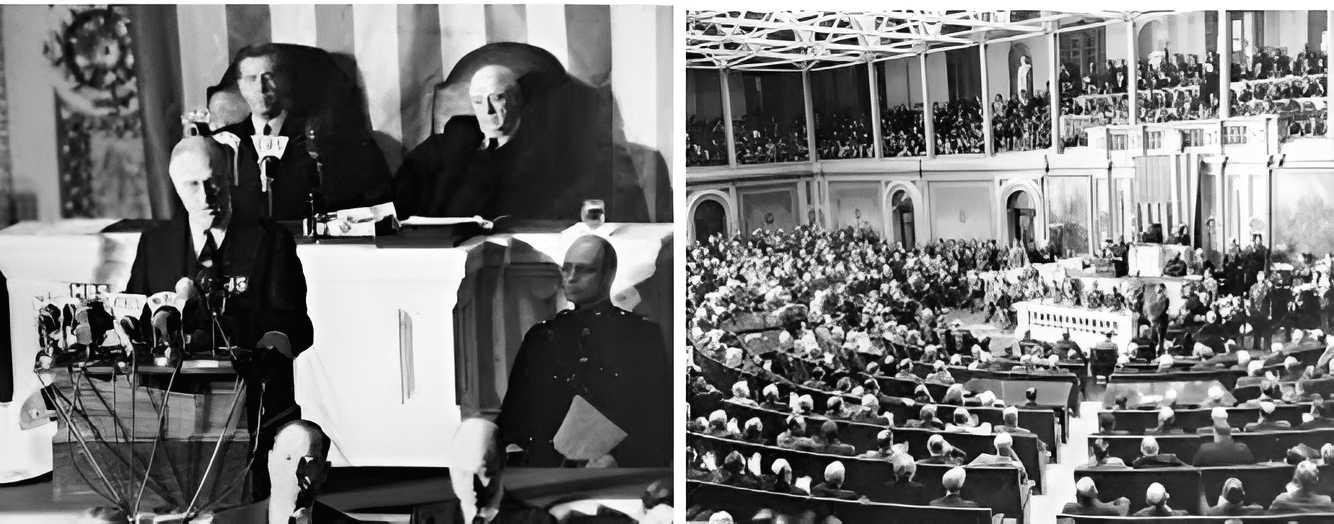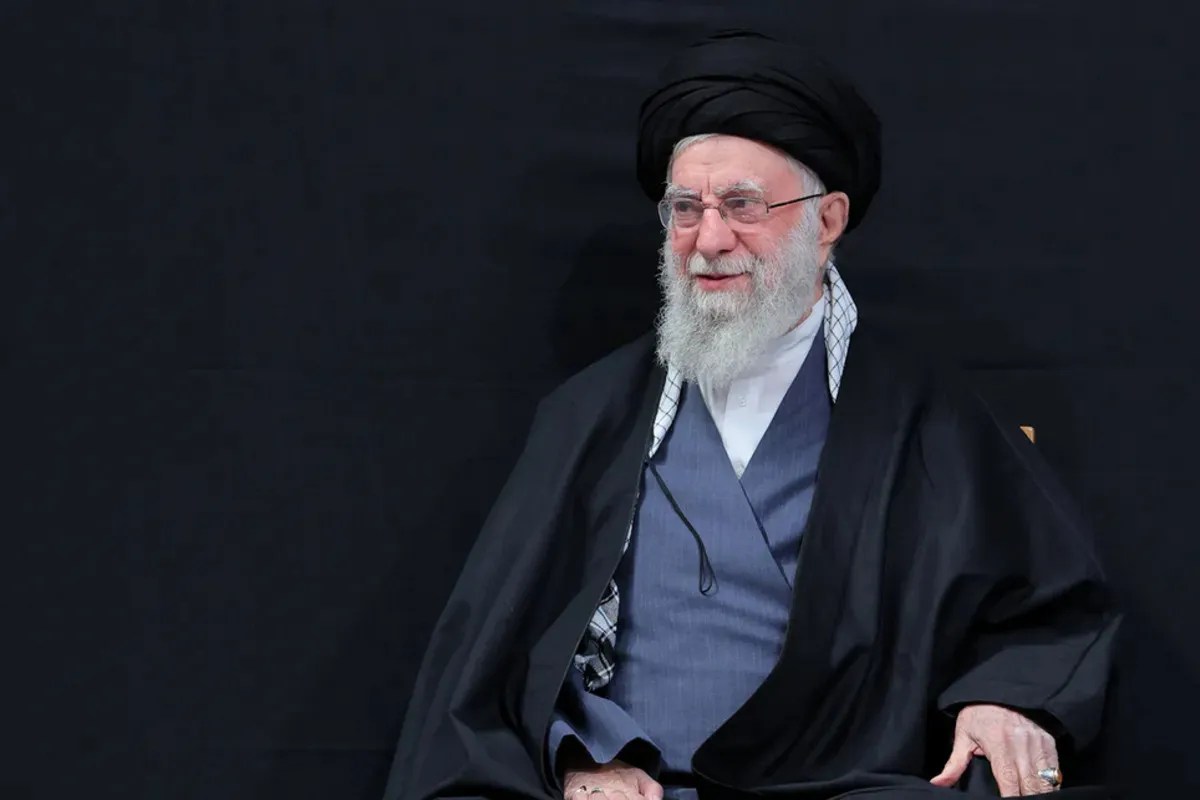
When a superpower stumbles, the instinct of the commentariat is to reach for a historical shorthand. We crave the comfort of a pre-written script. For decades, two specific ghosts have haunted the halls of State Departments and the boardrooms of multinational banks: Pearl Harbor and the Suez Canal. One represents a brutal, unexpected blow that triggers a sleeping giant’s rebirth; the other marks the pathetic, whimpering end of an empire that forgot it could no longer dictate terms to the world.
But the current American moment fits neither of these molds.
To view modern instability through the lens of a "Pearl Harbor moment" is to indulge in a dangerous kind of optimism. It assumes that a single external shock—whether a cyberattack on the power grid, a blockade in the South China Sea, or a financial contagion—will magically unify a fractured public and jumpstart an industrial base that has been hollowed out by thirty years of offshoring. Conversely, labeling a setback a "Suez moment" suggests a clean, linear descent into middle-power status. It implies that the end of hegemony is an orderly hand-off.
The reality is far more jagged. We are not witnessing a sudden explosion or a polite retreat. We are watching the slow-motion disintegration of the post-Cold War consensus, a process driven by internal institutional decay rather than a single external adversary.
The Fallacy of the Sudden Shock
History enthusiasts love the Pearl Harbor narrative because it provides a clear arc of redemption. It suggests that a nation’s problems are merely logistical and psychological. If the enemy strikes, we simply flip a switch, convert the car factories to tank plants, and out-produce the threat.
This ignores the structural rot. In 1941, the United States possessed a massive, underutilized industrial infrastructure and a relatively cohesive social fabric. Today, the "sleeping giant" is a service economy dependent on brittle, globalized supply chains. You cannot "awaken" a manufacturing sector that has been sold for parts to satisfy quarterly earnings reports.
If a modern Pearl Harbor were to occur—perhaps a total digital blackout of the Eastern Seaboard—the result would likely not be a surge of national unity. It would more likely be a frantic, litigious scramble to assign blame. The "why" behind this shift isn’t a lack of patriotism; it’s a lack of shared reality. When a country can no longer agree on the basic facts of a crisis, the mobilizing power of an external attack evaporates.
Why Suez is a Poor Proxy for Power
The 1956 Suez Crisis is the gold standard for imperial humiliation. Britain and France, clinging to the remnants of their colonial prestige, attempted to seize the Suez Canal after Egypt nationalized it. They were stopped not by the Egyptian military, but by the United States threatening to collapse the British pound. It was the moment the world realized the torch had passed.
Analysts often hunt for a modern Suez—a specific event where the U.S. is told "no" by a peer competitor and is forced to back down. They point to the withdrawal from Afghanistan or the inability to dictate oil prices to the Gulf states.
Yet, the U.S. position differs fundamentally from 1950s Britain. The British Empire was a colonial project built on direct territorial control. The American system is a financial and technological web. A nation can lose its appetite for foreign wars without losing its grip on the world’s reserve currency or the operating systems that run global commerce.
The danger isn't a "Suez moment" where a single defeat signals the end. The danger is a "thousand cuts" scenario. It is a gradual loss of trust in the dollar, a slow migration of talent to other jurisdictions, and the steady erosion of the legal certainties that once made the West the only place for serious capital.
The Industrial Mirage
We often talk about "deglobalization" as if it’s a policy choice we can simply enact with enough political will. This is a profound misunderstanding of how deeply embedded the current system has become.
Decades of "just-in-time" logistics were not just about efficiency; they were about removing the cost of resilience from the balance sheet. Every warehouse that was closed and every local supplier that was replaced by a cheaper overseas alternative was a withdrawal from the national security bank.
The Cost of Efficiency
- Institutional Memory Loss: When you stop making things, you forget how to make them. We see this in the struggle to scale up domestic semiconductor production despite billions in government subsidies.
- Infrastructure Debt: The physical bones of the country—ports, rails, and power grids—were built for an era that no longer exists. They are being maintained on a "run-to-fail" basis.
- Talent Stratification: We have spent forty years funneling our most capable minds into high-frequency trading and advertising algorithms rather than material science or structural engineering.
This isn't a problem that can be solved by a "Suez-style" realization that we are no longer the top dog. It is a deep-seated crisis of competence that persists regardless of who sits in the Oval Office.
The Weaponization of Interdependence
The most overlooked factor in the Pearl Harbor vs. Suez debate is the nature of modern warfare. It is no longer about sinking ships or occupying territory. It is about the control of flows—the flow of data, the flow of capital, and the flow of energy.
In 1941, the lines on the map were clear. In 2026, the battlefield is the cloud. If an adversary can compromise the firmware of the routers that run a nation’s banking system, they don't need a Pearl Harbor. They have already won.
The irony is that our greatest strength—our deep integration into the global economy—is also our greatest vulnerability. We are tethered to our rivals in a way that makes a clean "Suez" break impossible and a "Pearl Harbor" mobilization suicidal for both sides. This is the "mutually assured destruction" of the 21st century, and it isn't limited to nuclear weapons.
The Crisis of Domestic Legitimacy
A nation’s power on the world stage is a direct reflection of its stability at home. This is where the historical analogies fail most spectacularly. Neither the 1941 U.S. nor the 1956 U.K. faced the level of internal ideological polarization currently paralyzing the West.
When the state can no longer perform its basic functions—protecting the border, maintaining the currency, and ensuring public safety—it loses the moral authority to lead an international order. You cannot export a model that is visibly malfunctioning at the source.
The real story isn't about whether we are in a "Part 3" of some historical trilogy. It’s about the fact that we are writing a new, much darker genre. We are entering an era of "permanent crisis management" where the goal isn't to win, but to simply prevent the system from crashing for one more day.
The Strategy of Managed Decline
If we accept that neither a glorious rebirth nor a clean exit is on the cards, what remains? The only honest path forward is a strategy of radical realism.
This means acknowledging that we cannot be everywhere and do everything. It means prioritizing the protection of core technologies and vital supply chains over the maintenance of an overextended military footprint. It requires a brutal audit of our own capabilities.
The Realities of the New Era
- Selective Decoupling: We cannot decouple from the global economy entirely, but we must identify the "choke points" where we are most vulnerable and build redundant systems, even if it hurts the bottom line.
- Institutional Reform: The bureaucracy that oversees national security and economic policy is largely a relic of the 1990s. It is too slow, too risk-averse, and too disconnected from the realities of the private sector.
- Public Trust as National Security: Rebuilding the social contract is not a "soft" issue. It is a hard power requirement. A divided nation is a playground for foreign intelligence services.
The obsession with finding the "right" historical label is a form of procrastination. It allows us to pretend that the future is predictable. By asking if this is a Pearl Harbor or a Suez moment, we are asking which old solution we should dust off.
We should be asking a different question entirely. How do we govern a world where the old rules have been burned, and the new ones are being written by our competitors?
The answer won't be found in a history book. It will be found in the ability to adapt to a reality that doesn't care about our past glories. Stop looking for a moment of clarity and start preparing for a decade of chaos.
Demand a full, transparent audit of the national strategic reserve and the domestic manufacturing capacity for essential medicines. If we cannot secure the basics, the grand strategy doesn't matter.