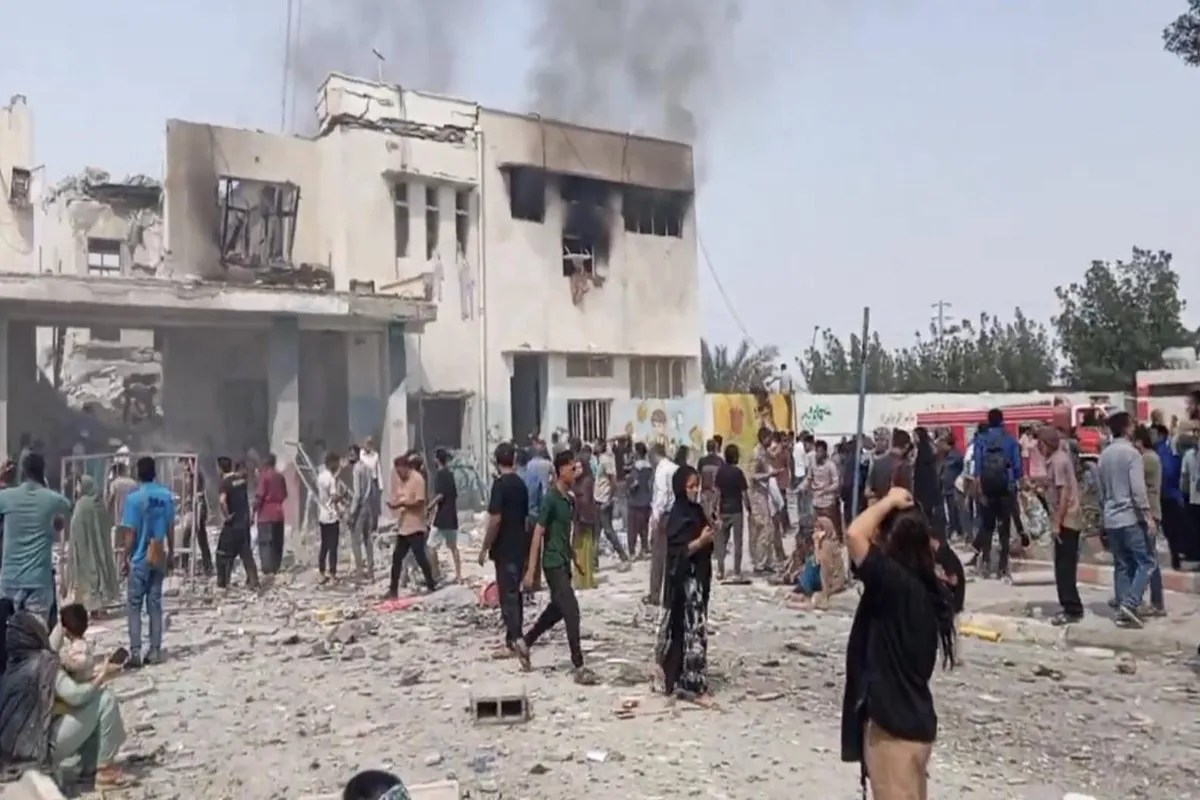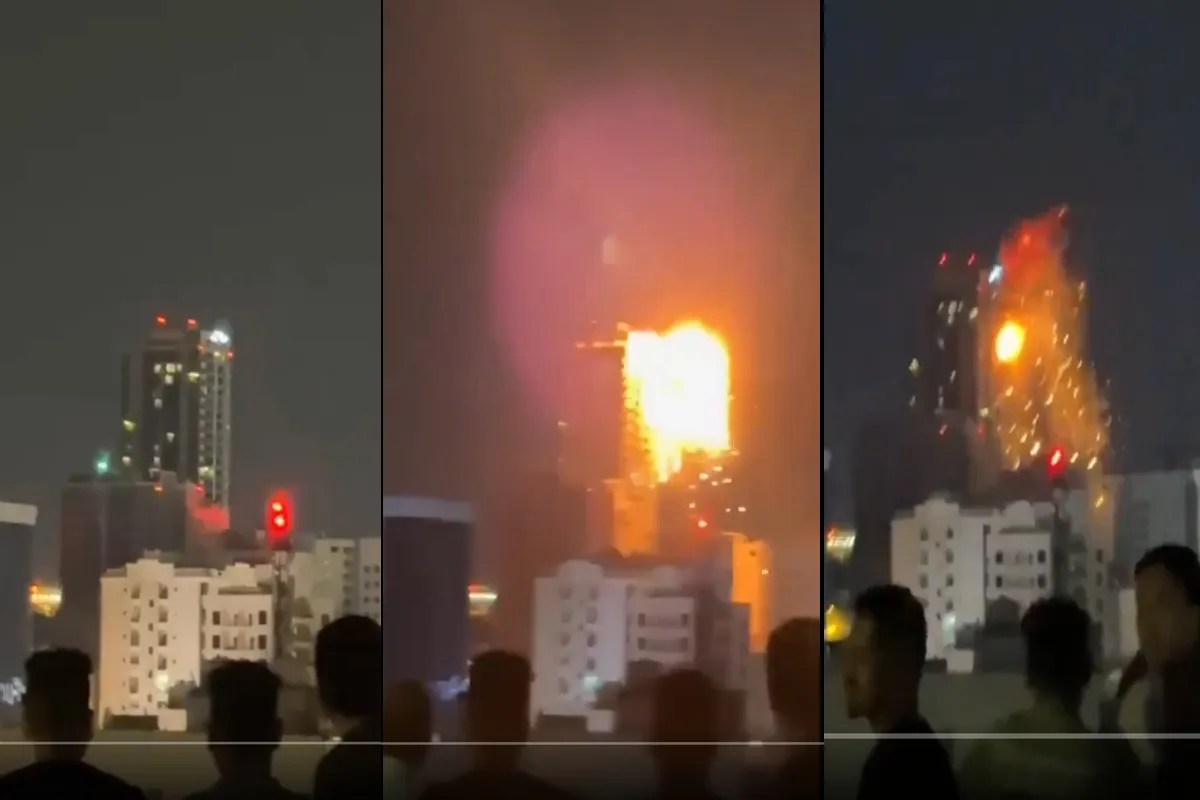
The prevailing narrative suggests a sudden, erratic surge in regional tension. That is a convenient fiction. What we are witnessing across the Persian Gulf is not a random spasm of aggression from Tehran, but the calculated execution of a long-term strategy designed to exploit a visible vacuum in Western resolve. For decades, the Gulf monarchies operated under a simple, unspoken contract: they provided the world with energy price stability, and in exchange, the United States provided a kinetic security guarantee. That contract has been shredded.
As Iran ramps up pressure on its neighbors through drone incursions, maritime harassment, and proxy movements, the reaction in Riyadh, Abu Dhabi, and Doha is not merely "panic." It is a cold, hard pivot toward self-preservation. The billionaire states of the GCC (Gulf Cooperation Council) have realized that the American "umbrella" is more of a parasol—effective against a light drizzle of regional annoyance, but entirely porous in a real storm. In similar developments, read about: The Sabotage of the Sultans.
The Strategy of Proportional Pain
Tehran is not looking for a full-scale war that would inevitably result in the destruction of its own infrastructure. Instead, it utilizes a doctrine of calibrated escalation. By targeting specific oil tankers or launching low-cost loitering munitions at processing plants, Iran demonstrates a terrifying reality: it can inflict billions of dollars in economic damage for the price of a mid-sized sedan.
This is a math problem that the West is currently losing. When a $20,000 drone can threaten a multi-billion dollar refinery, the traditional defense model of firing $2 million interceptor missiles is economically unsustainable. The Gulf states see the ledger. They know that while Washington speaks of "ironclad commitments," the political appetite in the U.S. for another Middle Eastern conflict is non-existent. Reuters has provided coverage on this important issue in great detail.
The "lashes out" framing used by superficial news outlets misses the point. These are not emotional outbursts. They are stress tests. Each time a provocation goes unanswered by the West, the regional balance of power shifts an inch toward the Islamic Republic.
The Death of the Petrodollar Protection Pact
To understand why the Gulf is vibrating with anxiety, one must look at the shifting flow of global capital. For half a century, the security of the Gulf was a domestic American interest because the U.S. was a net importer of energy. Today, the U.S. is the world's leading oil producer. This change in energy status has fundamentally altered the geopolitical incentive structure.
Riyadh knows that a disruption in the Strait of Hormuz hurts Beijing and New Delhi far more than it hurts Houston or Chicago. This realization has triggered a massive, quiet shift in diplomacy. We are seeing a "hedging" era. The Saudi-Iran normalization deal, brokered by China, was not a sign of sudden friendship. It was a tactical admission by the House of Saud that they can no longer rely on a single Western benefactor to keep the peace.
The Maritime Vulnerability Gap
The geography of the Gulf is a nightmare for traditional naval power. The Strait of Hormuz is a narrow choke point where high-tech destroyers are vulnerable to "swarm" tactics—hundreds of fast-attack boats equipped with anti-ship missiles.
- Asymmetric Warfare: Iran has invested heavily in "suicide" boats and midget submarines.
- Infrastructure Density: Desalination plants and oil terminals are fixed targets that cannot be hidden.
- Economic Interdependence: A 5% increase in global insurance premiums for shipping can derail the fragile post-inflation recovery in the West.
The "panic" is actually a sophisticated reassessment of risk. The Gulf states are currently buying every advanced air defense system they can get their hands on, but they are also opening back-channel negotiations with the very people who are threatening them. It is a dual-track policy: arm to the teeth while talking to the hand that holds the knife.
Why Sanctions Failed to Provide a Buffer
The Western reliance on economic sanctions as a tool of deterrence has proven largely ineffective in stopping the "lashing out." If anything, sanctions have forced Tehran to perfect the art of the shadow economy. By building a vast network of front companies and illicit shipping routes, Iran has become insulated from the very pressure intended to keep it in check.
Furthermore, the rise of a "multipolar" world means that sanctioned oil always finds a buyer. Whether it is "teasing" the market through privateers or selling at a steep discount to independent Chinese refineries, the revenue continues to flow. This cash is immediately recycled into the drone programs that are currently keeping Gulf monarchs awake at night.
The internal logic of the Iranian regime is built on the premise of "strategic patience." They are betting that they can outlast the political cycles of Western democracies. They see a U.S. election every four years as a point of weakness and a chance for a policy reversal. This creates a permanent state of uncertainty for US allies, who never know if the next administration will be a "maximum pressure" hawk or a "de-escalation" dove.
The Intelligence Failure of Anticipation
There is a glaring gap in how Western intelligence agencies view the "why" behind recent escalations. Often, these events are analyzed in a vacuum, as if they are responses to local grievances. In reality, the moves in the Gulf are part of a broader global chessboard.
When Iran increases pressure on a U.S. ally in the Middle East, it often coincides with shifts in the war in Ukraine or negotiations over nuclear enrichment. The Gulf has become a theatre of distraction. By creating a crisis in the Strait, Tehran forces the Pentagon to divert assets and attention away from other theaters. The Gulf states hate being used as pawns in a game they don't control, and that resentment is starting to boil over into their own foreign policy decisions.
The Rise of the Regional Autonomy
We are entering an era where the UAE and Saudi Arabia are no longer asking for permission to act in their own interests. This was evident in the recent expansion of the BRICS bloc to include these states. It is a clear signal: if the West won't guarantee security, the Gulf will seek it through a web of global alliances that include the West's primary rivals.
This is not a pivot away from the U.S. out of spite, but out of necessity. The "lash out" from Iran is simply the catalyst accelerating a process that was already underway. The monarchies are diversifying their security portfolios. They are buying French jets, Chinese drones, and Russian defense tech, all while maintaining the largest U.S. military bases in the region. It is a messy, dangerous game of balance.
The Infrastructure of Fear
Consider the vulnerability of a city like Dubai. It is a marvel of modern engineering, a hub of global finance, and a luxury tourism magnet. However, it is also a "glass house." A single sustained campaign of drone strikes on power grids or water systems would end the Dubai dream in a matter of weeks. The "panic" reported by the media is the sound of investors recalculating the risk premium of doing business in a region where the rules of engagement are being rewritten by the side with the cheapest weapons.
The traditional deterrent of "overwhelming force" only works if the other side believes you will actually use it. Right now, there is a profound lack of belief in the Gulf that the West is willing to bleed for the stability of someone else's oil fields.
The Proxy Evolution
The threat is no longer just from Iranian territory. The "ring of fire" strategy—utilizing groups in Yemen, Iraq, and Lebanon—allows for a layer of plausible deniability. When a missile is launched from Yemeni soil, it provides just enough diplomatic cover to prevent a direct retaliatory strike on Tehran. This allows the aggression to continue without triggering the "red lines" that would lead to a total war.
The Gulf allies see through this, but they are frustrated that the international community continues to play along with the charade. They see a world that is willing to tolerate "gray zone" conflict as long as it doesn't lead to a $150 barrel of oil.
The New Reality for Investors
For the global business community, the takeaway is clear: the era of "stable" Middle Eastern geopolitical risk is over. The "panic" is the market pricing in a permanent state of low-intensity conflict. Companies are now looking at "friend-shoring" and alternative supply chains that bypass the region entirely.
The Gulf states are fighting this trend by doubling down on massive infrastructure projects like NEOM, hoping that by becoming "too big to fail," they can force the world to care about their security. It is a high-stakes gamble. They are attempting to build the future while the ghosts of 20th-century religious and territorial animosity are knocking at the door.
The next time you see a headline about "panic" in the Gulf, look past the hyperbole. Look at the shipping insurance rates. Look at the flight paths of cargo planes. Look at the guest lists of diplomatic summits in Beijing. The real story isn't that Iran is lashing out; it's that the old world order has finally cracked, and the people living in the middle of it are the first to feel the chill.
Determine your exposure to regional volatility by tracking the spread between Brent crude and the "geopolitical risk premium" added by maritime insurers.