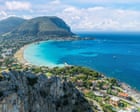
The era of the "King of Mondello" has finally hit a wall. For over a century, a single entity held the keys to one of the most profitable stretches of sand in the Mediterranean. This wasn’t just a business arrangement. It was a local institution that survived world wars, the fall of monarchies, and the rise of the digital age. But the revocation of the Mondello beach concession by Sicilian authorities marks a tectonic shift in how Italy manages its most valuable natural asset. It is a story of organized crime, bureaucratic inertia, and a sudden, sharp injection of legal accountability.
The decision to strip the Italo-Belgian Company of its century-old rights to the beach isn't merely about administrative paperwork. It follows a rigorous investigation into the deep-seated influence of the Mafia within the local economy. For decades, the concessionaire operated with a level of autonomy that defied modern competitive standards. They controlled the cabins, the umbrellas, and the access points, effectively privatizing a public resource under the guise of historical tradition. Now, the state has intervened, citing a "mafia interdict," a legal tool designed to sever ties between public contracts and criminal syndicates. Discover more on a related issue: this related article.
The Mechanism of Control on the Coastline
To understand how a single company kept its grip on Mondello for 110 years, one must look at the way Italian coastal concessions were traditionally handled. These weren't open auctions. They were perpetual renewals. The Italo-Belgian Company became synonymous with the beach itself. Locals didn't just go to Mondello; they went to the "Italo-Belga." This brand loyalty provided a convenient cover for more systemic issues regarding how revenue was tracked and who truly benefited from the millions of euros flowing through the sand every summer.
The Italian government has been under intense pressure from the European Union to open these coastal businesses to fair competition. The Bolkestein Directive, a long-disputed EU rule, mandates that public services—including beach resorts—must be put out to tender. Italy resisted for years. Why? Because the beach club lobby is incredibly powerful, and in regions like Sicily, that power is often intertwined with local political and shadow interests. The Mondello case is the first major domino to fall, signaling that the "grandfathered" era of beach management is effectively dead. Further journalism by The Guardian highlights related perspectives on this issue.
Behind the Mafia Interdict
The term "mafia interdict" sounds like a simple ban, but it is a complex legal surgical strike. It doesn't necessarily mean the CEO was caught in a smoke-filled room with a boss. Instead, it suggests that the company’s internal structure or its subcontractors were sufficiently "permeable" to criminal influence. In Palermo, the Mafia doesn't always demand a cut of the door; they demand the cleaning contracts, the security details, and the supply chains for the beach bars.
Investigators found that the influence had reached a point where the public interest was no longer being served. When a company holds a monopoly for a hundred years, it stops innovating. It stops being transparent. It becomes a state within a state. The revocation is an attempt to reclaim that territory for the public, but the vacuum left behind creates its own set of risks.
The Economic Fallout for Sicily
Mondello is the crown jewel of Palermo’s tourism sector. Thousands of families rely on these beach clubs for their livelihoods. By revoking the concession, the government has essentially paused the heartbeat of the local summer economy. There is a legitimate fear that if the transition to new management isn't handled with extreme precision, the beach could fall into a state of neglect.
- Employment Uncertainty: Hundreds of seasonal workers are now in limbo.
- Infrastructure Maintenance: The iconic Art Nouveau pier and the rows of wooden cabins require constant, expensive upkeep.
- Revenue Loss: The city of Palermo stands to lose significant tax revenue if the transition drags into the high season.
The irony is that the very move intended to clean up the industry could, in the short term, cause more economic pain than the corruption it sought to eliminate. This is the "Mafia tax" in reverse—the cost of removing the cancer is often as high as the cost of the disease itself.
The Resistance of the Old Guard
Don't expect the Italo-Belgian Company to go quietly into the night. They have already launched a barrage of legal appeals, claiming that the revocation is based on "administrative misunderstandings" rather than criminal ties. Their argument centers on the idea of historical investment. They claim that without their stewardship, Mondello would have been an unmanaged wasteland.
This defense is a classic trope in Italian business. It frames the monopolist as a benevolent protector. However, the data tells a different story. For years, the fees paid by these concessionaires to the Italian state were laughably low compared to their private earnings. It was a lopsided deal where the public got pennies while the private operators banked millions on sand they didn't own.
Mapping the New Mediterranean Beach Market
The fall of the Mondello monopoly is a warning shot to every beach club operator from San Remo to Syracuse. The Italian government is currently drafting new rules for "public evidence" tenders. These will prioritize:
- Environmental Sustainability: Moving away from permanent concrete structures toward removable, eco-friendly setups.
- Public Access: Ensuring that a significant percentage of every beach remains free and accessible to those who don't want to pay 30 euros for a sunbed.
- Digital Transparency: Mandatory electronic payment systems to track every euro spent on the shoreline, making it much harder to wash illicit cash.
This isn't just about cleaning up the Mafia. It's about modernizing a prehistoric business model. The old way relied on cash, handshakes, and family names. The new way demands balance sheets, environmental impact reports, and open bidding.
The Risk of Foreign Predation
While the removal of Mafia influence is a net positive, a new threat looms on the horizon. Large international hospitality groups are eyeing the Italian coast. With the legal requirement for open tenders, local "mom and pop" operators—even the honest ones—may be outbid by global corporations with deep pockets.
There is a real danger that the soul of the Italian beach experience could be replaced by sanitized, corporate beach clubs that look the same in Sicily as they do in Dubai or Miami. The challenge for the Sicilian regional government is to create a bidding process that excludes the Mafia but still protects the local character and small-scale entrepreneurs of the region.
A Test Case for National Reform
All eyes are now on Palermo. If the city can successfully re-tender the Mondello concessions without falling back into the hands of shadow interests or succumbing to corporate blandness, it will provide a blueprint for the rest of the country. If it fails—if the beach ends up littered with trash and embroiled in endless lawsuits—it will embolden those who argue that the old, corrupt ways were the only way to keep the lights on.
The Sicilian authorities have taken a massive gamble. They have challenged the status quo in a place where the status quo is reinforced by omertà and centuries of tradition. It is a necessary disruption, but the execution must be flawless. The transition period will be messy. There will be protests on the boardwalk and heated debates in the regional parliament.
The era of the untouchable beach baron is over, and the tide is coming in fast. Those who built their empires on public sand are finding that the foundation was much softer than they imagined. The fight for Mondello isn't just about umbrellas and deckchairs; it's a fight for the transparency of the Italian state itself.
You can check the official registers of the Sicilian Region's Department of Environment to see the timeline of the new tender process as it opens to the public.