Astana is no longer a safe harbor. For two years, Kazakhstan served as the primary pressure valve for hundreds of thousands of Russians fleeing mobilization, political prosecution, or the economic isolation of their home country. That valve is being tightened by a series of quiet, bureaucratic adjustments and a visible shift in judicial cooperation between Astana and Moscow. What began as a hospitable "middle ground" has transformed into a high-stakes screening room where the Kremlin’s wanted list increasingly dictates Kazakh domestic policy.
The shift is not marked by a single decree but by a pattern of behavior. Kazakh authorities have moved from a position of passive tolerance to one of active compliance. This isn't just about high-profile activists. It affects the IT professional who shared a "subversive" post on Telegram three years ago and the draft-age migrant who thought a border crossing was a permanent shield. Meanwhile, you can find other stories here: The Cold Truth About Russias Crumbling Power Grid.
The Digital Noose and Interstate Cooperation
The mechanism of this crackdown is rooted in the 1993 Minsk Convention and the subsequent Chisinau Convention on legal assistance. These agreements provide the legal scaffolding for the Commonwealth of Independent States (CIS) to exchange data and hand over suspects. While these treaties were originally designed to combat organized crime and drug trafficking, they are now the primary tools for political repatriation.
Moscow has become exceptionally efficient at weaponizing these old frameworks. By entering names into the Interstate Wanted List, Russia triggers an automatic red flag in the Kazakh Ministry of Internal Affairs database. When a Russian citizen attempts to renew a "pink slip" (temporary residence permit) or gets stopped for a routine traffic violation in Almaty, the system now flashes with a mandate for arrest. To understand the full picture, we recommend the excellent article by The Washington Post.
This is a digital trap. Russian intelligence services have spent the last decade digitizing their criminal records and integrating them with the border systems of neighboring states. Kazakhstan, while maintaining its sovereignty, has allowed its own digital infrastructure to remain deeply porous to Russian requests. The result is a seamless transition from a Russian police file to a Kazakh jail cell.
Economic Leverage Over Human Rights
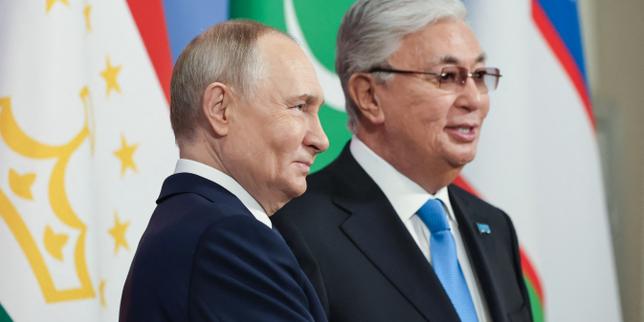
Why would President Kassym-Jomart Tokayev, who has famously distanced himself from some of Vladimir Putin's more aggressive geopolitical stances, allow this? The answer lies in the brutal reality of geographic and economic dependency.
Kazakhstan shares the world’s longest continuous land border with Russia. More importantly, the vast majority of Kazakh oil—the lifeblood of its economy—flows to global markets through the Caspian Pipeline Consortium (CPC), which terminates at the Russian port of Novorossiysk. On several occasions since 2022, Russia has "temporarily" halted this flow due to technical or environmental concerns, coincidentally following moments where Astana showed too much independence.
Handing over a few dozen "troublemakers" is a low-cost concession for Astana to keep the oil flowing. It is a cynical but effective form of diplomacy. For the Kazakh government, the safety of a few thousand Russian exiles is a secondary concern compared to the stability of its multi-vector foreign policy and its precarious energy exports.
The Death of the Humanitarian Loophole
In the early months of the conflict, Kazakh courts were often hesitant to extradite individuals for "crimes" that didn't exist in Kazakh law, such as "discrediting the army." There was a legal gray area that lawyers successfully exploited. That window has slammed shut.
Russian prosecutors have learned to reclassify political charges into "universal" crimes. An activist isn't wanted for a protest; they are wanted for "fraud," "extremism," or "inciting mass riots." Because these crimes exist in the Kazakh penal code, the principle of dual criminality is met, making extradition almost a formality.
The case of Yakov Kazantsev, an activist detained in Kazakhstan, serves as a chilling precedent. Despite the risks of torture or unfair trial in Russia, the administrative momentum favors the prosecution. The Kazakh judicial system is not designed to challenge the validity of a Russian warrant; it is designed to execute it. This creates a environment where the burden of proof is effectively shifted onto the refugee, who must prove they will be persecuted—a near-impossible task in a court system that values diplomatic harmony over individual liberty.
The Role of Russian Intelligence on Kazakh Soil
It is an open secret in Astana and Almaty that the FSB (Federal Security Service) operates with a high degree of freedom within Kazakhstan. There have been numerous reports of "informal" abductions—incidents where individuals disappear from Kazakh streets only to resurface in Russian custody weeks later.
These operations bypass the formal extradition process entirely. They rely on a "handshake" agreement between security services that operates below the level of official government policy. For the Russian migrant, this means that even if the Kazakh courts provide a temporary stay of deportation, the threat of an extrajudicial snatch-and-grab remains.
The chilling effect is intentional. The goal is to signal to the Russian diaspora that there is no "near abroad" that is truly beyond the Kremlin's reach. By making Kazakhstan a dangerous place for dissidents, Moscow effectively forces them further afield—to the EU, the US, or the Caucasus—or, ideally, back home to face "justice."
A New Reality for the Migrant Population
For the average Russian "relokant" in Kazakhstan, the strategy has shifted from integration to invisibility. The once-vibrant communities of Russian tech workers in Almaty are thinning out. Those who can afford to leave are heading for Southeast Asia or the Balkans. Those who remain are scrubbing their social media histories and avoiding any contact with local authorities.
The Kazakh government has also introduced stricter registration rules. The "visa run" (leaving and re-entering the country to reset a stay) was abolished in early 2023. This forced thousands of Russians into a formal residency process that requires a clean criminal record from the Russian Federation—a document that is impossible to obtain for anyone on a Kremlin blacklist.
This bureaucratic maneuver did more to purge the country of "undesirables" than any mass deportation order could have. It turned the legal status of thousands of people into a ticking time bomb.
The High Cost of Neutrality
Kazakhstan is attempting to perform a geopolitical vanishing act. It wants to be a partner to the West, a transit hub for China’s Belt and Road Initiative, and a loyal neighbor to Russia. But neutrality has a price, and that price is often paid in human currency.
The international community has largely remained silent on these extraditions. Because Kazakhstan is a vital alternative to Russian energy and a key player in bypassing sanctions for Western goods, there is little appetite in Brussels or Washington to sanction Astana over the treatment of Russian exiles.
This leaves the refugees in a vacuum. They are too Russian for the West to fully embrace, and too rebellious for Moscow to ignore. Kazakhstan, caught in the middle, has chosen the path of least resistance.
The message from Astana is clear: you are welcome as a consumer, as a tenant, and as a source of tax revenue. But the moment your presence complicates the relationship with the neighbor to the north, the welcome mat is withdrawn. If you are on the list, you are already gone.
Check your registration status today. If you have any history of political engagement in Russia, consult with a human rights lawyer immediately to explore pathways to a third country.