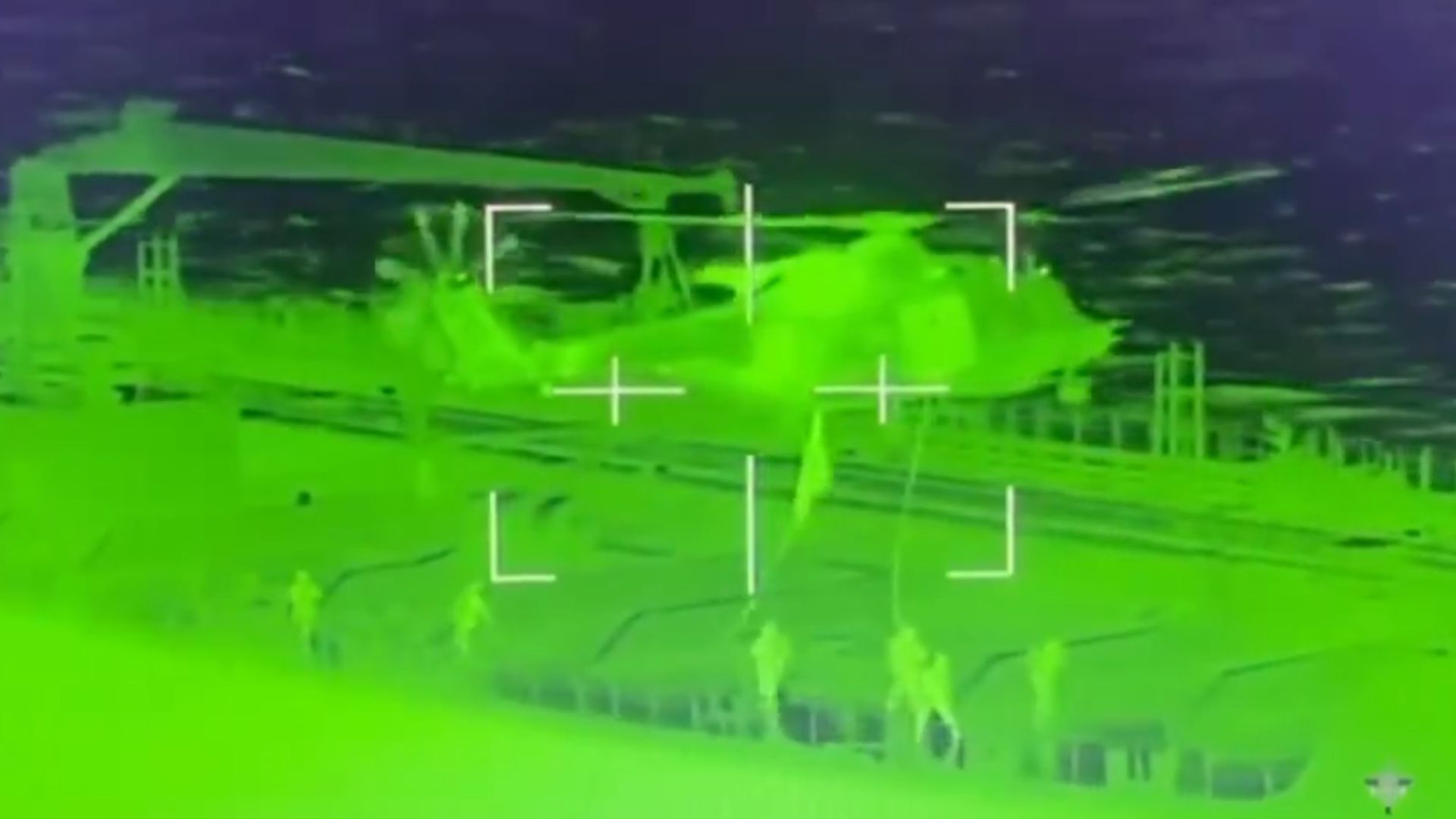
The smoke rising from the ruins of the Beit Rahbari compound in central Tehran on February 28, 2026, signaled more than just the end of an era. It marked the start of a geopolitical firestorm that neither Washington nor Jerusalem seems fully prepared to contain. When the joint U.S.-Israeli operation, titled Epic Fury, successfully assassinated Supreme Leader Ali Khamenei, it did not just remove a dictator. It decapitated the ideological heart of the Shia world, an act that President Masoud Pezeshkian has now officially branded a "declaration of war against Muslims."
This is not the typical rhetoric of a regime under pressure. It is a calculated mobilization of a religious and military apparatus that has spent four decades preparing for this exact moment. While President Donald Trump and Prime Minister Benjamin Netanyahu celebrate what they call the "greatest chance" for the Iranian people to reclaim their sovereignty, the reality on the ground is a fractured, bleeding nation that could just as easily collapse into a regional black hole as it could embrace democracy.
The Decapitation Strategy and its Immediate Fallout
The strikes were surgical, daytime hits that reportedly eliminated forty senior commanders alongside the 86-year-old Khamenei. Among the dead are IRGC commander Mohammad Pakpour and security chief Ali Shamkhani. To the architects of the mission, this is tactical perfection. By removing the decision-makers, they intended to paralyze the Iranian response and encourage a popular uprising.
Instead, the immediate result has been a violent, reflexive lash-out across the Middle East. Within hours of the confirmation of Khamenei’s death, the Islamic Revolutionary Guard Corps (IRGC) initiated what they call the "most devastating offensive operation in the history of the Islamic Republic."
- 137 missiles and 209 drones were launched within the first twenty-four hours.
- Targeted assets include U.S. bases in Qatar, Bahrain, and Kuwait, along with civilian infrastructure in the UAE and Saudi Arabia.
- The Strait of Hormuz is currently seeing a significant uptick in maritime harassment, threatening to choke off 20% of the world’s oil supply.
The theory of "decapitation" assumes that the body dies with the head. In a highly decentralized network like the "Axis of Resistance," however, the body often continues to thrash with lethal autonomy. Groups like Hezbollah in Lebanon and the Houthis in Yemen now view the assassination as a "red line" that justifies unrestricted warfare. They are no longer waiting for orders from a central command that no longer exists in its previous form.
A Nation Split Between Celebration and Mourning
The reaction inside Iran exposes the deep, agonizing fault lines of a society that has endured decades of repression. In the affluent districts of North Tehran and the student hubs of Mashhad, videos have surfaced of people dancing on balconies and honking horns. For many who witnessed the brutal crackdown on the January 2026 protests—where an estimated 30,000 people were killed—this is a moment of long-overdue catharsis.
Yet, this jubilation is countered by a massive, state-orchestrated show of grief and rage in the squares of the capital. For the true believers and the millions whose livelihoods are tied to the clerical establishment, Khamenei was not just a politician but a "Marja" (source of emulation). His death is being framed as a martyrdom, a powerful narrative tool used to justify the internal purges that have already begun.
The provisional Leadership Council, quickly established by Ali Larijani, is currently hunting for the "infiltrators" who provided the intelligence for the strikes. History suggests that when a regime feels its survival is at stake, the first thing it does is turn its guns inward. The "chance for freedom" touted by the West may very well be drowned out by a wave of internal executions and a desperate, scorched-earth defense by the remaining IRGC loyalists.
The Economic Cost of the Epic Fury Campaign
Markets do not wait for the dust to settle. Oil prices soared by 13% in early Monday trading as the reality of a protracted conflict in the Persian Gulf set in. The paralysis of aviation hubs in Dubai and Abu Dhabi due to drone threats is not just a regional issue; it is a disruption of the global supply chain.
If the IRGC follows through on its threat to shut down the Strait of Hormuz, the "tactical brilliance" of the assassination will be weighed against a global energy crisis. The U.S. and Israel have removed an enemy, but they have also removed the only person who had the ultimate authority to negotiate a ceasefire. In the theocratic hierarchy, there is no one left to sign a "deal."
The Illusion of a Vacuum
The most dangerous assumption in this conflict is that a power vacuum in Tehran will naturally be filled by pro-Western moderates. The provisional council includes hardline clerics and security hawks who have zero incentive to cooperate with the "Great Satan."
Russia and China are watching from the sidelines, their energy investments at risk. While China has officially condemned the strikes as a violation of sovereignty, it is likely already moving to secure its interests by backing whatever hardline faction emerges from the chaos.
The war that started on February 28 is not a conventional one. It is a kinetic, multi-front struggle where the lines between state actors and proxies have blurred entirely. The U.S. may have achieved air superiority over western Iran, but it cannot bomb an ideology out of existence, nor can it ensure that the "regime change" it seeks will lead to anything other than a more radicalized, desperate successor.
Watch the movement of IRGC naval assets near the Hanish Islands. If the retaliatory strikes move from symbolic hits to sustained maritime interdiction, the initial military victory will quickly be overshadowed by a global economic depression.