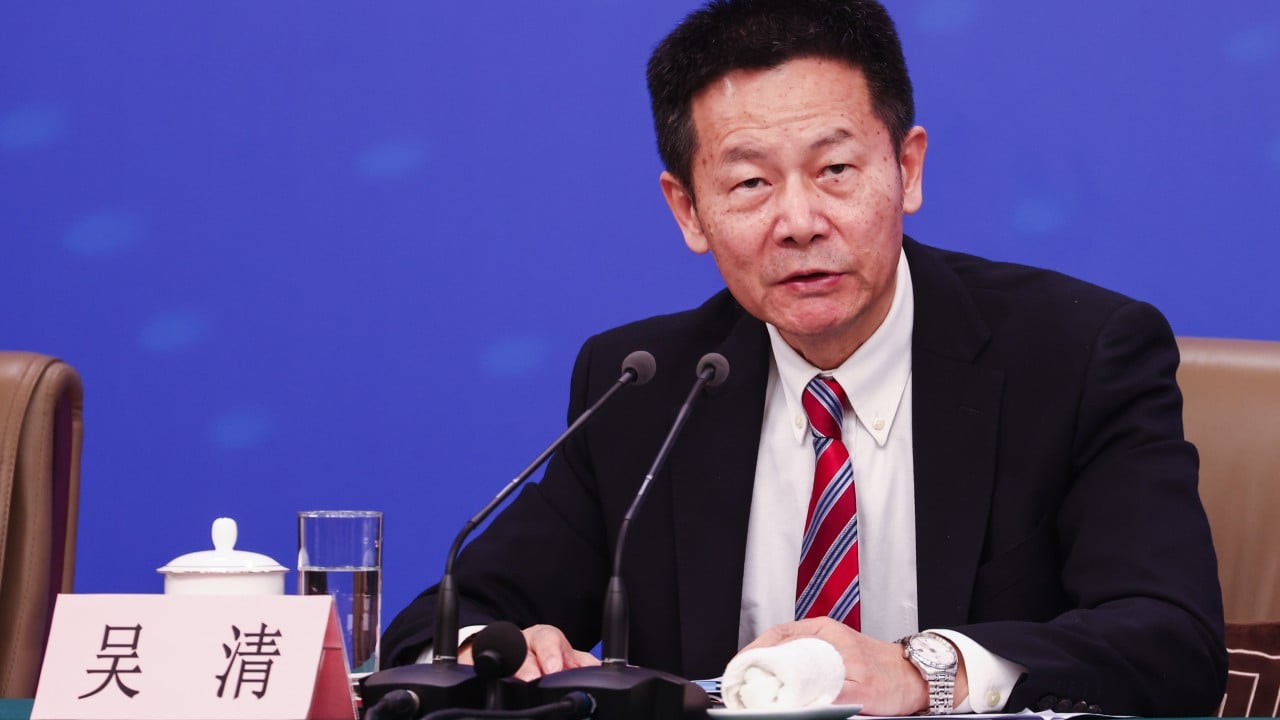
Chinese regulators just dropped the hammer on market volatility, and frankly, it's about time. For years, the A-share market felt like a casino where the house always won and the retail investor got the bill. That's changing. Wu Qing, the man leading the China Securities Regulatory Commission (CSRC), didn't mince words at the recent National People's Congress press conference. He’s promising a "market-stabilizing mechanism with Chinese characteristics" that actually puts teeth into enforcement.
If you've been sitting on the sidelines watching the Shanghai Composite hit decade highs while waiting for the other shoe to drop, you aren't alone. The skepticism is real. But this latest vow of "tougher oversight" isn't just another slogan. It’s a structural shift aimed at the 15th Five-Year Plan period (2026-2030). The goal is simple: make the market boring enough for long-term capital to actually stay.
The end of the wild west for speculators
The CSRC is going after the "three poisons" of the Chinese equity market: financial fraud, market manipulation, and insider trading. We've seen this movie before, but the script is different this time. Instead of just issuing fines that amounts to a slap on the wrist, the regulator's moving toward a "zero tolerance" policy that includes criminal liability and massive financial penalties.
Basically, they're trying to kill the culture of "excessive speculation." You know the type—short-term "hot money" that pumps a stock on a rumor and dumps it before the average person can blink. Wu Qing’s team is now monitoring risks across spot and futures markets simultaneously. They’re looking for "cross-market" transmission, meaning you can't hide your shady moves in one corner of the market while profiting in another.
Why the ChiNext reform changes the game
One of the biggest gripes about Chinese stocks has been the listing standards. They were either too rigid or too opaque. The new plan for ChiNext—Shenzhen's version of the Nasdaq—is to introduce "inclusive listing standards." This is a huge win for companies in "new quality productive forces." Think semiconductors, AI applications, and advanced manufacturing.
- Pre-review mechanisms: Borrowing a page from the STAR Market, ChiNext will use a more streamlined IPO process.
- Capital raising: Companies under review can now raise capital from existing shareholders, keeping the lights on while they wait for their debut.
- Sector focus: It’s no longer just about being a tech giant; it’s about modern services and "new consumption" business formats.
By making it easier for the right kind of companies to list, the CSRC is effectively trying to dilute the influence of old-school, debt-heavy industries. It’s a pivot toward a tech-heavy index that mirrors the country's actual economic goals for 2030.
Putting the "long" back in long-term capital
The biggest problem with the A-share market has always been its "lightweight" investor base. It’s mostly retail traders chasing trends. To fix this, the regulator is aggressively courting "patient capital." We’re talking about social security funds, pension funds, and insurance companies.
The CSRC just amended legal interpretations to refine the "strategic investor" mechanism. Institutional giants can now act as strategic investors with a minimum 5% shareholding. They aren't just there to provide cash; they're expected to participate in corporate governance. This means actual oversight from people who have a vested interest in the company not going bankrupt in six months.
Foreign investors are also getting a seat at the table. The Qualified Foreign Institutional Investor (QFII) scheme is being optimized, and more futures products are opening up to international traders. The message is clear: if you’re here to invest for years, not days, Beijing will roll out the red carpet.
Breaking the cycle of "involution"
There’s a term in China called neijuan or "involution"—basically, cutthroat competition that leaves everyone exhausted and no one profitable. The regulator is now applying "anti-involution" frameworks to the market. They’re pushing for capacity discipline in sectors like materials and telecoms.
Instead of ten companies fighting for the same margin-less business, the government wants consolidation. This improves pricing power and, by extension, corporate earnings. When companies make more money, they can actually afford to pay dividends. In 2025, we saw a record number of buybacks and dividend payouts. That wasn't an accident. It’s part of a directive to make stocks look more like assets and less like trading chips.
The reality check on property risks
Let's address the elephant in the room: the property sector. Yes, defaults happened. Yes, it’s still a mess. But the "systemic risk" argument is losing steam. In 2018, property and related sectors made up 25% of China's GDP. By 2026, that's projected to drop to around 16%. Meanwhile, tech-related sectors are filling that gap, expected to hit over 18% of GDP this year.
The stock market has already priced in the property gloom. The sector now accounts for a tiny 1.4% of the MSCI China Index. The regulator’s "tougher oversight" isn't about saving failing developers; it’s about ensuring the rest of the market doesn't get dragged down by them.
What you should do now
If you’re looking at the Chinese market, don't just buy the index. The era of "a rising tide lifts all boats" is over. Focus on the sectors the CSRC is actively protecting.
- Check the payout ratios: Look for firms with established dividend policies. The regulator is literally grading companies on this now.
- Verify the strategic investors: Stocks backed by the National Social Security Fund or major insurance players have a built-in "safety net" because those institutions won't tolerate blatant fraud.
- Watch the ChiNext transition: As the new listing standards roll out, there will be a flood of tech-focused IPOs. Some will be gold; most will be noise. Stick to those with "hard tech" credentials.
The CSRC is trying to build a market that functions like a global financial hub. It’s going to be a bumpy ride, and they’ll probably over-correct a few times. But for the first time in a long time, the rules of the game are actually being enforced. Stop waiting for the "perfect" moment to enter. Start by identifying the companies that are already playing by these new rules.