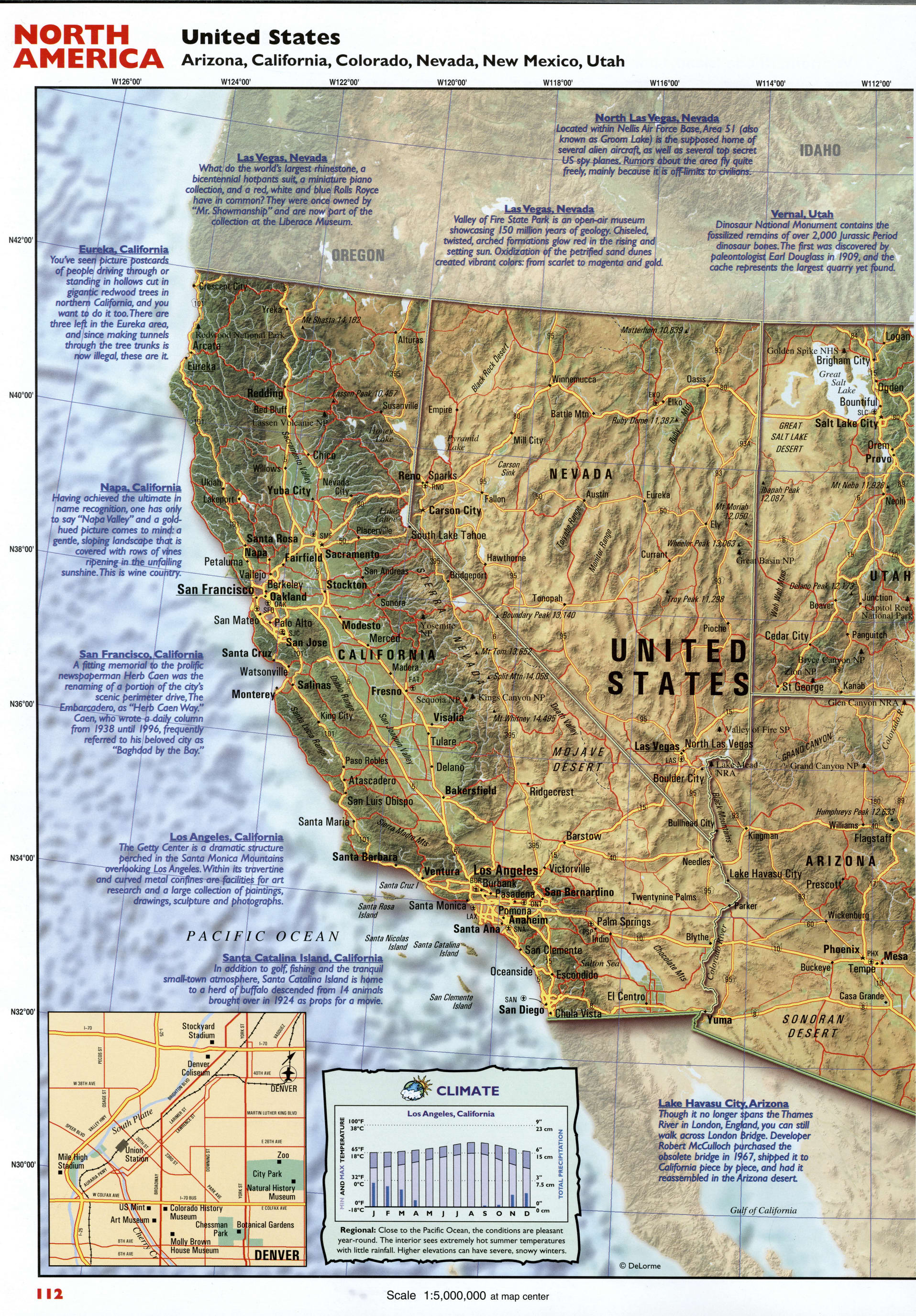
The Colorado River is screaming for a ceasefire, but the people in charge of the water are picking up their gavels instead. On February 14, 2026, a massive deadline came and went. The seven states that rely on this river—Arizona, California, Nevada, Colorado, New Mexico, Utah, and Wyoming—couldn't agree on how to share the dwindling supply after the current rules expire this fall. Now, the Trump administration has stepped in with a set of "options" that have the Lower Basin states—California, Arizona, and Nevada—ready to go to war in court.
If you live in Phoenix, Los Angeles, or Las Vegas, you need to pay attention. The federal government is basically proposing to solve a century-old math problem by making you pay the entire bill.
The math that doesn't add up
For years, the "Law of the River" has been built on a fiction. In 1922, they thought the river had plenty of water. They were wrong. Today, the river provides about 12 million acre-feet a year, but the law promises over 15 million. You don't need a PhD in hydrology to see the problem.
The Bureau of Reclamation recently released its Draft Environmental Impact Statement (DEIS) for post-2026 operations. It lays out a few paths, but the ones the Trump administration seems to favor put almost all the "pain" on the Lower Basin. Arizona has already offered to cut its use by 27%. Nevada offered 17%. California, which has the most senior rights, offered 10%.
The federal government basically said, "Thanks, but we need more, and we’re taking it from you." The Lower Basin governors—Gavin Newsom, Katie Hobbs, and Joe Lombardo—issued a rare joint statement on February 13, 2026, calling the federal approach "unworkable." They're right. You can't run a regional economy by "randomly slashing" water to the most populated areas while letting the Upper Basin states off the hook.
Why the Upper Basin is digging in
The four states upstream—Colorado, Utah, Wyoming, and New Mexico—have a very different view of reality. Their argument is simple: "We never use our full share anyway because we don't have the big reservoirs you do. We live with whatever Mother Nature gives us every year. Why should we take 'cuts' to a supply we can't even access?"
They call their plan "supply-driven." It sounds fair on paper. If there's less water in the mountains, everyone gets less. But the Lower Basin sees this as a violation of the 1922 Compact. That 104-year-old document says the Upper Basin must deliver a specific amount of water (75 million acre-feet over ten years) to the Lower Basin.
The Upper Basin now claims that's a "non-depletion" obligation, not a "delivery" obligation. Basically, they're saying as long as they don't actively steal the water, they aren't responsible if it doesn't show up. This is the kind of legal hair-splitting that keeps water lawyers in expensive suits and cities in the desert very, very nervous.
The Trump administration's "Maximum Flexibility" gamble
Secretary of the Interior Doug Burgum has a tough job, but his agency’s current proposals are a blunt instrument. One of the options, labeled "Maximum Operational Flexibility," gives the feds the power to ignore historical norms and slash deliveries as they see fit to keep the dams from crashing.
While that sounds like a strong "business-like" approach, it ignores the human and economic cost. Arizona is currently home to a $200 billion semiconductor boom. These chips need water. You can't tell Intel or TSMC that their multi-billion dollar investment might lose 30% of its water supply because of an "ad hoc" federal decision.
Arizona's Democratic delegation recently sent a blistering letter to the Bureau of Reclamation. They pointed out that the current federal alternatives ignore the government's trust responsibility to Tribal Nations. Tribes hold some of the oldest and most senior rights on the river, yet they've been largely sidelined in these "big picture" negotiations.
The looming threat of "Dead Pool"
The reason everyone is panicking is "dead pool." This is the point where water in Lake Mead or Lake Powell drops so low it can no longer flow through the turbines to create power, or worse, can't even get through the outlet pipes to the cities downstream.
The Bureau’s latest projections show Lake Mead could hit 1,034 feet by late 2027. That is dangerously close to the point where the plumbing stops working.
| Reservoir | Critical Level | Consequences |
|---|---|---|
| Lake Powell | 3,490 ft | Minimum power pool; turbines stop spinning. |
| Lake Powell | 3,370 ft | Dead pool; water stops flowing to Lake Mead. |
| Lake Mead | 950 ft | Minimum power pool; Hoover Dam stops generating. |
| Lake Mead | 895 ft | Dead pool; Las Vegas and CA/AZ lose their main intake. |
The current federal plan acts like a band-aid on a gunshot wound. It tries to save the reservoirs by starving the users, but it doesn't solve the underlying problem: we are trying to live a 15-million-acre-foot lifestyle on a 12-million-acre-foot budget.
What happens next?
The public comment period for these federal plans ended on March 2, 2026. Now, the Bureau of Reclamation has to scramble to finalize a "Record of Decision" by October 1.
If the states don't find a way to compromise in the next few months, we are headed for the Supreme Court. That is a nightmare scenario. You don't want nine justices in Washington D.C., who may not know the difference between an "acre-foot" and a "foot-fault," deciding who gets to water their crops in the Imperial Valley or who gets to turn on the tap in Phoenix.
Here is what you can actually do:
- Check your local water board’s stance: Most municipal water districts in the Southwest have public meetings this month to discuss how they’ll respond to the federal DEIS. Show up or write in.
- Support infrastructure, not just "cuts": The feds are focused on management, but the states are begging for money for desalination and wastewater recycling. That’s the only way to decouple our future from the river’s failure.
- Track the "Consensus" talks: Even though the deadline passed, the "negotiators" are still talking behind closed doors. Watch for any joint press release from the "Lower Basin" as a sign that they're ready to stand together against the federal overreach.
The era of cheap, easy water is over. Whether the Trump administration likes it or not, they can't simply "negotiate" away the reality of a drying river without causing a massive economic collapse in the West. It’s time for a deal that actually recognizes the water isn't coming back.