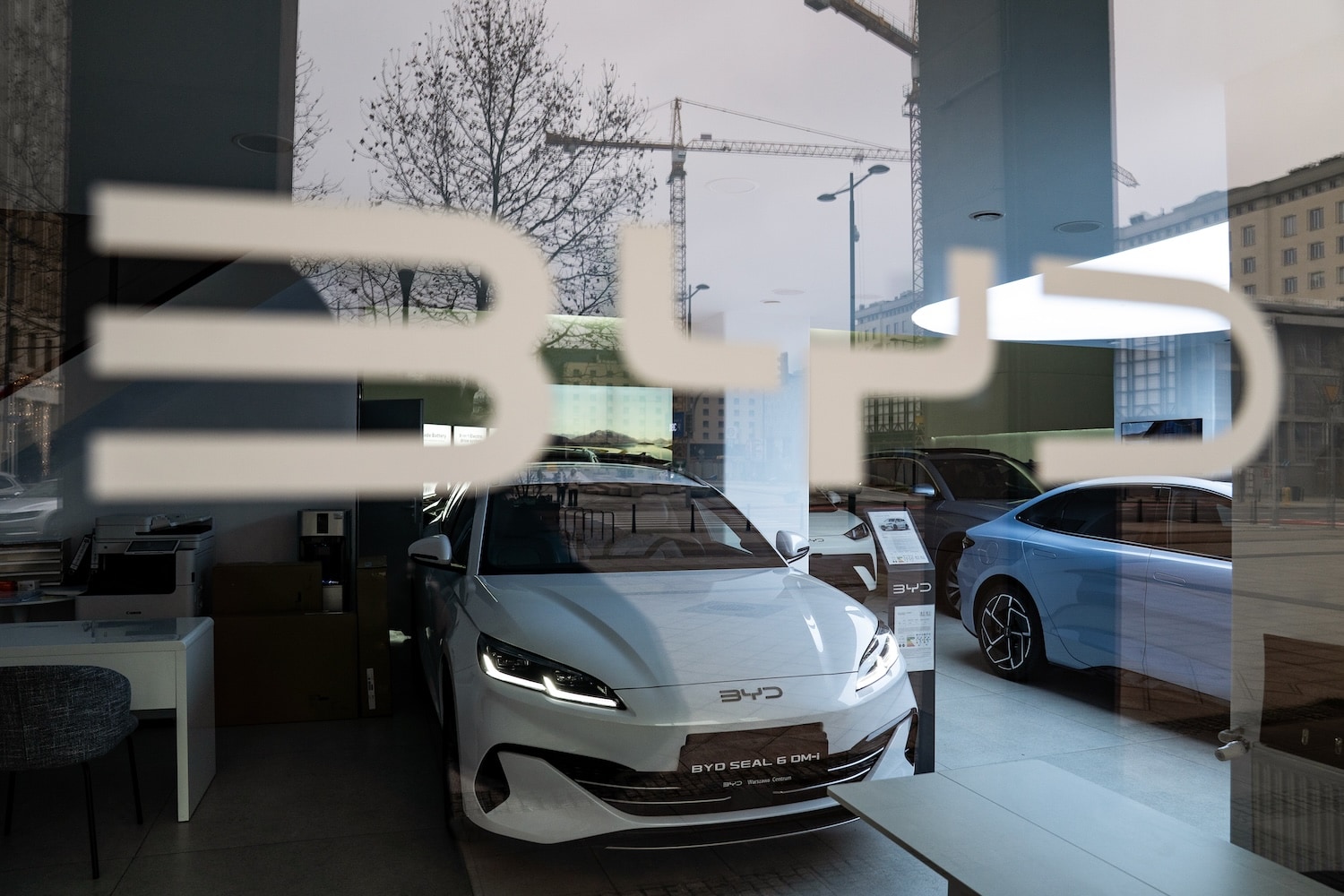
The global automotive hierarchy is being dismantled by a company that started by making mobile phone batteries for Nokia. BYD, the Shenzhen titan that recently wrestled the crown of world’s largest electric vehicle (EV) producer away from Tesla, is no longer content watching the North American market from across the Pacific. While the United States remains a fortress of protectionism, Canada has quietly cracked the door.
In a move that signals a seismic shift in trade geopolitics, the Canadian government recently dismantled its punitive 100% surtax on Chinese-made EVs, replacing it with a modest 6.1% rate for a quota of 49,000 vehicles annually. This isn't just a policy tweak; it is a lifeline for an automaker that was effectively boxed out of the continent just eighteen months ago. BYD Executive Vice President Stella Li has confirmed the company is now actively scouting locations for a Canadian manufacturing facility. But the real story isn't the brick-and-mortar plant. It is the brazen admission that BYD is open to acquiring a legacy automaker to bypass the years of regulatory and cultural friction required to build a brand from scratch.
The Trojan Horse Strategy
For decades, the "Big Three" in Detroit and their counterparts in Europe have viewed Chinese automakers as distant, low-cost threats. That complacency is dying. BYD’s interest in Canada is a calculated bypass of the U.S. border. Under the current trade climate, a Chinese car built in Shenzhen faces a wall of American tariffs. However, a Chinese car built in Ontario—using a local workforce and integrated into the North American supply chain—presents a far more complex legal challenge for U.S. trade hawks.
The company's insistence on 100% ownership of any Canadian plant is a direct rebuff to the joint-venture model that has defined the Chinese domestic market for forty years. BYD doesn't want partners; it wants control. This vertical integration is their "secret sauce." Unlike Ford or GM, which rely on a sprawling network of external suppliers for everything from seats to software, BYD manufactures its own batteries, semiconductors, and power electronics. If they build in Canada, they aren't just bringing an assembly line; they are bringing an entire ecosystem that the West has spent the last decade outsourcing.
Buying a Seat at the Table
The most disruptive component of BYD’s current posturing is the signal that it might simply buy its way in. Analysts have long speculated that struggling legacy brands—those with iconic names but depleted balance sheets—are ripe for the picking. Names like Chrysler have frequently surfaced in the rumor mill. While Stellantis and BYD have officially denied acquisition talks, the logic remains hauntingly sound for the Chinese firm.
Acquiring a legacy brand provides three things BYD currently lacks in North America:
- A Turnkey Dealer Network: Building a retail and service footprint from zero takes a decade. Buying one takes a signature.
- Regulatory Path: Legacy brands already have vehicles "homologated" (certified) for North American safety standards.
- Consumer Trust: It is easier to sell a "Chrysler powered by BYD" to a skeptical suburban parent than a brand-new badge they can't pronounce.
The financial reality makes this possible. Despite a recent 36% dip in early 2026 sales due to a cooling domestic market, BYD’s war chest remains formidable. They are playing the long game while Western OEMs are forced to answer to quarterly earnings calls and the crushing cost of transitioning away from internal combustion engines.
The Canola Compromise
Canada’s decision to break ranks with the U.S. on tariffs was not born of a sudden love for Chinese tech. It was a cold, hard trade-off. After Ottawa mirrored the U.S. 100% tariffs in 2024, Beijing retaliated by slamming Canadian agricultural exports, specifically canola. The "Canola War" threatened billions in revenue for Canadian farmers.
The current "quota" system—allowing 49,000 units at 6.1%—is a pressure-release valve. It satisfies the agricultural lobby while giving the Canadian government a chance to court BYD for local jobs. However, this move has placed a massive strain on the Canada-U.S. relationship. Washington views the Canadian border as the "soft underbelly" of its economic defense against China. If BYD successfully establishes a beachhead in Newmarket or Windsor, the tension between the two neighbors will reach a breaking point.
The Logistics of a Launch
BYD isn't waiting for the first shovel to hit the ground in Canada to start selling. They have already registered their Shenzhen and Xi’an plants with Transport Canada. This is the paperwork equivalent of clearing customs before the plane lands. Models like the Seal, the Atto 3, and the ultra-affordable Seagull (likely to be rebranded for the West) are already undergoing the "homologation" process to ensure they meet local safety and crash-test standards.
The 2026 sales target for BYD's overseas operations is 1.3 million units. To hit that, they need North America. They have already established a massive presence in Brazil and Thailand, and they are currently building a plant in Hungary to serve Europe. Canada is the final piece of the puzzle.
Hard Truths for the Domestic Industry
The arrival of BYD in Canada will be a brutal wake-up call for the "Big Three." The Chinese automaker isn't just winning on price; they are winning on technology. Their "Blade Battery" is widely considered more stable and energy-dense than many of the units currently powering American EVs. Even Ford has entered talks to source BYD batteries for its global hybrid lineup, an admission that the student has become the master.
The Canadian consumer, currently squeezed by inflation and high interest rates, is unlikely to care about the "geopolitical alignment" of their car’s software if the vehicle costs $25,000 and travels 450 kilometers on a single charge. The federal mandate requires 20% of new car sales to be zero-emission by 2026. Without affordable Chinese imports, that goal is a fantasy.
The automotive landscape is no longer a battle of brands; it is a battle of supply chains. BYD has spent twenty years building theirs. Now, they are coming for the driveways of the West, and they are using Canada’s open door to do it.
Would you like me to analyze the specific trade implications this Canada-China deal has for the 2026 USMCA renegotiation?