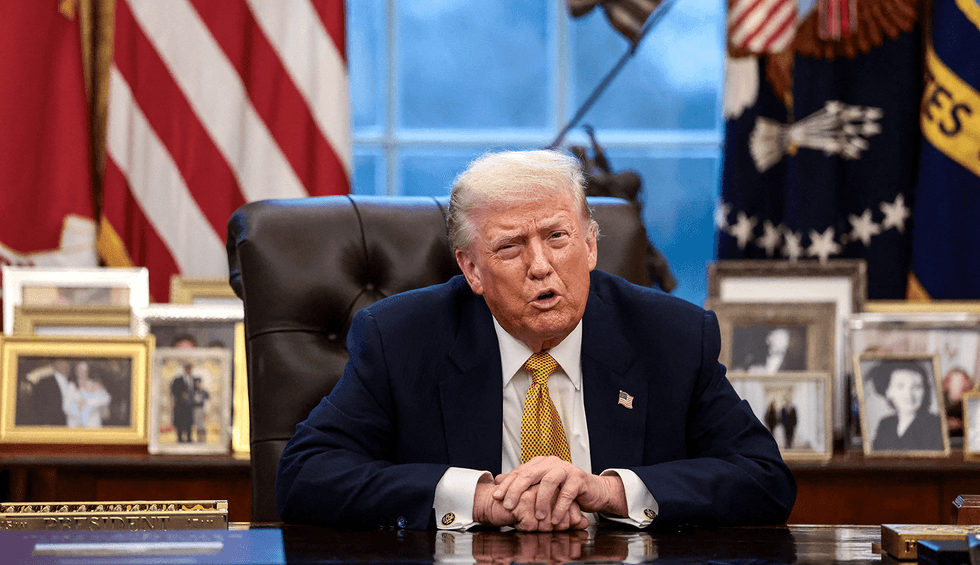
The assumption that Donald Trump’s second term would be a mere repeat of his first—heavy on tweets, light on boots—died in the smoke over Caracas this January. For years, the "America First" doctrine was interpreted by many as a retreat into isolationism. That was a catastrophic misreading of the man and his methods. What we are witnessing in 2026 is not a withdrawal from the world, but a violent re-centering of it around a single, uncompromising axis. The "Trump Corollary" to the Monroe Doctrine has turned the Western Hemisphere into a private estate, while the strikes against Iran have signaled a terrifyingly low threshold for total war.
By invading Venezuela and decapitating the Iranian leadership within the same sixty-day window, the administration has discarded the concept of "strategic patience." The goal is no longer to manage rivals, but to break them. This isn't a fiasco born of incompetence; it is a calculated demolition of the post-war rules-based order. You might also find this connected coverage interesting: Strategic Asymmetry and the Kinetic Deconstruction of Iranian Integrated Air Defense.
The Venezuela Blueprint and the Death of Sovereignty
Operation Absolute Resolve was not about spreading democracy. In fact, Trump’s refusal to back María Corina Machado’s democratic opposition in favor of a transactional relationship with former regime remnants proves that the White House views Latin America through a strictly extractionist lens. The message to the world was blunt: if you sit on resources the U.S. deems vital, your sovereignty is a clerical error.
This shift has sent a tremor through global markets. Rebuilding Venezuela’s decimated oil infrastructure requires hundreds of billions in capital that no private entity will provide without long-term security. By "running" Venezuela, as the President puts it, the U.S. has effectively nationalized a foreign state's problems. It is a high-stakes gamble that assumes the mere presence of American power will stabilize a region that has resisted outside control for centuries. As extensively documented in latest reports by Associated Press, the results are notable.
The Iran Gamble and the End of the Long Game
While the Caracas operation was a blunt force trauma, the strikes on Tehran—dubbed Operation Epic Fury—represent a systemic shock. The assassination of Supreme Leader Khamenei didn't just remove a rival; it liquidated the very concept of diplomatic de-escalation. For forty-five years, the U.S.-Iran relationship was a dance of proxies and sanctions. Now, the music has stopped.
Critics argue that by targeting the head of state, Trump has invited a generation of asymmetrical retaliation. They aren't wrong. However, the administration’s internal logic is different. They believe that the "Islamic Revolution" experiment is exhausted and that a massive, singular blow will cause the entire structure to fold. It is a "maximum pressure" strategy taken to its literal, kinetic extreme.
The risk is a "permanently altered America" that no longer relies on the soft power of alliances but on the hard power of pre-emption. Traditional allies in London and Paris are no longer being consulted; they are being notified. This has created a vacuum where mid-level powers are now hedging their bets, looking toward Beijing and Moscow as more "predictable" partners, even if they are more authoritarian.
The Greenland Distraction and the New Territorialism
The bizarre, escalating tension over Greenland serves as a perfect case study for this new era. While the media focused on the absurdity of renaming it "Red, White, and Blueland," the underlying mechanism was purely coercive. By threatening 25% tariffs on EU goods unless Denmark ceded the territory, Trump used the American consumer market as a weapon of territorial conquest.
This is the return of 19th-century geopolitics. In this worldview, land is wealth, and wealth is security. The fact that Trump temporarily backed down at Davos should not be seen as a retreat. It was a proof-of-concept. He showed that he is willing to hold the entire NATO alliance hostage to secure a strategic Arctic foothold.
The Economic Toll of Total Leverage
For the business world, this volatility is a nightmare masquerading as a "strong" stance. The administration’s aggressive use of tariffs as a tool of statecraft has invalidated decades of trade law. When the Supreme Court recently attempted to curb this authority, the President simply framed it as a national security issue, effectively bypassing the judiciary.
- Supply Chain Fracture: Companies can no longer plan for five-year horizons when a single speech can trigger a trade war with an ally.
- Capital Flight: While the U.S. market remains a juggernaut, the weaponization of the dollar is accelerating the "de-dollarization" efforts of the BRICS nations.
- Defense Spending: The "peace through strength" mantra has led to a ballooning deficit that even the most hawkish Republicans are beginning to fear.
A Movement Losing Its Center
Perhaps the most overlooked factor in this escalating conflict is the internal fracture within the Trump movement itself. The old guard of "restraint-oriented" libertarians and Koch-funded isolationists is being shoved aside by a younger, more aggressive cadre of digital-native insurgents. These are people who don't just want to "bring the troops home"; they want to use them to settle old scores and secure new frontiers.
Trump is no longer just leading a political party; he is presiding over a shift in the American psyche. The rejection of 66 international organizations in a single week wasn't a bureaucratic move—it was a symbolic divorce from the global community. The President is betting that the world needs America more than America needs the world.
Whether this bet pays off depends on whether the targeted regimes collapse or harden. History suggests the latter. By removing the "middle ground" of diplomacy, the administration has left itself with only two options: total victory or a multi-front, decades-long quagmire that will drain the very treasury the President claims to be protecting. The "Brutal Truth" is that we are no longer navigating a crisis; we are living in the ruins of the old order, and the new one is being built with iron and oil.
The next few months will determine if the U.S. can actually govern what it has conquered, or if it has simply set the world on fire and lost the extinguisher.