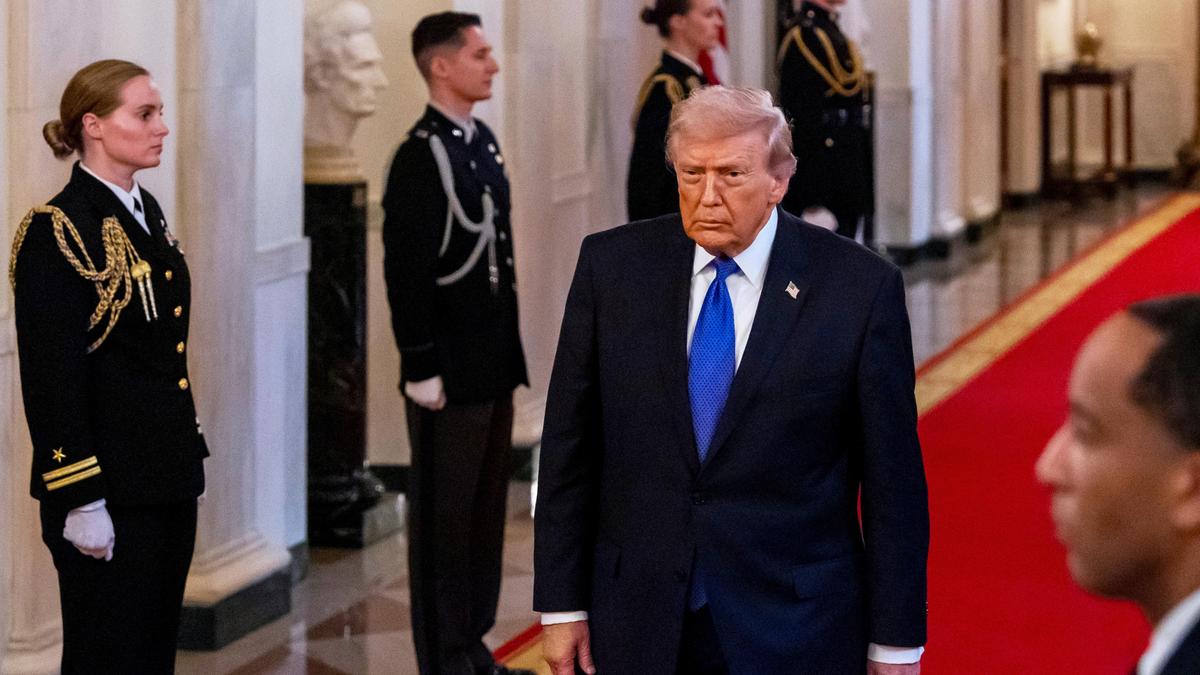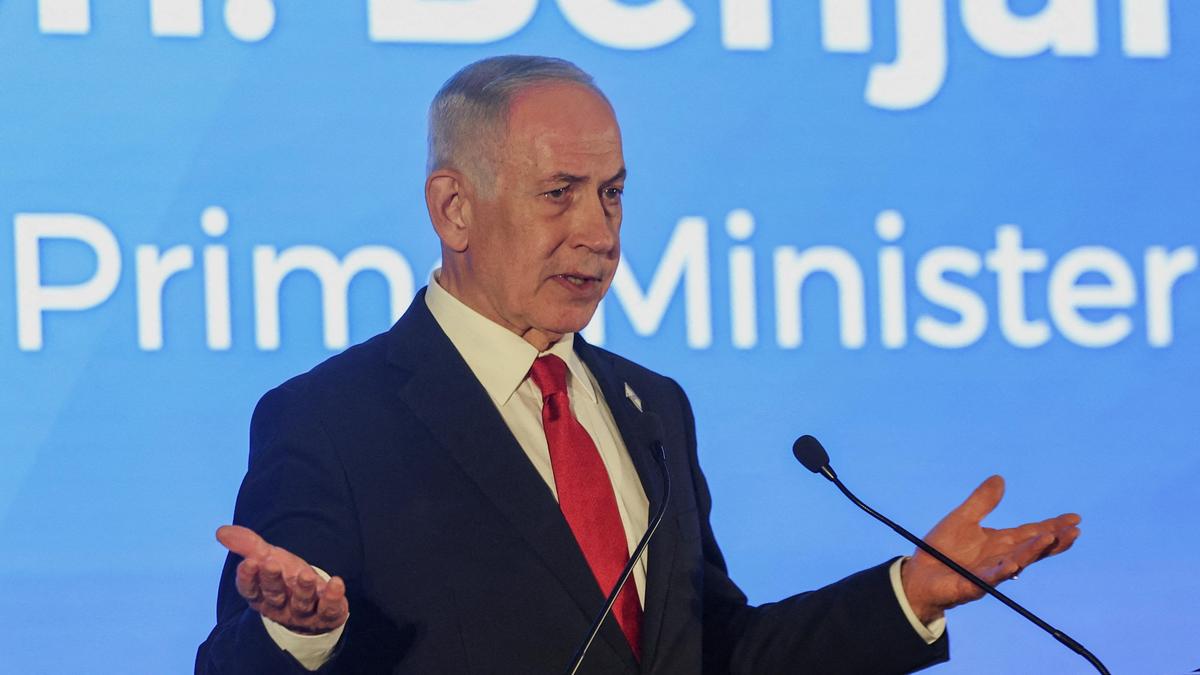
The smoke over Tehran hasn't even begun to clear, yet the narrative is already being vacuum-sealed for public consumption. On Monday, Israeli Prime Minister Benjamin Netanyahu sat across from the cameras and promised the world that the current firestorm—ignited by a massive joint U.S.-Israeli air campaign—is not the start of another decade-long quagmire. It will be "quick and decisive," he claimed. It "won’t take years."
But behind the podium, the math of Middle Eastern warfare rarely obeys the calendar of a televised interview. While Netanyahu and U.S. President Donald Trump frame "Operation Epic Fury" as a surgical removal of a nuclear cancer, the reality on the ground suggests we have moved past the era of shadow boxing and into a full-scale regional realignment that nobody can truly control. This isn't just a series of airstrikes; it is a high-stakes gamble to force a regime collapse before the concrete dries on Iran’s new, "immune" underground bunkers.
The Immunity Clock
The primary driver for the timing of this escalation wasn't a single provocative act, but a construction schedule. According to intelligence reports cited by Netanyahu, the Iranian regime had begun frantic work on hardened, deep-buried sites designed to house ballistic missile production and uranium enrichment. These weren't just bunkers; they were being engineered to a depth that conventional bunker-busters could not reach.
Israeli intelligence estimated that these facilities would become "immune" within months. This created a closing window for military action. In the eyes of the Israeli security cabinet, if they didn't strike now, they would lose the ability to strike forever. This "now or never" mentality explains why the scale of the attack—which has already reportedly claimed the life of Supreme Leader Ali Khamenei—exceeds anything seen in the 2025 "12-Day War."
Decapitation Without a Destination
The killing of Khamenei on February 28, 2026, was intended to be the ultimate "decisive" blow. By removing the spiritual and political apex of the Islamic Republic, the U.S. and Israel hoped to trigger a popular uprising. And it’s true that the Iranian public, battered by the hyper-inflation of early 2026 and the brutal crackdowns of January, is at a breaking point.
However, decapitating a regime is the easy part. Managing the headless body is where the "endless" part of the war usually begins. History is littered with "quick" operations that morphed into generational burdens.
- 1982 Lebanon: Intended to be a 40-kilometer push; resulted in an 18-year occupation.
- 2003 Iraq: "Mission Accomplished" was declared in weeks; the fallout lasted decades.
- 2011 Libya: Regime change achieved; the country remains a fractured shell.
Netanyahu’s insistence that this won't be an "endless war" rests on the assumption that the Iranian people will simply step into the vacuum and build a pro-Western democracy. It ignores the IRGC’s internal security apparatus, which remains heavily armed and ideologically committed, even without its figurehead.
The Proxy Backlash
While the air war pounds Tehran, the regional consequences are already spreading. Iran’s "Axis of Resistance" is not sitting idle. Hezbollah, though weakened by prior Israeli campaigns, still possesses enough firepower to make life in Tel Aviv a nightmare. On Tuesday, explosions shook the city as air defenses struggled to keep up with incoming salvos.
More concerning is the horizontal escalation. Drones have already struck the U.S. embassy in Riyadh. The IRGC has claimed responsibility for hitting a U.S. airbase in Bahrain. This is the "how" of the conflict: Iran is no longer trying to win a dogfight in the skies; it is trying to make the cost of victory so high for American and Israeli allies in the Gulf that the coalition fractures.
The Trump Factor
President Trump’s involvement adds a layer of unpredictability that defies standard military doctrine. His rhetoric has swung from promising "annihilation" to signaling a willingness to talk to new leadership. This "maximum pressure" on steroids is designed to break the Iranian will, but it also leaves no room for a "climb-down" for the Iranian military.
For the U.S., the risk is that "four to five weeks" of combat operations—as initially projected—becomes an open-ended commitment to police a collapsing state of 85 million people. The American public is skeptical. Polling indicates only 25% approval for these strikes. Netanyahu is essentially borrowing American airpower and political capital for a project he has dreamed of for 40 years.
The Hard Reality
Is it an endless war? Technically, Netanyahu might be right—it may not look like the trench warfare of the 20th century. But it will be a persistent, high-intensity security crisis. Even if the regime falls tomorrow, the task of securing Iran’s nuclear materials, preventing a civil war, and managing the inevitable insurgency will take far longer than "some time."
The "quick and decisive" label is a political necessity, not a strategic certainty. When you strike the heart of a regional power, the shockwaves don't stop just because the Prime Minister says the mission is on schedule. We are no longer talking about a "conflict" with Iran; we are witnessing the violent deconstruction of the Middle Eastern order.
Whether it takes weeks or years to settle, the "decisiveness" Netanyahu promises will be written in the rubble of Tehran and the redirected flight paths of a region now permanently on a war footing. Ask the families in Tel Aviv currently sitting in bomb shelters if the war feels "limited" or "quick."