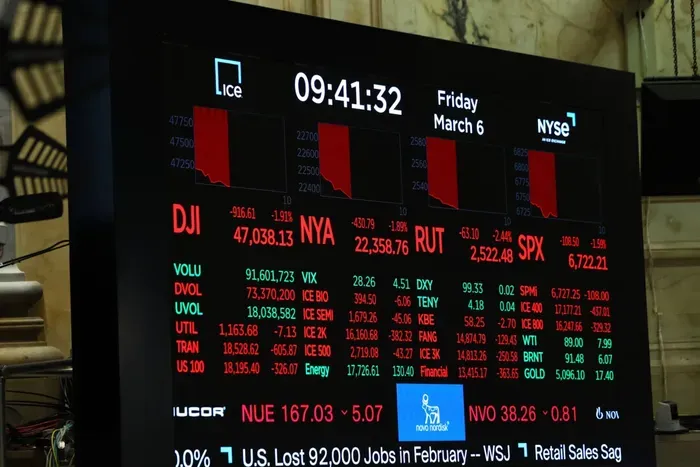
Wall Street just hit a wall of cold, hard reality. For months, equity markets have been operating on the borrowed time of cheap expectations, but a toxic combination of surging crude prices and a relentless climb in Treasury yields has finally forced a reckoning. When oil climbs and bonds sell off simultaneously, the cushion for stocks evaporates. This isn't just a bad trading session. It is the market finally admitting that the era of easy disinflation is over and the "higher for longer" interest rate environment is a structural trap, not a temporary inconvenience.
The Crude Reality of Energy Inflation
Energy is the silent tax on every sector of the economy. When Brent crude pushes toward the upper limits of its trading range, it doesn't just hurt the person at the gas pump. It ripples through supply chains, increases the cost of shipping every pallet of goods, and forces airlines to rethink their quarterly guidance. The recent spike in oil prices has effectively neutralized the progress the Federal Reserve thought it was making on the Consumer Price Index.
Investors often look at "core" inflation, which strips out food and energy, as a way to feel better about the underlying trend. That is a mistake in the current environment. You cannot run a global economy on core inflation. High energy prices act as a massive drag on consumer discretionary spending. When people spend more to fill their tanks, they spend less on the retail and tech products that drive the S&P 500. The market is finally pricing in this squeeze on margins.
The geopolitical tension underlying this oil surge is not a variable that any central bank can control. Production cuts from OPEC+ and regional instability mean that the supply side of the equation is tightening just as seasonal demand peaks. This creates a floor for energy prices that keeps inflation sticky. If inflation stays sticky, the Fed cannot cut rates. If the Fed cannot cut rates, the current valuation of high-growth tech stocks becomes impossible to justify.
Why 10 Year Yields are Killing the Bull Market
The 10-year Treasury yield is the benchmark for the world. It is the "risk-free" rate against which every other asset is measured. When that yield climbs, the math for owning stocks changes instantly. Why would an institutional investor take a flyer on a volatile tech stock with a 2% earnings yield when they can get a guaranteed return on a government bond that is significantly higher?
They wouldn't. And they aren't.
This surge in yields is a signal that the bond market has lost faith in a quick return to the 2% inflation target. Bond vigilantes are demanding more compensation for the risk of holding long-term debt in an economy that is running hotter than expected. This creates a gravity well for equity valuations. As the discount rate used in financial models increases, the present value of future earnings decreases. This hits the "Magnificent Seven" and other growth-heavy stocks the hardest because their value is predicated on profits that are years away.
Consider the basic formula for valuing a company. If you increase the denominator—the interest rate—the final number drops. It is basic arithmetic that the market tried to ignore for the first half of the year. Now, the bill has come due. The correlation between falling bond prices and falling stock prices has returned with a vengeance, destroying the traditional 60/40 portfolio hedge and leaving nowhere for investors to hide.
The Corporate Debt Cliff
While the headlines focus on daily stock fluctuations, the real danger is lurking in corporate balance sheets. Many firms spent the last decade gorging on cheap debt. That debt eventually has to be refinanced. If a company issued bonds at 3% and now has to roll that debt over at 7% or 8%, their interest expense doubles.
That money comes directly out of profits. It reduces the cash available for research, development, and stock buybacks. We are entering a period of "earnings erosion" where the top-line revenue might look okay, but the bottom line is being eaten alive by debt service and energy costs. The market is beginning to sniff out which companies are "zombies"—firms that only survived because interest rates were near zero—and is punishing them accordingly.
The Myth of the Soft Landing
For the last six months, the consensus on Wall Street was that the Fed would pull off a miracle. The narrative suggested that inflation would cool, employment would stay strong, and we would transition into a period of steady growth without a recession.
That narrative is dying.
A soft landing requires a very specific set of circumstances that are now being dismantled by the oil and bond markets. You cannot have a soft landing when the cost of capital is skyrocketing and the cost of energy is surging. These are the two most fundamental inputs for the global economy. When they both move higher at the same time, it creates a "pincer movement" that traps both the consumer and the corporation.
The Fed is now in a position where they may have to keep rates high even as the economy slows down to prevent an energy-driven inflation spiral. This is the definition of stagflation. While we aren't fully there yet, the risk is higher than it has been in decades. The sell-off we are seeing is a move toward pricing in this grim reality.
Consumer Exhaustion is Real
We have to look at the state of the American consumer. Savings from the pandemic era have largely been depleted. Credit card delinquencies are on the rise. Student loan payments have resumed for millions. Now, add higher gas prices and higher mortgage rates to that mix.
The consumer has been the primary engine of the U.S. economy, but that engine is knocking. Retailers are already reporting a shift in behavior, with shoppers moving away from big-ticket items and toward essentials. When the consumer retreats, the S&P 500 follows. The market is realizing that the "resilient consumer" story has reached its final chapter.
The Algorithmic Acceleration
It is also important to understand how modern markets work. Much of the selling we see isn't humans making rational decisions; it is driven by systematic funds and high-frequency trading algorithms. These programs are often keyed to specific technical levels and correlations.
When the 10-year yield crosses a certain threshold—say, 4.5% or 4.8%—it triggers automatic sell orders in equity futures. This creates a feedback loop. Selling leads to more selling, which pushes volatility higher, which then forces more funds to reduce their "Value at Risk" (VaR) by selling even more. This is why a 1% drop can quickly turn into a 3% rout. The machines have taken over, and they don't care about "fundamental value" or "long-term potential." They only care about the direction of the trend and the level of volatility.
A Fundamental Shift in Strategy
The old playbook of "buying the dip" is dangerous in this environment. That strategy worked when the Fed was ready to step in and provide liquidity at the first sign of trouble. But the "Fed Put" is dead. The central bank's primary mission is now fighting inflation, and they view a weaker stock market as a helpful tool in tightening financial conditions. They aren't going to save you.
Investors need to focus on companies with massive cash piles, zero debt, and the ability to pass on costs to their customers. "Pricing power" is no longer a buzzword; it is a survival requirement. If a company cannot raise its prices to offset the cost of oil and interest, its stock is a liability.
We are seeing a rotation out of speculative "story stocks" and back into boring, cash-flow-positive businesses. This is a healthy process in the long run, but it is incredibly painful in the short term as the market sheds trillions of dollars in bloated valuations.
The volatility will continue as long as the bond market remains in flux. Until we see a definitive peak in yields and a stabilization in the energy markets, every rally should be viewed with skepticism. The market isn't just selling off; it is re-evaluating the entire framework of the global economy.
Check your exposure to high-beta tech and companies with floating-rate debt immediately.