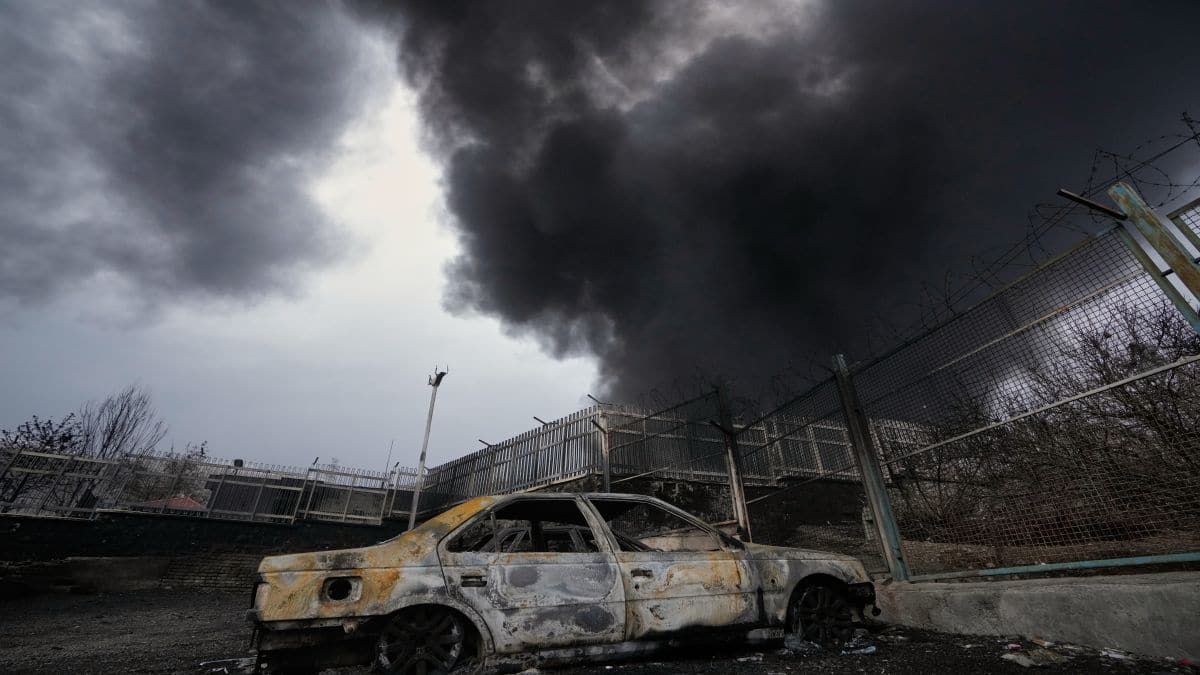
The smoke rising over Sitra isn't just a local disaster. When Bahrain’s Bapco Energies declared force majeure on March 9, 2026, it signaled a terrifying shift in the "Operation Epic Fury" conflict. This wasn't a random glitch or a small fire. It was a direct, successful strike by Iranian Shahed-136 drones on the Residue Hydrocracking Unit at the Al-Ma’ameer facility—the absolute crown jewel of Bahrain’s $7.3 billion modernization program.
If you’re wondering why your local gas prices just twitched or why the stock market looks like a sea of red, this is why. We aren't just talking about one refinery. We're talking about the systematic dismantling of the Gulf's energy security.
The Reality of the Bapco Shutdown
Let’s be clear about what "force majeure" actually means here. It’s a legal "get out of jail free" card. Bapco is telling its international partners that it can’t fulfill its contracts because an "act of God"—or in this case, an act of war—has made it impossible.
The Sitra refinery had just finished an upgrade that boosted capacity to 405,000 barrels per day. It was supposed to be the engine for Bahrain’s Economic Vision 2030. Now, that engine is stalled. While Bapco claims domestic supplies are "fully secured" through contingency plans, the export market is a different story.
- The Target: The LC-Fining unit, which turns heavy crude into high-value ultra-low sulfur diesel.
- The Damage: Indefinite offline status for key units while engineers assess structural integrity.
- The Human Cost: At least 32 civilians injured in nearby residential areas during the early morning strikes.
Why This Hit is Different
In previous regional flare-ups, energy infrastructure was often treated as a "red line" that neither side really wanted to cross. That line is gone. By hitting Bapco, Iran has proven it can and will strike the heart of sovereign economic assets.
The timing couldn't be worse. This attack follows similar disruptions at Saudi Arabia’s Ras Tanura and news that Kuwait’s KPC has also issued force majeure notices. When you combine these infrastructure hits with the fact that the Strait of Hormuz is virtually a no-go zone right now, you get a perfect storm. Roughly 20% of the world’s oil supply is currently bottlenecked or under fire.
Global Markets are Reacting with Panic
You don't have to be a commodities trader to feel the impact. Brent crude has already surged past $114 per barrel. Some analysts are whispering about $120 or higher if the escalation doesn't stop.
The "winners" here, if you can call them that, are refiners outside the strike zone with spare capacity. US-based giants like ExxonMobil and Chevron might see a short-term margin boost. But honestly, that’s cold comfort when insurance premiums for tankers in the Persian Gulf are skyrocketing. Those costs aren't stayed by the oil companies; they’re passed directly to you at the pump.
What Happens to the Big Players
This isn't just a Bahraini problem. It’s a massive headache for global partners. TotalEnergies, which signed a major deal in 2024 to manage Sitra’s output, is now looking at a gaping hole in its regional trading margins.
Then there’s the broader economic ripple. Asian markets, particularly in India, Japan, and South Korea, rely on this region for the lion's share of their energy. When the Gulf sneezes, the global economy catches a cold. We're already seeing stock indices like the Nikkei and the Dow Jones take hits as investors flee to "safe" assets.
The Strategy Moving Forward
If you're tracking this situation, don't just look at the fire totals. Watch the "back end" of the oil futures curve. US shale producers are hesitant to ramp up production because they need to know these prices will stick before they commit billions in capital. It takes months, not days, to bring new supply online.
For now, the focus is on stabilization. Here is what needs to happen next:
- Damage Assessment: Engineers need to determine if the LC-Fining unit can be patched or if it requires a total rebuild.
- Alternative Routing: Traders are scrambling to find non-Gulf supplies of middle distillates to prevent a global diesel shortage.
- Security Escalation: Expect a massive increase in anti-drone battery deployments around remaining "soft" energy targets in the UAE and Qatar.
The situation is fluid and, frankly, pretty grim. We’ve moved past the era of "saber-rattling" into a period of sustained infrastructure attrition. Stay informed on regional shipping advisories and keep an eye on the G7’s potential release of emergency oil reserves. That might be the only thing keeping prices from hitting the stratosphere this week.