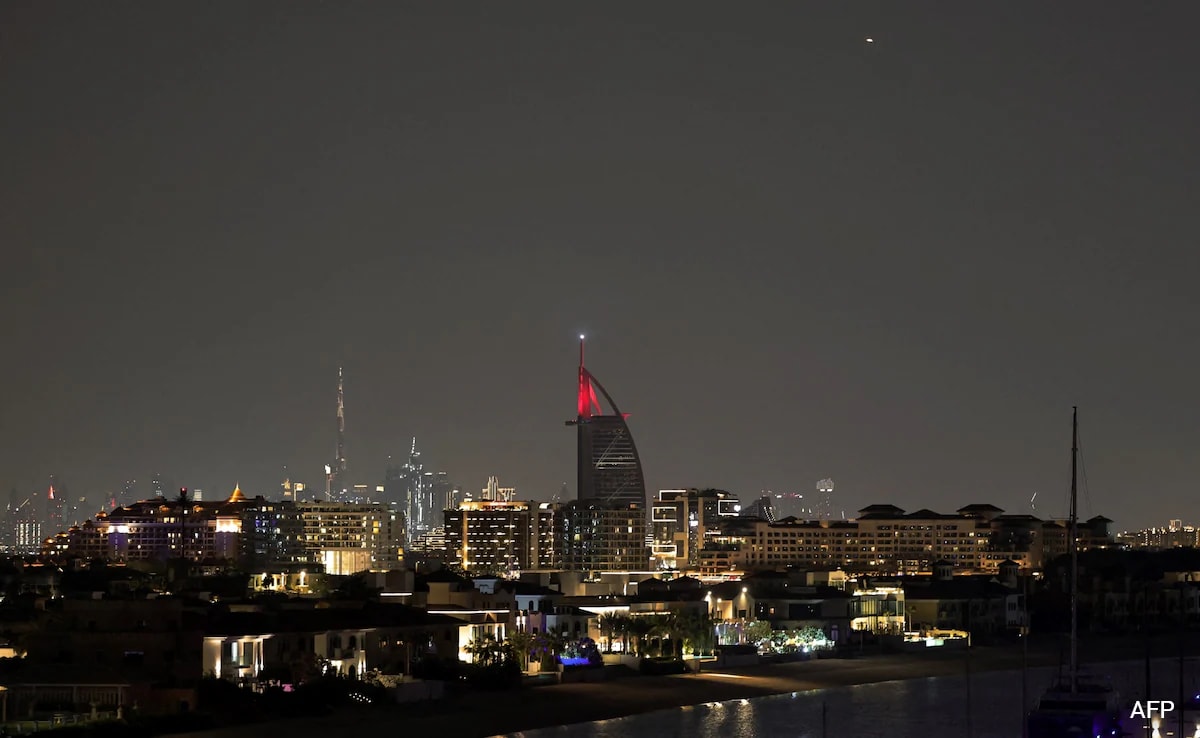
The gold-plated dream of Dubai is hitting a wall of geopolitical reality. For the last three years, the narrative was simple. If you were a billionaire from Mumbai, Hong Kong, or Singapore, you moved your family office to the Emirates. You got the golden visa, the zero-tax lifestyle, and a safe harbor from the fallout of the Ukraine war. But that sanctuary vibe is fading fast. As the conflict with Iran continues to simmer across the water, the ultra-wealthy from Asia are starting to see the Persian Gulf as a high-stakes gamble they no longer want to take.
I’ve seen this cycle before. Wealth follows stability. When the rockets start flying in the neighborhood, even the most luxurious penthouse in the Burj Khalifa feels like a glass cage. The shift isn't just a rumor. Data from private banks in Singapore and Zurich shows a distinct uptick in "safety-first" inquiries from families who previously thought Dubai was their forever home. They aren't just worried about a stray missile. They’re worried about the banking system, the insurance premiums, and the sudden volatility of a region that's too close to the fire.
If you’re sitting on a few hundred million dollars, your primary goal isn't growth. It’s preservation. Dubai was the ultimate growth play for a decade. Now, the math has changed. The threat of a wider regional war involving Iran has turned the UAE from a neutral playground into a strategic liability.
The end of the neutral playground myth
For years, Dubai marketed itself as the "Switzerland of the Middle East." It was the place where everyone could do business regardless of who was fighting elsewhere. That worked when the conflicts were proxy wars in distant lands. It doesn't work when the Iranian military is actively trading blows with regional powers and international coalitions.
Wealthy Asian investors, particularly those from India and China, have a low tolerance for systemic risk. They’ve seen how quickly assets can be frozen or devalued when a country gets dragged into a conflict. If the Strait of Hormuz becomes a permanent battleground, the logistics of Dubai collapse. We’re talking about a city that imports almost everything. If the supply chains break, the luxury lifestyle becomes a survivalist exercise very quickly.
Many families are now looking at the physical proximity to the Iranian coastline. It’s less than 100 miles across the water. In the age of hypersonic drones and ballistic missiles, that distance is nothing. The psychological comfort of being in a "safe haven" is gone. When you hear the sirens or see the headlines about intercepted projectiles, the tax benefits start to matter a lot less.
Where the money is going instead
Singapore is the massive winner in this shift. While Dubai was booming, Singapore was tightening its rules on family offices to weed out "dirty money." Now, that perceived elitism and strictness are acting as a magnet. It’s seen as the truly neutral ground. If you’re a billionaire from Jakarta or Shanghai, Singapore feels like home, and more importantly, it feels boring. In the world of high finance, boring is beautiful.
We are also seeing a resurgence in the "old" European hubs. Zurich and Geneva are back on the radar for Asian families who previously thought they were too expensive or too slow. The trade-off is simple. You pay more in taxes and fees, but you don't wake up wondering if the local airport will be open tomorrow.
- Singapore: High barriers to entry but total geopolitical insulation.
- Switzerland: Expensive and slow, but the ultimate "fortress" for capital.
- Australia: Gaining traction for those looking for land and resources far from any strike zones.
The movement isn't a mass exodus yet. It’s more of a quiet diversification. People aren't necessarily selling their Dubai villas at a loss, but they aren't moving their core liquid assets there anymore. They’re keeping the "fun money" in the Gulf and moving the "legacy money" back to the deep-water ports of the West or the regulated streets of Singapore.
The insurance nightmare nobody mentions
Everyone talks about the taxes. Nobody talks about the insurance. This is the "dirty little secret" of the Dubai property and shipping market right now. If you own a fleet of private jets or a superyacht, your insurance premiums in the Persian Gulf have skyrocketed. Some underwriters are simply refusing to cover certain assets if they are permanently stationed in the UAE.
Asian family offices are run by incredibly smart accountants. When the cost of insuring your assets exceeds the tax savings you get from living in a zero-tax zone, the move no longer makes sense. I’ve heard reports of maritime insurance jumping by 300% or 400% for vessels operating in the region. That’s a massive hit to the bottom line that the glossy tourism brochures never mention.
Then there’s the issue of banking. If the UAE gets caught in the crossfire of sanctions or conflict, the ability to move money in and out becomes a nightmare. We saw this with the "Grey List" issues a few years back. While the UAE worked hard to get off that list, the threat of geopolitical instability bringing back those restrictions is a constant shadow. For a billionaire, being unable to move $50 million on a Tuesday morning because of a "regional emergency" is a dealbreaker.
Why the Indian corridor is cooling off
The Indian ultra-high-net-worth community has been the backbone of the Dubai real estate market for decades. For many, Dubai was a second home—just a short flight from Mumbai or Delhi. But the recent escalations have changed the calculus for the big industrial families.
These families have businesses that span the globe. They can't afford to be tied to a region that might face secondary sanctions or significant trade disruptions. There’s also the "repatriation" trend. The Indian government has made it increasingly attractive for wealthy Indians to bring their money back home or invest in the GIFT City (Gujarat International Finance Tec-City).
When you compare the stability of a rising India with the volatility of a Middle East on the brink, the choice is becoming obvious. The "Dubai Dream" was built on the idea that the city was an island of peace. If that island is no longer peaceful, it’s just a very hot desert with expensive buildings.
Look at the long term play
Don't expect Dubai to disappear. It’s a resilient city with a visionary leadership team that has pivoted before. But the "easy money" era from Asia is over. The next phase will be much more about "tactical" investments rather than "lifestyle" shifts.
If you’re advising a family office or managing your own wealth, the move is to hedge. You don't pull out of Dubai entirely, but you stop treating it as your primary safety net. You look at the "Three-Legged Stool" model:
- The Growth Leg: Keep some capital in high-risk, high-reward zones like the UAE or emerging SE Asia.
- The Stability Leg: Move your core holdings to Singapore or Switzerland.
- The Security Leg: Invest in physical assets in "isolated" geographies like New Zealand, Australia, or even parts of North America.
The world is getting noisier. The families that survive and thrive are the ones who can hear the signal through the static. Right now, the signal is screaming that the Gulf is getting too loud. It’s time to look for a quieter neighborhood.
Start by auditing your current exposure to the Middle East. Check your insurance policies for "war and civil unrest" clauses. Most people assume they’re covered. They aren't. Then, look at your residency status. Having a golden visa is great, but having a second or third option in a neutral territory is better. Move the liquid assets first. The real estate can wait, but your cash needs to be in a place where the banks never close and the sirens never sound.